Owner’s manual


How do I tell what model my Kenmore dryer is?
Your Kenmore dryer’s model number is printed on the model and serial number label; on model 11074892401, that label is located at the top inside the dryer door well. Write down the full model number and serial number so you can match the correct parts and specifications in the 11074892401 owner's manual.
Check these common Kenmore dryer label locations (start with the door area first):
- Top inside the dryer door well (most common for this style)
- Inside the door opening on the cabinet frame
- Back panel of the dryer cabinet
- Near the lint screen housing (varies by design)
When you find the label, record the details exactly as shown.
- Model number (example format: 110.XXXXXXXX)
- Serial number
- Purchase date (helpful for your records)
- Fuel type (gas or electric), if listed
| Item on label | What it helps with | Example |
|---|---|---|
| Model number | Ensures parts fit your exact dryer | 11074892401 |
| Serial number | Confirms production series for some parts | Varies |
| Purchase date | Maintenance and service history | Varies |
Kenmore model numbers identify the exact design family and component set. Using the full model number prevents ordering the wrong items like a door switch, thermostat, or drum support parts that can look similar but mount differently.
If you are troubleshooting a no-start symptom while you are checking the label, a common related part is the dryer door switch WP3406107.
Last updated: February 2026
How to hard reset a Kenmore dryer?
To hard reset your Kenmore dryer model 11074892401, unplug it (or switch off both dryer breakers) for 2 minutes, then restore power and start a new cycle. This clears many control glitches; if the dryer still will not run, we move to door, power, and airflow checks.
- Turn the cycle selector to OFF.
- Unplug the dryer (or turn both circuit breakers off for the dryer).
- Wait 2 minutes.
- Restore power.
- Close the door firmly.
- Select a cycle and press PUSH TO START (as described in the 11074892401 owner's manual).
The manual’s troubleshooting points to a few basics that stop the dryer from running.
- Confirm the dryer has power; many dryers use 2 fuses or 2 breakers, so check both.
- Make sure the door is fully closed; a failed door switch can prevent starting.
- Clean the lint screen before or after each load; restricted airflow can trigger overheating protection.
- If the drum turns hard by hand or you hear squealing, inspect drum support and belt-drive parts.
- If the control advances but the motor will not run, the drive system or motor circuit needs attention.
| Symptom | What to check first | Related part for this model |
|---|---|---|
| No response when you press Start | Door not sensed as closed | Dryer door switch WP3406107 |
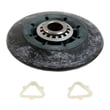
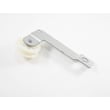
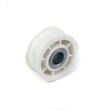
| Hums but will not tumble | Belt/idler or drum support drag | Dryer idler pulley 279640, support WPW10314173 |
A hard reset fixes temporary electronic or control-state issues, but it will not correct a real safety interlock (door switch), power supply problem (tripped breaker), or mechanical drag (idler/roller). Checking those items prevents repeat shutdowns and protects the motor and heater system.
Last updated: February 2026
What are common dryer part failures?
Common failures on the Kenmore 11074892401 dryer usually involve heat production, drum tumbling, airflow, or starting circuits. The most frequent results are no heat, no tumble, won’t start, overheating/shutting off, or loud squealing or thumping; our 11074892401 owner's manual troubleshooting section helps narrow the cause.
- Dryer won’t start: door switch, timer, motor, power supply issue
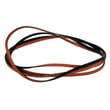
- Drum won’t tumble: idler pulley, drum rollers, drive motor (or a worn belt on many dryers)
- No heat (gas models): igniter, gas valve coils, radiant sensor, operating thermostat
- Overheats or shuts off: restricted venting, high-limit thermostat opening, lint buildup
- Loud noise: worn drum support rollers, idler pulley wear, blower wheel damage
These are frequent wear items we see on Kenmore dryers like model 11074892401:
| Problem you notice | Likely part area | Example part for this model |
|---|---|---|
| Squealing, thumping, rumbling | Drum support and belt path | Support WPW10314173, dryer idler pulley 279640 |
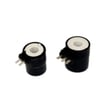
| Runs but no heat (gas) | Ignition and gas valve circuit | Igniter 279311, dryer gas valve coil kit 279834 |
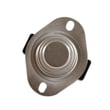
| Stops heating or overheats | Temperature safety controls | Dryer operating thermostat WP3387134, dryer high-limit thermostat W11050897 |
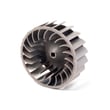
| Runs but poor drying | Airflow and lint path | Dryer blower wheel WP697772 |
- Confirm the cycle and temperature are set correctly (Air/No-heat cycles cause “no heat” complaints).
- Check the door closes firmly; a bad door switch can prevent starting.
- Verify proper venting: use 4-inch heavy metal venting, avoid plastic or foil, and keep the vent from kinking or crushing.
- Clean the lint screen and remove residue buildup (detergent and fabric softener can coat the screen).
- For gas dryers, confirm the gas supply valve is open.
Most “dryer problems” are either airflow restrictions (slow drying, overheating) or normal wear parts (rollers, idler pulley, thermostats). Fixing the root cause protects the motor, drum, and heating system, and restores normal drying times.
Last updated: February 2026
What does PF stand for on a Kenmore dryer?
PF on a Kenmore dryer (including model 11074892401) means power failure. It shows up after the dryer loses electrical power or the control senses a voltage interruption; once power is stable again, you can select a cycle and restart the dryer (see the 11074892401 owner's manual).
- Press OFF/Cancel (or turn the cycle selector to OFF) to clear the display.
- Re-select the cycle and temperature.
- Close the door and press PUSH TO START.
- If PF returns, plug the dryer directly into a properly grounded outlet (avoid extension cords).
- Check the home breaker for a tripped breaker or a loose connection.
| Cause | What you may notice | What to check |
|---|---|---|
| Brief outage or flicker | PF after a storm or utility work | Clear PF and restart |
| Loose plug or outlet | PF when the dryer vibrates | Outlet fit, cord seating |
| Tripped/weak breaker | Dryer stops mid-cycle | Reset breaker, verify correct breaker size |
| Overheating shutdown (less common) | Stops, then PF later | Lint buildup and airflow restrictions |
PF is mainly an alert that the cycle was interrupted, so clothes may be damp and the timer or sensor cycle may not finish normally. If PF happens repeatedly, fixing the power source or airflow issue helps prevent nuisance stops and protects components like the drive motor and timer.
These parts do not cause PF by themselves, but they are commonly checked when a dryer stops unexpectedly:
- Dryer door switch WP3406107 (dryer stops if the door switch opens)
- Dryer high-limit thermostat W11050897 (opens if the dryer overheats)
- Dryer operating thermostat WP3387134 (helps regulate drum temperature)
Last updated: February 2026
What size is the thermal fuse on a dryer?
On the Kenmore 11074892401 dryer, the thermal fuse is a small, flat safety device mounted on the blower housing or heater duct; most dryer thermal fuses are roughly 1 to 2 inches long with two 1/4-inch spade terminals. Use the 11074892401 manual to confirm the exact location and access steps.
Thermal fuses are commonly described by form factor and terminals, not by a precise length.
- Flat plastic or metal-bodied fuse (often white plastic)
- Two male spade terminals (commonly 1/4 inch)
- Mounts with 1 or 2 screws to the duct or blower housing
- Designed to open (blow) if the dryer overheats
- Not resettable; it must be replaced if open
We match by model number and mounting style, then confirm with the wiring layout and part diagram.
| What to check | What you’re looking for | Why it matters |
|---|---|---|
| Mounting location | Blower housing or heater/burner duct | Prevents ordering the wrong style |
| Terminals | Two spade terminals (often 1/4 inch) | Ensures your wire connectors fit |
| Symptoms | Dryer won’t run, or no heat (varies by design) | Points to the right circuit to test |
| Overheat cause | Restricted venting, lint buildup | Prevents repeat fuse failure |
A thermal fuse is a critical overheat safety. If it opens, the dryer can stop running or stop heating, and replacing it without fixing airflow problems (lint screen, ducting, outside hood) often leads to another failure.
If you’re troubleshooting heat and airflow on this gas dryer, these model-matched parts are commonly inspected or tested:
- Dryer high-limit thermostat W11050897 (overheat protection on the heat circuit)
- Dryer operating thermostat WP3387134 (regulates normal drum temperature)
- Duct lint WPW10128606 (lint ducting component that can affect airflow if damaged or packed)
Last updated: February 2026