Owner’s manual
 Error Codes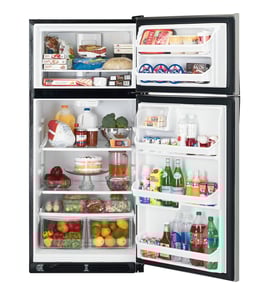

How big is the Kenmore refrigerator model 10676232402?
The Kenmore top-mount refrigerator model 10676232402 is typically a full-size unit in the 18 to 22 cubic foot range. For the exact capacity and the cabinet dimensions (height, width, depth), we recommend checking the specifications section in the 10676232402 owner's manual.
What “big” can mean (capacity vs. dimensions)
Refrigerator “size” is usually described two ways:
- Capacity (cubic feet): how much food storage space you get
- Overall dimensions: whether it fits your kitchen opening
- Clearance needs: space around the cabinet for airflow and door swing
Typical size ranges for Kenmore 106 top-mount refrigerators
| Measurement | Typical range | What to plan for |
|---|---|---|
| Capacity | 18 to 22 cu. ft. | Family-size storage |
| Width | ~29 to 33 in. | Standard cabinet openings |
| Height | ~65 to 69 in. | Check overhead cabinets |
| Depth | ~30 to 34 in. | Add space for doors/handles |
Installation clearances to include in your measurements
Even if the cabinet dimensions fit, the refrigerator needs breathing room. The manual guidance for ventilation and door swing is:
- 1/2 inch clearance on each side and at the top
- 2 inches minimum clearance on the hinge side next to a fixed wall (some models need more)
- Extra space behind the refrigerator if you have an ice maker water line
Why it matters
Getting the correct capacity and dimensions helps avoid delivery surprises, door-swing issues, and poor cooling from restricted airflow. It also helps when ordering shelves, bins, and door gaskets for model 10676232402.
Last updated: January 2026
Which is better, top-mount or bottom mount refrigerator?
For most households, a top-mount refrigerator like Kenmore model 10676232402 is the better value: it’s typically more affordable, simpler to service, and offers strong efficiency. A bottom-mount is better when you want fresh-food items at eye level and you use the refrigerator section far more than the freezer.
Quick comparison
| Feature | Top-mount (freezer on top) | Bottom-mount (freezer on bottom) |
|---|---|---|
| Fresh-food access | You bend more | More convenient, less bending |
| Freezer access | Easier, at chest level | Often requires bending or pull-out drawers |
| Cost and repair complexity | Typically lower and simpler | Typically higher and more complex |
| Organization | Straightforward shelves/bins | Often more drawers and zones |
| Best for | Budget, reliability, frequent freezer use | Convenience, frequent fresh-food use |
How we recommend choosing
- Pick top-mount if you want a dependable layout, lower upfront cost, and easier access to frozen foods.
- Pick bottom-mount if you cook often and want everyday refrigerated items (produce, dairy, leftovers) at eye level.
- If you have limited kitchen clearance, consider door swing and ventilation space; many top-mount designs need room at the sides/top and extra space behind if an ice maker water line is used.
- If you store a lot of tall items, compare shelf adjustability and bin depth.
- If you want fewer temperature and moisture issues, prioritize models that keep vents clear and maintain good airflow between compartments.
What matters for performance (either style)
Good airflow and proper installation make a bigger difference than freezer location. On top-mount designs, the freezer supplies cold air to the refrigerator section; blocking vents with food packages can cause uneven temperatures and moisture problems. For model-specific setup and airflow guidance, use the 10676232402 owner's manual.
Why it matters
Choosing the right layout reduces food waste and frustration. If you use the refrigerator section dozens of times a day, bottom-mount convenience can be worth it. If you want long-term reliability and value, top-mount is usually the smarter pick.
Last updated: January 2026
What are the common problems with Kenmore Elite refrigerators?
Common Kenmore Elite refrigerator problems include warm temperatures, frost buildup, water leaks, and unusual noises. On Kenmore model 10676232402 (a top-mount refrigerator), many of these symptoms trace back to airflow issues, door sealing, the ice maker/water system, or normal operating sounds described in the owner's manual.
Most common symptoms and what usually causes them
- Not cooling or weak cooling: blocked vents, poor air circulation, dirty condenser area, or a failed evaporator fan motor
- Excessive frost/ice: door left ajar, torn/warped gasket, or a defrost system problem
- Buzzing, clicking, humming: normal cycling sounds, or a compressor start component issue
- Water under the refrigerator: clogged/iced drain path, water line connection issue, or filter housing leaks
- Ice maker not making ice: water supply issue, frozen fill tube, or ice maker failure (allow 24 hours after setup)
Quick checks we recommend first (no tools)
- Confirm controls are set correctly and allow 24 hours for temperature to stabilize after changes.
- Make sure packages are not blocking interior air vents (proper air circulation matters).
- Inspect door closing and gasket contact all the way around; clean sticky gaskets and the cabinet surface they touch.
- If the unit wobbles, level it and re-check door alignment (misalignment can cause warm temps and frost).
- For ice issues, verify the water supply is on and avoid softened water when possible (it can affect ice maker performance).
Parts that commonly relate to these problems
If troubleshooting points to a failed component, these model-compatible parts are common fixes:
| Symptom | Likely part area | Example part for this model |
|---|---|---|
| No ice or poor ice production | Ice maker assembly | Ice maker assembly - refrigerator ice maker by whirlpool 4317943 |
| Warm fridge, weak airflow | Evaporator fan motor/blade | Evaporator motor WPW10189703 |
| Door not sealing, frost buildup | Door gasket | Gasket panel (white) 2159061 |
Why it matters
A top-mount refrigerator like Kenmore 10676232402 depends on steady airflow and a tight door seal to keep temperatures stable. Fixing simple issues (airflow blockage, door alignment, gasket cleaning) often prevents bigger problems like heavy frost, warm food temps, and ice maker failures.
For model-specific operating details like “normal sounds,” door adjustment, and water system prep, follow the owner's manual.
Last updated: January 2026