Owner’s manual
 Error Codes


How to get the bottom shelf out of a Samsung fridge?
On the Samsung RF263BEAESG bottom-mount refrigerator, we remove the bottom tempered-glass shelf by first taking out the drawers underneath, then tilting the front of the shelf up and lifting it straight up before sliding it out. Use extra care because the glass shelf is heavy.
Steps to remove the bottom shelf
- Unload the shelf so you are not lifting weight.
- Remove the drawers below the shelf (vegetable/fruit drawers):
- Pull each drawer out to full extension.
- Tilt up the front of the drawer.
- Pull straight out.
- Remove the shelf:
- Tilt up the front of the tempered-glass shelf.
- Lift the shelf up vertically.
- Pull the shelf out.
Tips to avoid damage (and make reassembly easier)
- Use two hands; tempered glass shelves are heavy.
- Lift straight up before pulling out so the rear hooks clear the slots.
- Keep the shelf level to prevent chipping the glass edge.
- Set the shelf on a towel or flat padded surface.
- Dry the shelf completely before reinstalling after cleaning.
Reinstalling the shelf (quick guide)
To put the shelf back in, guide the shelf hooks into the slots at the height you want, then lower the front so the hooks drop into place. Reinstall the drawers by setting them on the frame rails and pushing them back in.
Common “stuck shelf” causes and fixes
| What you notice | Most common cause | What we do |
|---|---|---|
| Shelf will not lift | Drawers still installed | Remove drawers first, then lift shelf |
| Shelf lifts but will not slide out | Rear hooks not cleared | Lift higher, then pull straight out |
| Shelf feels wedged | Food packaging blocking movement | Clear items near the back wall and side rails |
Why it matters
Removing the drawers first prevents the shelf from binding on the rails and reduces the chance of cracking the tempered glass. It also makes cleaning easier and helps keep airflow paths clear for consistent cooling.
For model-specific diagrams and shelf relocation details, use the RF263BEAESG owner's manual. If you need replacement storage parts (like a shelf), you can order by model from the parts list for RF263BEAESG or search by model on Sears PartsDirect.
Last updated: February 2026
How many cubic feet is the Samsung RF263BEAESG?
The Samsung RF263BEAESG refrigerator has a total capacity of 24.6 cubic feet. For the exact capacity breakdown by compartment (refrigerator vs. freezer) and configuration details, we recommend confirming in the RF263BEAESG owner's manual.
Quick specs snapshot
- Model: Samsung RF263BEAESG bottom-mount refrigerator
- Total capacity: 24.6 cu. ft.
- Typical use: family-size food storage with a bottom freezer drawer
- If you are shopping parts by model: use the parts list for RF263BEAESG, or search by model on Sears PartsDirect
Why capacity matters
Capacity helps you compare refrigerators and plan storage. It also affects:
- How much cold air the evaporator fan has to circulate
- How often doors are opened and how hard the compressor works
- How quickly temperatures recover after loading groceries
Related measurements (helpful for fit)
The manual for the RF263 series also lists common cabinet dimensions used for planning installation and clearance.
| What you are checking | Typical RF263 series value | Why it matters |
|---|---|---|
| Width | 35 3/4 in. | Ensures the cabinet opening is wide enough |
| Cabinet height | 68 3/8 in. | Helps confirm fit under cabinets |
| Overall height | 70 in. | Accounts for hinges and leveling |
Parts that commonly relate to performance (optional reference)
If you are troubleshooting cooling, ice, or water flow issues while evaluating capacity and usage, these are common RF263BEAESG-RELATED parts found on this model’s parts list:
- Refrigerator temperature sensor DA32-10104N (temperature feedback and control)
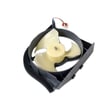
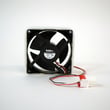
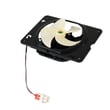
- Refrigerator ice maker evaporator fan DA97-12540A (airflow for ice room and cooling)
- Refrigerator water filter DA29-00019A (water quality and dispenser flow)
Last updated: February 2026
How to turn off Samsung ice maker RF263BEAESG?
To turn off the ice maker on your Samsung RF263BEAESG refrigerator, press the Ice Off button so the Ice Off indicator lights up; the ice maker will stop making ice. Use this when you have enough ice or want to save water and energy.
Steps to turn the ice maker off
- Tap Ice Off (do not hold it) until the Ice Off icon/indicator illuminates.
- Confirm ice production stops (no new cubes should be made).
- If you hear a water valve noise and the water line is not connected, turn Ice Off on to stop the noise.
- Keep hands and objects out of the dispenser opening and ice chute.
Button timing: Ice Off vs. Child Lock
On this model, the same button area can control more than one function depending on how long you press.
| What you want to do | What to press | How long to press | What you should see |
|---|---|---|---|
| Stop making ice | Ice Off | Less than 3 seconds | Ice Off indicator lights |
| Lock the dispenser controls | Child Lock | Hold 3 seconds | Child Lock icon lights |
Why it matters
Turning Ice Off on prevents unnecessary ice production, reduces water use, and helps avoid valve noise when the refrigerator is not connected to a water supply. It also helps prevent jams and spills when you are cleaning the ice bucket or dispenser area.
Helpful references and parts
- For the exact control panel layout and indicator icons for RF263BEAESG, use the RF263BEAESG owner's manual.
- If you are troubleshooting ice production (no ice, small cubes, clumping), we recommend our guide: why your Samsung fridge stopped making ice and how to fix it.
- If ice is backing up or leaking around the chute, a worn chute seal can contribute; check the refrigerator dispenser ice chute cap and gasket assembly DA97-12594A.
You can also find model-specific replacement parts for RF263BEAESG on this parts list, or search by model on Sears PartsDirect.
Last updated: February 2026
Why is my Samsung fridge not making ice in the bottom freezer?
For Samsung model RF263BEAESG, no ice from the bottom-freezer ice maker is usually caused by the ice function being turned off (NO ICE), a freezer temperature that is too warm, or restricted water flow from a clogged filter or weak inlet valve. Use the RF263BEAESG owner's manual to confirm the exact control settings.
Quick checks (fastest fixes)
- Make sure ice making is not set to NO ICE or otherwise turned off.
- Set the freezer colder; ice makers slow down or stop when the freezer is too warm.
- Wait at least 12 hours after installing or reconnecting the water supply before expecting ice.
- Keep freezer air vents clear; blocked air holes reduce cooling and can affect ice production.
- Pull out the ice bucket, wash with mild detergent, rinse, and dry completely; reinstall to prevent clumps and jams.
Run the built-in ice maker test
The manual procedure is:
- Remove the ice bucket.
- Press the test button on the right side of the ice maker.
- Do not press the test button continuously if the tray has ice or water; overflow or a jam can occur.
Water flow and parts that commonly cause “no ice”
If the test runs but the tray does not fill, focus on water supply.
- Replace an overdue filter: refrigerator water filter haf-qin/exp
- If dispenser water is weak or intermittent, check the valve: refrigerator water inlet valve DA62-04027A
Symptom guide
| What you see | Most likely cause | Best next step |
|---|---|---|
| No ice at all | Ice off, freezer too warm | Turn ice on; lower freezer temp |
| Small or hollow cubes | Low water flow | Replace filter; check inlet valve |
| Bucket jammed/clumped | Moisture, clumped ice | Clean and dry bucket thoroughly |
Why it matters
Ice makers need steady freezing temperatures and consistent water pressure. Fixing airflow blockages and restoring water flow prevents repeat ice jams and slow production.
For parts shopping beyond the list for RF263BEAESG, search by model number on Sears PartsDirect.
Last updated: February 2026