

How do I tell what model my Kenmore dryer is?
Your Kenmore dryer’s model number is printed on the appliance’s ID label; once you find it, match the full number exactly (for example, 11086427810) to get the right parts, diagrams, and troubleshooting info for your specific electric dryer.
Where to find the model number label
Check these common spots on Kenmore dryers:
- Inside the door opening on the front panel (most common)
- On the door frame itself
- On the back panel of the dryer cabinet
- Near the lint screen housing (some designs)
- Behind the lower access panel (if your dryer has one)
What to write down (so parts match)
Record the information exactly as shown on the label.
| Label item | What it’s used for | Example |
|---|---|---|
| Model number | Correct parts list and diagrams | 11086427810 |
| Serial number | Production run details | (varies) |
| Type (electric/gas) | Confirms correct troubleshooting path | Electric |
Quick tips to avoid ordering the wrong part
These steps prevent the most common mix-ups:
- Copy the entire model number, including all digits
- Use the model number (not the brand name) when searching parts
- If the label is worn, take a clear photo and zoom in to confirm digits
- Match the symptom to the right system (heat, drum drive, door switch, airflow)
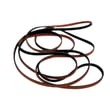
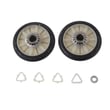
- When the dryer won’t tumble, compare common drive parts like the belt 341241 and dryer idler pulley WP691366
Why it matters
Kenmore model numbers can look similar, but small differences change the correct belt, motor, thermal fuse, or door switch. Using the exact model number helps us point you to the right replacement parts and the most accurate repair steps.
Last updated: February 2026
What is the average lifespan of 11086427810?
A Kenmore electric dryer like model 11086427810 typically lasts 13 years with normal household use and basic maintenance (lint removal, proper venting, and avoiding overloads). Keeping airflow strong is the single biggest factor in reaching that lifespan.
What affects dryer lifespan the most
- Vent restriction (long runs, crushed flex duct, clogged hood) raises heat and wear
- Lint buildup in the lint chute and blower housing reduces airflow
- Overloading strains the belt, drum support, and motor
- High heat cycles used constantly accelerate thermal wear
- Worn drum seals can cause rubbing, noise, and poor airflow
Quick maintenance checklist (monthly and yearly)
- Clean the lint screen before every load; replace a damaged screen if it no longer seals well (see screen W10874409).
- Check outside vent hood for strong airflow while running.
- Vacuum lint around the lint chute area and inside the cabinet as needed.
- Keep the dryer level so the drum rides correctly.
Common “end-of-life” symptoms vs. fixable issues
| Symptom | Often caused by | Typical fix |
|---|---|---|
| Drum will not turn | Worn belt or idler | Replace belt or idler pulley |
| Loud squeal or thump | Idler pulley, drum support wear | Replace worn rotating parts |
| Runs but no heat | Thermal cut-off, thermostat, wiring | Diagnose and replace failed heat-safety parts |
| Weak drying | Venting or lint restriction | Clean venting and internal lint paths |
Why it matters
A dryer that is close to its expected lifespan can still run reliably, but restricted airflow and overheating shorten life quickly and can also trip safety devices like the thermal fuse.
Last updated: March 2026
What replacement parts are most commonly needed for the 11086427810?
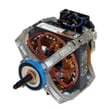
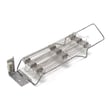
For Kenmore electric dryer model 11086427810, the most commonly replaced parts are the drive system components (belt and idler pulley) and airflow and heat-safety parts (thermal fuse, thermostat, thermal cut-off). These parts address the most frequent complaints: no tumble, noise, and no heat.
Most common replacement parts for this model
- Drive belt: belt 341241
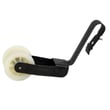
- Idler pulley (belt tensioner): dryer idler pulley WP691366
- Thermal fuse (no heat or will not run): fuse WP3392519
- Cycling or safety thermostat: thermostat WP694674
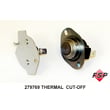
- Thermal cut-off kit (overheat protection): cut-off kit 279769
- Door switch (won’t start when door is closed): dryer door switch W10820036
Symptom-to-part quick guide
| Dryer problem | Parts to check first | Notes |
|---|---|---|
| Drum not turning, motor runs | Belt, idler pulley | Belt can break; idler can seize and shred belt |
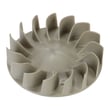
| Loud squeal or grinding | Idler pulley, blower wheel | A loose or damaged wheel can roar or vibrate |
| Runs but no heat | Thermal fuse, thermostat, cut-off kit | Overheating is often caused by poor venting |
| Won’t start | Door switch, thermal fuse | Also confirm power at the outlet and breaker |
Why it matters
Replacing the correct part the first time saves repeat tear-down. For example, a failed thermal fuse is often a result of restricted venting; fixing airflow helps prevent the new fuse from blowing again.
Helpful DIY testing tip
Before ordering electrical parts, we test continuity with a meter so we replace only what failed. The guide how to use a multimeter to test electrical parts video walks through the basics.
Last updated: March 2026