 Owner’s manual


What is the capacity of the Kenmore Elite washer?
The Kenmore Elite washer model 11047798800 is a front-load design; most Kenmore Elite front-load washers of this generation are typically about 4.0 to 4.5 cu. ft. capacity. For the exact rated capacity for your specific unit, check the model specifications in the 11047798800 owner's manual.
How to confirm the exact capacity on your washer
We recommend using the manual first because it lists the official specs tied to your model number.
- Look for a Specifications section (often near the front or back of the manual)
- Check for terms like capacity, tub volume, or IEC capacity
- Match the model number exactly: 11047798800
- If you are comparing units, note whether the spec is listed as DOE or IEC capacity
What “capacity” means in real-world loads
Capacity is a tub-volume rating; it helps you estimate what fits without overloading (which can cause poor cleaning, vibration, and longer cycle times).
| Load type | Typical fit for a 4.0 to 4.5 cu. ft. front-load washer | Best practice |
|---|---|---|
| Bath towels | Large towel loads | Leave space at the top for tumbling |
| Bedding | Many comforters and duvet inserts | Use Bulky/Bedding when available |
| Mixed laundry | A full hamper | Avoid packing items tightly |
Why it matters
Using the right load size helps your 11047798800 wash more efficiently and reduces unbalanced loads that can extend cycle time. The manual also notes cycles can run longer if the washer detects oversudsing or an unbalanced load.
Last updated: February 2026
How to hard reset a Kenmore Elite washer?
To hard reset your Kenmore Elite washer model 11047798800, unplug it (or switch off the breaker) for about 1 minute, then restore power. This clears many control glitches without changing the washer’s cycle options or settings stored in the control.
Quick reset steps (recommended)
- Press STOP twice to cancel the current cycle.
- Unplug the washer (or turn the breaker off).
- Wait 60 seconds.
- Plug back in (or turn the breaker on).
- Select a cycle and press START (hold about 1 second) to begin.
For model-specific control behavior and cycle cancel steps, follow the 11047798800 owner's manual.
If the washer is stuck mid-cycle
If the washer will not respond, we use the built-in cancel sequence first:
- Select STOP twice to cancel.
- If needed, select POWER.
- Re-select your cycle and options.
- Select and hold START (about 1 second) to restart.
Manual drain option
If the door stays locked because water level or temperature is high, the washer may drain before unlocking. You can also:
- Select STOP twice.
- Select POWER.
- Select DRAIN & SPIN.
- Select and hold START (about 1 second).
What a hard reset fixes (and what it does not)
| Symptom | Hard reset helps? | What to check next |
|---|---|---|
| Control panel frozen or unresponsive | Yes | Power supply, outlet, breaker |
| Cycle will not start after selecting options | Often | Door lock, cycle cancel steps |
| Error code like water inlet problems | Sometimes | Water supply, inlet screens, hoses |
| Leaks, banging, or vibration | No | Hoses, clamps, shock absorbers |
Why it matters
A hard reset is a fast, safe first step for electronic control glitches. If the issue returns quickly, the problem is usually not the control memory; it is commonly a door lock, water supply issue, or a mechanical problem that needs troubleshooting.
Last updated: February 2026
How to force a Kenmore Elite washer to drain?
To force your Kenmore Elite washer model 11047798800 to drain, cancel the current cycle and run Drain & Spin. On this model, we do that by pressing STOP twice, selecting POWER, choosing DRAIN & SPIN, then pressing and holding START for about 1 second. See the steps in the 11047798800 owner's manual.
Steps to manually drain (control panel method)
- Press STOP twice to cancel the wash cycle.
- Press POWER.
- Select DRAIN & SPIN.
- Press and hold START for about 1 second to begin draining.
- Wait for the spin to finish; the door unlocks when the cycle completes.
If the washer will not drain (quick checks)
If Drain & Spin starts but water stays in the drum, we check the most common causes first:
- Make sure the drain hose is not kinked, crushed, or pinched behind the washer.
- Confirm the standpipe or laundry tub drain is not clogged.
- Verify the drain hose is routed correctly; it should be secure but still allow an air gap.
- Inspect hoses for bulges, cuts, wear, or leaks and replace if needed.
- If you recently moved the washer, confirm the drain hose is not trapped in shipping clips.
Drain hose setup that prevents backflow
Improper drain hose routing can cause slow draining or water to siphon back into the washer.
| Setup detail | What we want | What to avoid |
|---|---|---|
| Standpipe/laundry tub connection | Hose secured with a strap and an air gap | Forcing excess hose deep into the standpipe |
| Hose shape | Natural curve over the form | Straightening the corrugated hose |
| Excess hose | Managed above the floor | Laying extra hose on the bottom of the tub |
Parts that can be involved when draining problems persist
If the issue is physical (leak, loose connection, or a hose problem), these model-matched parts are commonly related:
- Washer tub-to-pump hose WPW10467168 (internal drain path)
- Washer fill hose WP89503 (supply side, but leaks can mimic drain issues)
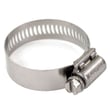
- Clamp WP285655 (helps seal hose connections)
Why it matters
Running Drain & Spin is the safest way to remove water because it uses the washer’s normal drain routine and helps the door unlock properly when the cycle is complete.
Last updated: February 2026
Is it worth repairing a Kenmore washing machine?
Yes, repairing a Kenmore Elite washer like model 11047798800 is usually worth it when the fix restores reliable operation for less than the cost of replacing the washer. It is especially worthwhile for common, repairable issues such as leaks, door sealing problems, or excessive vibration.
A practical repair vs. replace checklist
We use these factors to decide quickly:
- Age and condition: If the tub, drum, and cabinet are in good shape, repairs tend to pay off.
- Type of failure: Wear items (seals, hoses, clamps, door boot) are typically cost-effective repairs.
- Repeat problems: Frequent leaks or recurring error conditions can point to multiple worn parts.
- Labor complexity: Some repairs are straightforward; others require major disassembly.
- Performance needs: If you rely on features like Steam Sanitize, keeping the machine running can be a strong value.
Common repairs that are often worth it on this model
Front-load washers commonly develop leaks and door-seal issues. For model 11047798800, these parts are typical “high value” repairs:
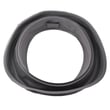
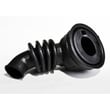
- Door boot leak or mold damage: bellow WP8182119
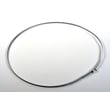
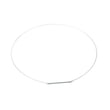
- Door boot clamp issues: washer door boot spring clamp WP8182210
- Tub-to-pump leak: hose WPW10467168
- Fill problems (slow fill, no fill): washer water inlet valve WPW10156253
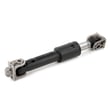
- Excessive shaking or banging: washer shock absorber W10822553
Cost and outcome comparison
| Situation | Typical outcome | Usually worth repairing? |
|---|---|---|
| Single leak (boot, hose, clamp) | Stops water damage risk quickly | Yes |
| Door not locking consistently | Restores safe operation | Often |
| Heavy vibration during spin | Improves stability and reduces “walking” | Often |
| Multiple major failures at once | Costs can stack up fast | Sometimes |
Why it matters
A targeted repair can prevent secondary damage (flooring, bearings, wiring) and keep cycles running correctly. This model’s cycle logic can extend time for oversudsing or unbalanced loads, so fixing the root cause helps performance and reduces repeat interruptions.
What we recommend before you decide
- Check troubleshooting and maintenance guidance in the owner's manual.
- Confirm the symptom (leak location, noise type, when it happens in the cycle).
- Price the likely parts first, then compare to replacement cost.
Last updated: February 2026
What is the average lifespan of a Kenmore washer?
Most Kenmore washers last 10 to 15 years. For a Kenmore Elite washer like model 11047798800, lifespan depends mainly on load size, how often you run cycles, and routine care; consistent cleaning and correct installation help you reach the full service life (or more). See the owner's manual for model-specific care and operating guidance.
Typical lifespan and what changes it
A washer’s life is usually determined by wear on the drive system, suspension, seals, and water-handling parts.
- Usage frequency: multiple loads per day shortens life faster than a few loads per week
- Overloading: increases stress on the motor, shocks, and tub support
- Detergent choice: using HE detergent helps prevent oversudsing and residue
- Leveling and stability: reduces vibration and “walking” that damages components
- Water quality and temperature: hot water and mineral buildup can accelerate seal and hose wear
Maintenance that extends washer life
These habits reduce common failure causes like oversudsing, leaks, and out-of-balance spinning.
- Use high-efficiency (HE) detergent and measure carefully
- Leave the door ajar between loads to help the bellow dry
- Wipe the door seal area and check for small items after each wash
- Keep the washer level to reduce vibration and suspension wear
- Don’t ignore early symptoms (new noises, small leaks, longer cycle times)
Common wear items you may replace over time
On front-load designs, leaks and vibration are two of the most common age-related issues.
| Symptom | Common cause | Example part for model 11047798800 |
|---|---|---|
| Water leaking at door | Torn or mold-damaged door bellow | Bellow WP8182119 |
| Excessive shaking or banging | Worn suspension | Washer shock absorber W10822553 |
| Door won’t lock or start | Failed door lock/latch | Latch WPW10253483 |
Why it matters
A washer that is maintained and kept stable runs quieter, cleans better, and avoids secondary damage (for example, a small door-seal leak can lead to corrosion or bearing wear if it’s left unchecked).
Last updated: February 2026


