
What company makes Craftsman air compressors?
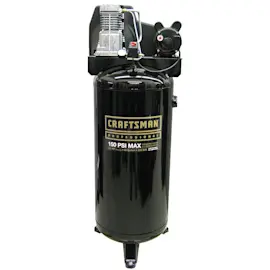
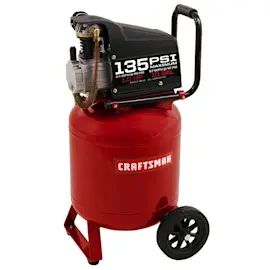
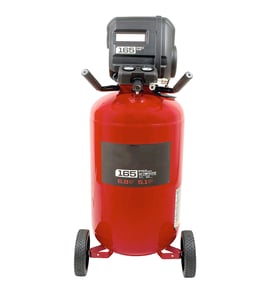
Craftsman is a brand, so Craftsman air compressors (including model 919165010) are built by different original equipment manufacturers (OEMs) depending on the model and production year. The most reliable way to identify the maker is to match the data plate details on your unit to the parts listing, or search by model on Sears PartsDirect.
Who actually manufactures Craftsman air compressors?
Craftsman has sourced air compressors from multiple OEMs over the years. Common OEM names you may see associated with Craftsman compressors include:
- DeVilbiss Air Power (common on many older Craftsman compressors)
- Campbell Hausfeld (seen on some older units)
- MAT Holdings / Alton Industries (common on many newer Craftsman air compressors)
Because OEM sourcing changes, the same Craftsman “look” can still have different internal parts (pump, pressure switch, regulator, gauges) across model numbers.
How to identify the manufacturer on your specific unit
Use the compressor’s data plate (usually on the tank or frame) and compare it to the model information.
- Confirm the full model number is 919165010
- Look for a manufacturing code, date code, or prefix on the label
- Note the voltage and motor specs (helpful when matching electrical parts)
- Check the pump style (oil-free vs. oil-lubricated) and regulator layout
- Use the exact model number when searching parts diagrams and lists
Quick check: what matters most
| What you’re checking | Why it matters | What to write down |
|---|---|---|
| Model number | Determines the correct parts list | 919165010 |
| Date code | Helps narrow OEM era | Month/year or stamped code |
| Pump type | Changes maintenance and rebuild parts | Oil-free or oil-lubricated |
| Electrical rating | Impacts switches and motors | Volts/amps |
Why it matters
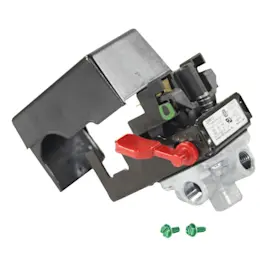
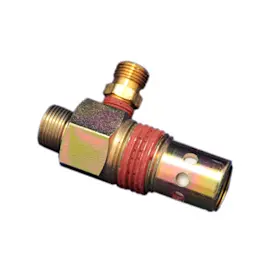
The OEM determines which replacement parts fit (pressure switch, check valve, regulator, gauges, pump components). Even small design differences can change thread sizes, cut-in/cut-out settings, and mounting patterns.
Related DIY help for Craftsman air compressor troubleshooting
If you are trying to identify the maker because the unit is failing, these guides help you narrow the system involved:
Last updated: February 2026
What is the most common cause of air compressor failure?
The most common cause of failure on a Craftsman air compressor like model 919165010 is poor maintenance that leads to overheating and accelerated wear. Dirty intake filters, restricted cooling airflow, moisture in the tank, and small air leaks force the pump and motor to work harder until a switch, valve, or pump component fails.
Most common failure drivers we see
- Overheating from blocked cooling fins, poor ventilation, or long run times
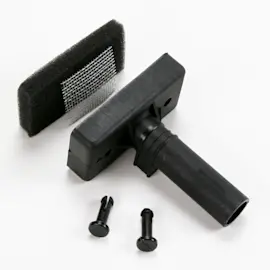
- Restricted intake airflow from a dirty or clogged air filter
- Moisture and corrosion from not draining the tank regularly
- Air leaks at fittings, hoses, regulator, or tank check valve
- Electrical issues such as a failing pressure switch, capacitor, or loose wiring
- Worn pump parts (seals, reed valves, piston ring) that reduce compression
Quick checks that prevent repeat failures
- Unplug the compressor; let it cool fully.
- Inspect and clean the intake area; keep vents and fins clear.
- Drain the tank after use; watch for excessive water or rust flakes.
- Listen for hissing; soap-test fittings to pinpoint leaks.
- Verify the pressure switch cycles normally (cuts in and cuts out consistently).
Symptoms and the most likely cause
| What you notice | Most likely cause | What to do first |
|---|---|---|
| Won’t start | Power issue, pressure switch, stuck pump | Follow air compressor won't start |
| Runs but won’t build pressure | Leak, worn valves/seals, bad check valve | Check leaks, then pump condition |
| Cycles rapidly or won’t regulate | Regulator or pressure switch problem | Inspect regulator and switch |
| Loud or getting louder | Loose mounts, worn pump, vibration | Review how to reduce air compressor noise |
Why it matters
Heat and restriction are the fastest way to shorten compressor life. When airflow is blocked or leaks are present, the motor draws more current and the pump runs hotter, which speeds up wear on valves, seals, and electrical controls.
For model-specific replacement parts, use the parts list for Craftsman 919165010, or search by model on Sears PartsDirect.
Last updated: February 2026
Are air compressor parts interchangeable?
Most parts on a Craftsman 919165010 air compressor are not interchangeable across brands or even across similar-looking models. Internal components (pump parts, valves, piston/seal pieces, pressure switch setups) must match the exact model design; only some external fittings and accessories are commonly standardized.
What’s usually interchangeable (and what isn’t)
Here’s the practical rule we use: internal parts are model-specific; external connections are sometimes standard.
- Often interchangeable (if size and style match):
- Quick-connect couplers and plugs (same “profile” and body style)
- Hose ends and adapters (matching thread type and size)
- Some regulators, gauges, and filters (if mounting and pressure range match)
- Usually not interchangeable:
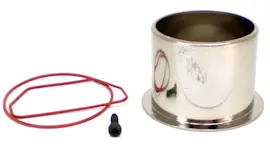
- Pump head components (valve plate, reed valves)
- Piston, cylinder, rings, seals
- Motor-to-pump mounting parts and flywheel/pulley setups
- Pressure switch configurations (cut-in/cut-out settings, port layout)
How to confirm compatibility before you buy
Use this checklist to avoid leaks, poor performance, or unsafe operation:
- Match the model number: 919165010 first
- Verify thread type (commonly NPT on many U.S. compressors) and thread size
- Confirm the connection style (male/female, swivel, compression, push-to-connect)
- Check pressure rating (PSI) for regulators, hoses, gauges, and safety-related parts
- Compare mounting orientation and port locations (especially switches and regulators)
Quick reference: internal vs. external parts
| Part area | Interchangeable? | What must match |
|---|---|---|
| Pump internals | Rarely | Exact pump design and mounting pattern |
| Pressure switch | Sometimes | Port layout, electrical rating, cut-in/cut-out range |
| Couplers/plugs | Often | Coupler “profile,” thread size/type |
| Gauges/regulators | Sometimes | Thread, range, mounting clearance |
Why it matters
Air compressors rely on sealed air paths and correct pressure control. A “close enough” part can cause constant air leaks, failure to build tank pressure, hard starting, or incorrect pressure regulation.
Helpful troubleshooting and repair resources
If you’re swapping parts because of a symptom, we recommend starting with these guides:
For model-based part matching and diagrams, search by model number on Sears PartsDirect.
Last updated: February 2026
Is it worth it to repair a compressor?
Yes, repairing a Craftsman air compressor model 919165010 is worth it when the problem is limited to common service parts (pressure switch, check valve, regulator, gauges, safety valve, fittings) and the total repair cost stays well below the price of a comparable replacement unit. If the pump or tank is the issue, replacement is usually the better value.
Quick decision checklist
- Repair it when it still builds pressure, but has a control or leak problem (switch, regulator, gauge, fittings).
- Repair it when the motor runs but performance is poor due to a likely valve or seal issue.
- Replace it when the tank won’t hold air or shows heavy corrosion.
- Replace it when the pump has major internal damage (scored cylinder, broken connecting rod) and needs a full rebuild.
- Replace it when it repeatedly trips breakers or overheats after basic electrical checks.
What typically drives the cost (and the outcome)
| What’s wrong | Typical fix type | Value outcome |
|---|---|---|
| Won’t start or won’t restart | Electrical/control diagnosis; switch or check valve is common | Often worth repairing |
| Won’t build tank pressure | Leak check; valve/seal/pump diagnosis | Depends on pump condition |
| Can’t adjust output pressure | Regulator issue or restriction | Often worth repairing |
| Tank leaks or won’t hold air | Tank integrity problem | Usually replace |
How we recommend you evaluate it
1) Identify the symptom first
Use a symptom-based path so you do not buy parts you do not need:
- Air compressor won't start
- Air compressor won't build tank pressure
- Air compressor air leaks
- Air compressor tank won't hold air
2) Compare repair scope to replacement scope
- Small-scope repair: one failed component, no recurring issues, normal pump sound.
- Large-scope repair: multiple symptoms, loud knocking, slow fill plus overheating, or repeated failures.
3) Consider downtime and safety
A compressor that cannot regulate pressure reliably or has a tank integrity concern is not a good repair candidate.
Why it matters
A targeted repair restores safe pressure control and reliable air delivery at a fraction of replacement cost; a major pump or tank failure turns into a high-cost repair with lower long-term reliability.
For parts lookup by model number, start with the parts list for 919165010 and search broader inventory on Sears PartsDirect.
Last updated: February 2026