Installation guide
 Owner’s manual


Can I look up Frigidaire parts by model number?
Yes. For your Frigidaire dryer model FEQB4000FS1, looking up parts by the full model number is the most reliable way to match the correct diagrams and compatible replacement parts, because small model-number differences can change belts, thermostats, and control components.
How to find the correct model number
Your dryer’s model and serial numbers are on the serial plate located on the left side of the door opening. Confirm the full model number before ordering parts, then keep it recorded for future repairs (see the FEQB4000FS1 owner's manual).
- Open the dryer door and locate the serial plate at the left side of the opening
- Write down the model number and serial number exactly as shown
- Use the full model number (including any suffix) when searching parts
- Compare the part name and part ID to what your symptom suggests
- If you are replacing a heating or safety component, match the exact part listing for your model
What you can typically look up with the model number
When you search by FEQB4000FS1, you can narrow results to the parts most commonly replaced on this dryer, such as:
- Drum drive parts (belt, idler)
- Drum support parts (bearing, felt seals, glides)
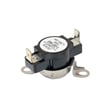
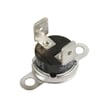
- Heating and temperature sensing parts (heating element, thermistor, thermal limiter)
- Door hardware (catch, strike)
- Electrical and control parts (control board)
Common examples for FEQB4000FS1
| Symptom | Part type to check | Example part for this model |
|---|---|---|
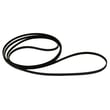
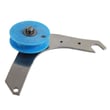
| Drum not turning | Drum belt | Frigidaire dryer drum belt 134503600 |
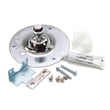
| Squealing or rumbling | Drum support | Dryer drum bearing kit, drum bearing, felt seals |
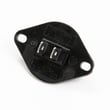
| No heat or overheating | Heat/safety controls | High-limit thermostat, thermal limiter, thermistor |
Why it matters
Model-number lookup prevents ordering the wrong revision of a part. That saves time, avoids repeat disassembly, and helps ensure safe operation, especially for heating and electrical components.
Last updated: February 2026
How much does it cost to replace a heating element in a Frigidaire dryer?
Replacing the heating element in a Frigidaire FEQB4000FS1 dryer costs the price of the part if you do it yourself, or the part price plus a service call and labor if you hire a technician. The exact total depends on local labor rates and whether an airflow or thermostat issue caused the failure.
What you pay for (and what changes the total)
A heating repair is usually a combination of parts and time. These are the cost drivers:
- Heating element assembly price (varies by supplier and availability)
- Service call/diagnostic fee (often separate from labor)
- Labor time to access the heater housing and reassemble the dryer
- Any additional failed safety parts from overheating
- Vent cleaning or vent rerouting if airflow is restricted
Common related parts for “no heat”
If the dryer overheated, a safety device can open and stop heat; fixing airflow first prevents repeat failures.
- Frigidaire dryer heating element assembly 131553900 (electric heat source)
- Dryer thermal limiter 134120900 (overheat safety device)
- Kelvinator dryer high-limit thermostat 3204267 (temperature limit control)
- Dryer thermistor 134587700 (temperature sensing)
Quick cost comparison (what’s included)
| Repair approach | Typically includes | You supply |
|---|---|---|
| DIY replacement | Part only | Tools, time, safe electrical shutoff |
| Professional repair | Part + diagnosis + installation | Access to dryer, model/serial info |
| Overheating correction | Heat repair + airflow fix | Vent cleaning or vent parts as needed |
Why it matters
A heating element often fails because of restricted airflow (lint buildup, crushed vent, long duct run). Correcting venting and confirming proper electrical supply helps the FEQB4000FS1 dry faster and prevents repeat heater and limiter failures.
What we recommend before ordering
- Confirm whether your dryer is electric or gas; the FEQB4000FS1 Use & Care Guide covers both types
- Check airflow at the outside vent and clean the lint screen housing
- Review vent diameter and duct length limits in the FEQB4000FS1 installation guide
- Use the troubleshooting section in the FEQB4000FS1 owner’s manual to rule out power supply issues (electric dryers can run but not heat on partial power)
Last updated: February 2026
How much is a control board for a Frigidaire dryer?
For the Frigidaire FEQB4000FS1 dryer, the control board price depends on the exact board your unit uses (main control vs. user interface). On this model’s parts list, the listed electronic control board is Dryer electronic control board 134484212, priced at about $250.49.
How to make sure you’re pricing the right control board
Control boards are easy to confuse because dryers can have more than one “board.” Use these checks before ordering:
- Match the model number on your dryer’s ID tag to FEQB4000FS1
- Confirm the symptom (dead display, won’t start, random beeping, no heat, etc.)
- Look for any stored error codes (if your dryer displays them)
- Compare the part ID on the old board (if visible) to the replacement listing
- Review wiring and console access steps in the FEQB4000FS1 owner’s manual
Common control-board types (what you might be shopping for)
| Board type | What it controls | Common symptoms |
|---|---|---|
| Electronic control board | Cycle logic, motor/heater commands, sensor inputs | Won’t start, stops mid-cycle, erratic operation |
| User interface board (console) | Buttons, display, selector inputs | Buttons don’t respond, display issues |
Related parts that can mimic a “bad board”
Before replacing a board, we typically rule out simpler failures that cause similar symptoms:
- Door not latching (check door strike and catch alignment)
- Overheat protection open (thermal limiter or high-limit thermostat)
- Temperature sensing issues (thermistor)
- Drive system problems that stop the cycle (belt or idler)
Model-matched examples from this dryer include the dryer thermal limiter 134120900 and dryer thermistor 134587700.
Why it matters
Ordering the wrong control board is one of the most expensive “guess-and-check” repairs on a dryer. Verifying the exact board and confirming the failure first saves time, avoids returns, and gets your FEQB4000FS1 drying reliably again.
Last updated: February 2026
What are common dryer part failures?
On the Frigidaire FEQB4000FS1 dryer, the most common part failures show up as no heat, long dry times/overheating, or no tumbling/noise. These problems usually trace back to the heating safety circuit (thermal limiter, thermostat, thermistor), airflow restrictions, or drum-drive wear parts like the belt and idler.
Most common failures and what you’ll notice
- No heat or weak heat: failed heating circuit parts, or restricted venting
- Dryer shuts off or smells hot: overheating from lint buildup or a safety device opening
- Drum won’t turn: broken belt or a failed idler/tensioner
- Squealing, scraping, thumping: worn drum bearing, glides, or felt seals
- Door won’t stay closed: worn latch components
Parts that commonly fail on this model
These are frequent replacement items we see for FEQB4000FS1 symptoms:
| Symptom | Likely part(s) | Example part for this model |
|---|---|---|
| Drum not turning | Belt, idler | Frigidaire dryer drum belt 134503600, dryer idler assembly 131863007 |
| Overheating, shuts down | Thermal limiter, high-limit thermostat | Dryer thermal limiter 134120900, kelvinator dryer high-limit thermostat 3204267 |
| Poor temperature control | Thermistor | Dryer thermistor 134587700 |
| Squeal/scrape noise | Drum bearing, bearing kit, felt seal | Dryer drum bearing 131825900, dryer drum bearing kit 5303281153 |
Quick checks before replacing parts
We recommend these safe, high-impact checks first (they prevent repeat failures):
- Clean the lint screen after every load (airflow is everything).
- Inspect the outdoor exhaust hood and remove lint buildup around the opening.
- Make sure nothing blocks ventilation air around the front/back of the dryer.
- If the cabinet feels unusually hot or cycles take too long, check for a crushed or clogged vent duct.
- If you service wiring, label wires before disconnecting and verify operation afterward.
Why it matters
Dryer failures often start as airflow problems; restricted venting can cause long dry times, overheating, and repeated thermal limiter or thermostat failures. Keeping the vent path clear protects the heating system and helps the dryer run efficiently.
For model-specific safety, maintenance, and troubleshooting steps, follow the FEQB4000FS1 owner’s manual and the FEQB4000FS1 installation guide.
Last updated: February 2026
Why is my Frigidaire dryer not drying?
If your Frigidaire FEQB4000FS1 dryer runs but clothes stay damp, the most common causes are restricted airflow (lint screen or vent), a heat problem (power supply on electric models or gas supply on gas models), or an overheat safety trip. Start with airflow checks first.
Quick checks we recommend first
- Clean the lint screen before or after every load.
- Check the outside exhaust hood for a strong, steady airflow while the dryer runs.
- Inspect the vent duct for kinks, crushing, lint buildup, or a stuck damper.
- Avoid overloading; tightly packed loads dry slowly.
- Confirm cycle and temperature settings match the fabric type (low heat can extend dry time).
- If the cabinet feels unusually hot or you smell hot air, stop and check venting immediately.
Heat and power: what to verify
Dryers can tumble normally but still not dry if heat is missing.
| What you notice | Likely area to check | What to do next |
|---|---|---|
| Drum turns, no heat (electric) | House power supply | Check that both legs of the 240V supply are present; a blown fuse or tripped breaker can leave the motor running but the heater off. |
| Drum turns, no heat (gas) | Gas supply and airflow | Make sure the gas shutoff valve is open and the room has adequate air supply. |
| Long dry times, dryer feels hot | Vent restriction | Clean/repair venting; restricted exhaust causes slow drying and overheating. |
When a safety device trips
Your FEQB4000FS1 can stop heating if an overheat safety opens. Vent restriction is the most common reason.
- If you suspect overheating, correct venting first.
- A failed safety device may need replacement after the airflow problem is fixed.
Helpful parts that are commonly involved in no-heat or overheating symptoms include the dryer thermal limiter 134120900 and the kelvinator dryer high-limit thermostat 3204267.
Why it matters
Good airflow is the foundation of drying performance. A clogged lint screen or restricted exhaust duct makes cycles take longer, wastes energy, and can overheat the dryer. For model-specific operating and care steps, follow the FEQB4000FS1 owner's manual.
Last updated: February 2026