Owner’s manual



What is the most common problem with a GE dryer?
The most common GE dryer complaint is poor drying performance: no heat, weak heat, or long dry times. On the GE DPGT750EC2WW electric dryer, the top causes are restricted airflow (lint buildup or a crushed vent) and a heat or safety component issue; use the built-in HELP Troubleshooter for guided checks in the DPGT750EC2WW owner's manual.
Most common issues we see (and what they usually point to)
- Long dry time: vent restriction, lint buildup in the duct, or overloaded/mixed-size loads
- Not heating or no heat: heating circuit problem (heater, thermostat, thermal cutoff) or power supply issue
- Dryer will not start: control panel asleep, door not fully latched, door switch issue, or power problem
- Stops mid-cycle or gets too hot: overheating from poor airflow, causing safety devices to open
- Squeaking during startup: drum support or belt-related wear
Quick checks first (fast, high-impact)
- Confirm airflow: strong, steady air at the outside vent hood while running.
- Clean lint path: lint screen, lint screen housing, and the transition duct behind the dryer.
- Check power (electric dryers): a tripped breaker can leave the dryer running but not heating; many electric dryers use two breakers/fuses.
- Wake the controls: if the panel is asleep, press POWER or touch the screen.
- Use the on-board Troubleshooter: press HELP, then select TROUBLESHOOTER, then choose the symptom (for example, LONG DRYTIME or NOT HEATING OR NO HEAT).
Parts that commonly relate to these symptoms on DPGT750EC2WW
| Symptom | Common area | Example part on this model |
|---|---|---|
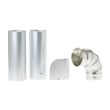
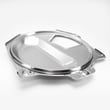
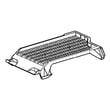
| Long dry time | Exhaust ducting/airflow | Duct assembl WE14X10064 |
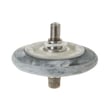
| Squeaking or drum not turning properly | Drum drive | Dryer drum belt WE12X10011 |
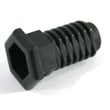
| Won’t start when door closes | Door latch/switch circuit | Latch body WE01X10187 |
Why it matters
Restricted airflow is the root cause behind many “no heat” and “takes forever to dry” complaints because it traps heat in the cabinet, reduces moisture removal, and can trigger safety shutoffs. Keeping the venting correct also helps protect the heater and controls.
You can order replacement parts for your GE DPGT750EC2WW from the parts list for this model, or search by model number on Sears PartsDirect.
Last updated: February 2026
Does eco dry on dryer save electricity?
Yes. On the GE DPGT750EC2WW electric dryer, Eco Dry typically saves electricity by using lower heat and longer run time, and by targeting a normal dryness level instead of overdrying. For the exact Eco Dry behavior and cycle options, follow the cycle guidance in the DPGT750EC2WW owner's manual.
How Eco Dry saves energy
Eco-focused cycles reduce energy use mainly by cutting heater wattage and avoiding extra minutes after clothes are already dry.
- Uses lower temperature settings more often
- Extends cycle time to dry gently with less heat
- Reduces overdrying by aiming for a normal dryness target
- Works best with properly sorted loads (similar fabric weights)
- Performs best when airflow is strong (clean lint screen and venting)
Settings that make the biggest difference
Your manual notes that a normal dryness level is the preferred choice for energy saving. Use these habits to maximize savings:
- Choose DRY (normal) dryness level instead of MORE DRY for most loads
- Use the lowest temperature that still dries the load (MEDIUM or LOW for many fabrics)
- Run full loads (without packing the drum tight)
- Clean the lint screen before every load
- Keep the exhaust path clear; restricted airflow increases time and energy
Quick comparison
| Option | Typical result | Energy impact |
|---|---|---|
| Eco Dry | Longer cycle, lower heat | Lowest overall use for many loads |
| Regular/Timed high heat | Faster cycle, higher heat | Higher use, more overdry risk |
| “More Dry” target | Extra dryness | Higher use due to added heat/time |
Why it matters
Dryers use the most electricity when the heating system runs at high output and when cycles continue after clothing is already dry. Eco Dry and a normal dryness target help reduce both, which lowers operating cost and is gentler on fabrics.
Parts and resources we recommend
If drying times are getting longer (even on Eco Dry), airflow or drum movement issues can drive up energy use.
- Review cycle and dryness settings in the DPGT750EC2WW owner's manual
- If the drum is not tumbling correctly, check the dryer drum belt WE12X10011
- For broader part lookup by model number, use Sears PartsDirect
Last updated: February 2026
What size dryer do I need for a 4.5 cu ft washer?
For a 4.5 cu ft washer, we recommend choosing a dryer with at least a similar capacity, and ideally slightly larger (about 7.0 cu ft or more) so full loads tumble freely and dry evenly. For your GE DPGT750EC2WW, also plan for the correct installation clearances and venting.
Recommended dryer capacity for a 4.5 cu ft washer
A 4.5 cu ft washer typically pairs best with a 7.0 to 8.0 cu ft dryer. That size range helps prevent overdrying, long dry times, and wrinkling caused by restricted airflow and poor tumbling.
- Minimum match: 4.5 cu ft (works, but you may need smaller loads)
- Best everyday match: 7.0 to 8.0 cu ft
- If you wash bulky items often: 8.0 cu ft or larger
Fit and installation planning (DPGT750EC2WW)
Capacity is only part of the decision. Your installation space and venting setup can affect performance just as much.
From the GE DPGT750EC2WW installation information in the owner's manual, plan for these common requirements:
- Minimum clearances (non-alcove/closet): 0 in. sides, 1 in. front, 3 in. rear
- Alcove/closet installs: dryer must vent outdoors; allow 0 in. sides and 3 in. front and rear
- Vent ducting: use 4-inch metal duct; keep the run as short and straight as possible
- Total vent length: keep under 150 equivalent feet to avoid long dry times and excess lint buildup
Quick comparison table
| Washer size | Recommended dryer size | What you gain |
|---|---|---|
| 4.5 cu ft | 7.0 to 8.0 cu ft | Better tumbling, faster drying, fewer wrinkles |
| 4.5 cu ft | 4.5 to 6.0 cu ft | Works with smaller loads, more load-splitting |
Why it matters
When the dryer is too small for the washer’s typical load, clothes cannot tumble properly. That leads to longer cycles, uneven drying, and more wear on components like the drum belt. If you are maintaining this dryer, common wear items include the dryer drum belt WE12X10011.
You can order replacement parts for GE DPGT750EC2WW from the parts list for this model, or search by model number on Sears PartsDirect.
Last updated: February 2026