Owner’s manual
 Error Codes


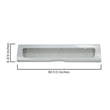
How to remove bottom grill from KitchenAid refrigerator?
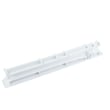
On the KitchenAid KBFS25ECMS00 bottom-mount refrigerator, the bottom grill (toe kick) typically pulls straight forward to release from the lower frame clips. Once it pops free, lift it away; to reinstall, align it on the lower frame and press until it snaps back into place. See the KBFS25ECMS00 owner's manual for model-specific access points and handling notes.
- Open both refrigerator doors for clearance.
- Grip the grill at both ends near the outer corners.
- Pull straight forward with steady pressure to pop it off the retaining clips.
- If it feels stuck, work side-to-side slightly while continuing to pull forward (avoid twisting hard).
- Set the grill aside where it will not get stepped on or warped.
- Check for shipping tape, dried spills, or debris along the top edge of the grill.
- Look for any screws at the ends or underneath (some toe kicks use screws instead of only clips).
- Warm the area slightly with a towel dipped in warm water if grime is acting like glue; then pull forward again.
- Line up the grill tabs with the slots on the lower frame.
- Press along the length of the grill until you hear or feel the clips snap in.
- Confirm it sits flush and does not rub the doors.
| What you see | What it usually means | What to do |
|---|---|---|
| Grill pops off easily | Clip-on toe kick | Pull straight forward |
| Grill moves but will not release | Tabs hung up or debris | Wiggle gently, clean edges |
| Visible screws | Screw-mounted toe kick | Remove screws first |
Removing the toe kick gives you access for cleaning, leveling checks, and inspecting for airflow restrictions or water drips near the front base.
Last updated: February 2026
What are the disadvantages of a bottom freezer?
For a KitchenAid KBFS25ECMS00 bottom-mount refrigerator, the main disadvantages of a bottom freezer are convenience and access: you typically bend more to reach frozen food, deep drawers can hide items, and heavy loads (like bulk meats or ice) are harder to lift out compared to a top-freezer design.
- More bending and lifting: frozen items sit low, so frequent freezer use can be less comfortable.
- Deep-drawer organization: food can stack and get forgotten at the bottom.
- Heavier drawer operation: a fully loaded freezer drawer can feel stiff or hard to pull smoothly.
- More door-open time: searching through a drawer often keeps the freezer open longer.
- Potential for drain and frost hassles: bottom-freezer layouts can be more sensitive to blocked drains or ice buildup if airflow is restricted.
| Feature | Bottom freezer | Top freezer |
|---|---|---|
| Fresh food access | Easier (eye-level shelves) | Requires more bending for fridge items |
| Freezer access | More bending | Easier reach |
| Organization | Drawer stacks can hide items | Shelves/bins often easier to see |
| Handling heavy items | Harder to lift up/out | Easier to lift down/out |
If your household uses the freezer multiple times a day, the extra bending and “digging” through a deep drawer can add up. If you use fresh-food shelves more often, a bottom-mount like the KBFS25ECMS00 can still be the better day-to-day layout.
- Keep everyday items in the upper basket or top layer.
- Use small bins to group foods (breakfast, snacks, frozen veggies).
- Avoid overpacking; leave space for airflow to reduce frost issues.
- If you notice warm temps or poor circulation, check the evaporator fan area; the how to fix your evaporator cooling fan guide helps you understand common symptoms.
- For model-specific use and care guidance (controls, loading, cleaning), follow the KBFS25ECMS00 owner's manual.
Last updated: February 2026
What's the average lifespan of a KitchenAid refrigerator?
Most KitchenAid refrigerators last about 14 years on average. A realistic lifespan range is 10 to 17 years, and your KitchenAid KBFS25ECMS00 can reach the higher end when the condenser area stays clean, doors seal tightly, and cooling or water issues are fixed early (before they strain the compressor).
Refrigerator life is mostly driven by compressor run time, airflow, and door sealing.
- 10 to 12 years: more frequent repairs start (fans, sensors, valves)
- 13 to 17 years: common “good run” with routine maintenance
- 17+ years: achievable when temperatures stay stable and seals stay strong
These are the highest-impact habits for a bottom-mount KitchenAid refrigerator like the KBFS25ECMS00:
- Keep the condenser area clean so heat can leave the system efficiently
- Confirm doors close easily and fully; avoid overloading door bins
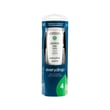
- Replace the water filter on schedule; use the correct fit like the refrigerator filter EDR4RXD1
- Fix warm spots or frosting early; evaporator airflow problems can snowball
- Keep freezer drawers sealing and sliding smoothly so the door is not held open
| What you notice | What it often means | What to do first |
|---|---|---|
| Temps swing, food spoils faster | Sensor or airflow issue | Check vents, then test the thermistor |
| Frost buildup, noisy fan | Evaporator fan problem | Inspect fan area and airflow |
| Water dispenses slowly or tastes off | Filter restriction | Replace filter and flush lines |
| Condensation around doors | Gasket not sealing | Clean and reshape gasket, then recheck seal |
Replacing a worn part early often prevents bigger failures.
- Temperature sensing: refrigerator thermistor W10316760
- Evaporator airflow: refrigerator evaporator motor W11024089
- Water system reliability: refrigerator water inlet valve assembly WPW10420083
- Door sealing: whirlpool refrigerator door gasket (gray) W10443320
A refrigerator that runs warm, leaks air, or has restricted water flow typically runs longer and harder. That extra run time increases wear on the sealed system (including the compressor), which is the most expensive area to repair.
For model-specific care steps and cleaning intervals, follow the owner's manual.
Last updated: February 2026
What is the most common problem with KitchenAid refrigerators?
For KitchenAid refrigerators like model KBFS25ECMS00, the most common problems we see are cooling issues (fresh food too warm or freezer too warm), ice maker and water dispenser troubles, and water leaks or frost buildup. These symptoms usually trace back to airflow, defrost-drain, or water-supply components.
- Fridge not cooling evenly: restricted airflow, evaporator fan problem, or a temperature sensor issue
- Freezer too warm: evaporator fan not moving air, frost blocking airflow, or a damper not opening correctly
- Ice maker not making ice: low water flow, a clogged filter, or a valve problem
- Water leaking inside or under the unit: clogged/iced defrost drain or water line/valve seepage
- Noisy operation: fan blade rubbing ice, worn fan motor, or vibration from panels/shelves
- Confirm temperatures: set freezer near 0°F and refrigerator near 37°F.
- Check door sealing: look for gaps, torn gasket areas, or doors not closing on their own.
- Listen for the evaporator fan: it should run when the compressor is running (door switch may need to be pressed).
- Inspect for frost on the back freezer panel: heavy frost often signals a defrost or airflow problem.
- Check water flow at the dispenser: weak flow often points to a filter restriction or supply issue.
If your troubleshooting points to a specific system, these are common repair paths for this model:
| Symptom | Common cause | Example part on this model page |
|---|---|---|
| Weak water flow, poor ice production | Clogged filter | Refrigerator filter EDR4RXD1 |
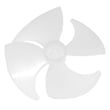
| Warm temps, noisy freezer, poor airflow | Evaporator fan motor or blade issue | Refrigerator evaporator motor W11024089 and refrigerator evaporator fan blade WP2169142 |
| Temps swing up and down | Sensor (thermistor) reading wrong | Refrigerator thermistor W10316760 |
| Ice maker or dispenser not filling well | Water inlet valve not opening fully | Refrigerator water inlet valve assembly WPW10420083 |
Cooling, ice, and leak complaints often share the same root causes: airflow (evaporator fan, damper, frost blockage) and water flow (filter, inlet valve). Fixing the underlying cause protects food temperatures, reduces frost buildup, and prevents repeat failures.
For model-specific operating tips and feature details, use the KBFS25ECMS00 owner's manual.
Last updated: February 2026