Owner’s manual
 View engine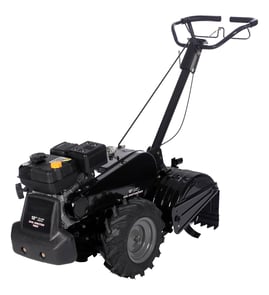



How to lubricate a tiller?
For the Craftsman 917293493 rear-tine tiller, lubrication is routine maintenance: keep the key pivot points oiled and grease the right-hand gear case once per season. This reduces wear on the transmission, wheels, and controls and helps the tiller operate smoothly.
What to lubricate on model 917293493
Use the lubrication points shown in the 917293493 owner's manual. Focus on these common service points:
- Throttle control linkage (light oil)
- Depth stake pin (light oil)
- Idler bracket pivot (light oil)
- Wheel hubs (light oil)
- Shield hinges (light oil)
- Right-hand gear case grease fitting (grease)
What to use (oil vs. grease)
The manual calls out two lubricant types for this tiller:
| Location | What to use | How often |
|---|---|---|
| Linkages, pins, pivots, hinges | SAE 30 or 10W-30 motor oil | Check before use; reapply as needed |
| Right-hand gear case grease fitting | EP #1 grease (about 1 oz.) | Once per season |
Quick steps (safe, clean, and effective)
- Shut the engine off and let the muffler cool.
- Disconnect the spark plug wire.
- Wipe dirt off each lube point first so grit does not get pulled into moving parts.
- Apply a few drops of oil to pivots and pins; work the control/part to spread it.
- Pump EP #1 grease into the right-hand gear case fitting (about 1 oz.) once per season.
- Wipe off excess to reduce dirt buildup.
Why it matters
Proper lubrication prevents premature wear in the transmission and control pivots, helps the drive system engage smoothly, and supports longer belt and chain life. It also helps you avoid performance issues that look like “slipping” or “dragging” during tilling.
Last updated: February 2026
How often should I change the oil in my tiller?
For your Craftsman rear-tine tiller model 917293493, we change the engine oil every 50 hours of operation or at least once a year, whichever comes first. We also check the oil level before starting and after every 5 hours of continuous use; see the maintenance schedule in the 917293493 owner’s manual.
Recommended oil-change schedule
Use this as a simple rule set for normal homeowner use:
- Change oil every 50 hours of run time
- Change oil at least annually even if you do not reach 50 hours
- Check oil before each use
- Recheck oil after every 5 hours of continuous operation
- Change oil more often in heavy load, high heat, dusty, or dirty conditions
Quick reference table
| Usage condition | Oil change interval | Extra checks |
|---|---|---|
| Normal gardening | Every 50 hours or yearly | Check before each use |
| Heavy load or high temperatures | More often than 50 hours | Check level more frequently |
| Dusty or dirty soil | More often than 50 hours | Inspect air cleaner more often |
How we change the oil (high-level steps)
Follow the procedure in the 917293493 owner’s manual; these are the key points that prevent messes and engine wear:
- Park the tiller on a level surface
- Drain oil when the engine is warm (it flows out better)
- Use a funnel and a suitable drain pan
- Remove the drain plug, tip the tiller forward to drain, then reinstall and tighten the plug
- Refill with a high-quality detergent oil meeting API SF-SJ; choose SAE viscosity for your temperature range
Why it matters
Fresh oil protects internal engine parts from heat and wear. Sticking to the 50-hour or yearly interval helps your Craftsman tiller start easier, run smoother, and last longer, especially when you work in tough soil.
Last updated: February 2026
Where is the model number on a Craftsman rear tine tiller?
On the Craftsman rear-tine tiller model 917293493, the model number is printed on the tiller’s ID label; it’s commonly located on the tine shield/tine guard area or on the front of the mainframe. Use the location diagrams in the 917293493 owner's manual to match what you see on your machine.
Common places to check first
- Tine shield or tine guard (near the rotating tines)
- Front of the mainframe (forward-facing frame area)
- Side of the mainframe near the wheel/tire area
- Near the engine mounting area (on the frame, not on the engine)
- Control panel area (less common, but worth a quick look)
What the label looks like (and what to write down)
The ID label typically includes the model number and may also list basic specs (for example, this model is a rear tine tiller with dual rotating tines). Record these items exactly as shown:
| Item on label | Example for this tiller | Why you need it |
|---|---|---|
| Model number | 917.293493 (often shown without the dot as 917293493) | Ensures correct Craftsman parts lookup |
| Product type | Rear tine tiller | Helps confirm you are on the right parts diagram |
| Engine model | May be listed separately on the engine tag | Used for engine-specific parts (filters, carb parts) |
Tips if the label is dirty or hard to read
- Brush off loose soil, then wipe with a damp rag and mild soap.
- Use a flashlight at a low angle to make faint printing easier to see.
- Take a close-up photo and zoom in to read worn characters.
Why it matters
Craftsman tillers often share similar frames and decals across multiple models; using the exact model number (917293493) prevents ordering the wrong drive belt, clutch cable, or tine hardware.
Last updated: February 2026
What is the bar on the back of a tiller for?
On the Craftsman rear-tine tiller model 917293493, the bar at the back is the drag stake (often called a drag bar). We use it to control forward speed and help the tiller “hold back” so the tines can dig at a steady pace; it also helps stabilize the tiller while tilling.
What the drag stake does (and when to raise or lower it)
- Controls forward speed in the forward-rotating till position.
- Helps the tines bite into soil by resisting forward movement.
- Improves stability so the tiller does not surge or bounce.
- Works with the depth stake; depth controls how deep you dig, drag controls how fast you move.
- Changes by tine mode:
- Raise it for counter-rotating tilling.
- Lower it for forward-rotating tilling.
For the exact control locations and operating positions, follow the diagrams and instructions in the 917293493 owner’s manual.
How to adjust it (basic steps)
- Shut the engine off and wait for all moving parts to stop.
- Pull the lock pin and remove the clevis pin.
- Move the drag stake up or down to the hole that matches your soil conditions.
- Reinstall the clevis pin, then secure it with the lock pin.
Quick guide: drag stake vs. depth stake
| Adjustment | What it changes | Typical symptom if set wrong |
|---|---|---|
| Drag stake | Forward speed and control | Tiller “runs away” (too high) or stalls/digs too aggressively (too low) |
| Depth stake | How deep the tines dig | Skips on top (too shallow) or bogs down (too deep) |
Why it matters
A properly set drag stake makes tilling safer and cleaner: it reduces sudden lurching, helps produce a more even seedbed, and prevents overloading the drive system when soil is hard or rocky.
Last updated: February 2026
What tiller is made in the USA?
Some tillers are made in the USA, but it varies by brand and even by specific model and production year. For your Craftsman rear-tine tiller model 917293493, the best way to confirm country of origin and factory details is to check the product identification information in the 917293493 owner's manual.
USA-made tiller brands you can shop for
These brands are commonly associated with USA manufacturing for certain tiller lines (availability can vary by model):
- Mantis (often associated with manufacturing in Pennsylvania)
- Northwest Tillers (heavy-duty, farm-focused tillers)
- MacKissic (Merry Tiller)
- Power Dog (often associated with Indiana-based manufacturing)
- Land Pride (some models assembled in the USA)
How to confirm if a specific tiller is USA-made
We recommend verifying the exact unit, not just the brand name. Use these checks:
- Look for a data plate or model/serial label on the tiller frame
- Match the model number and serial number to the documentation
- Check the engine label separately (engines can be sourced differently than the tiller chassis)
- Review the manual for identification and specifications
- If you are buying used, ask for a photo of the label before purchasing
Quick comparison: “Made in USA” vs “Assembled in USA”
| Label wording | What it usually means | What to verify |
|---|---|---|
| Made in USA | Product is manufactured domestically under applicable labeling rules | Model/serial label and manufacturer statement |
| Assembled in USA | Final assembly is domestic; parts may be imported | Assembly location and major component sourcing |
| Designed in USA | Engineering is domestic; manufacturing may be elsewhere | Actual manufacturing country on the data plate |
Why it matters
Country of origin can affect parts sourcing, service support, and long-term maintainability. For example, wear items like belts and cables are routine replacements on rear-tine tillers; using the correct model number helps ensure you get the right match.
Last updated: February 2026
Are Craftsman rear tine tillers any good?
Yes. Craftsman rear-tine tillers like model 917293493 are built for serious soil work; the owner’s manual positions this unit as a 7.0 HP, 19-inch tine-width tiller with dual rotating tines, which is a strong setup for breaking new ground when it’s maintained and adjusted correctly (see the 917293493 owner’s manual).
What “good” looks like in real use
A rear-tine tiller earns its keep when it can pull itself forward, stay controllable, and keep digging without constant belt or cable issues.
Common signs your tiller is performing well:
- Tines bite consistently without excessive bouncing
- Drive engages smoothly and holds under load
- Handles stay stable without excessive flex
- Soil is chopped and mixed, not just scratched
- No burning belt smell during normal tilling
What to watch for (durability and design pain points)
Some owners judge a tiller harshly when normal wear items are ignored or when the drive system is out of adjustment.
Pay attention to these areas first:
- Drive belt wear or slipping (a worn belt reduces power to the tines)
- Clutch/drive cable adjustment (manual guidance targets about 5/8-inch cable stretch when engaged)
- Tine wear and tine gap (manual notes replacing or straightening if the gap exceeds 3-1/2 inches)
- Loose fasteners, especially around guards and mounting points
- Operating too deep too fast (the manual warns against overloading capacity)
| Area | What you’ll notice | Typical fix |
|---|---|---|
| Drive engagement | Tines stop under load | Adjust cable; inspect belt |
| Tilling depth | Shallow digging | Check tine wear; slow down |
| Control/handling | Unit lunges forward | Reduce depth; maintain firm stance |
Parts that commonly affect performance
If performance drops, these model-matched parts are frequent culprits:
- Husqvarna rear-tine tiller drive belt 591372401 (slipping, glazing, cracking)
- Tiller clutch cable 532110675 (stretch, binding, poor engagement)
Why it matters
A rear-tine tiller is only “good” when the drive system and tines are in spec. Keeping the belt, cable tension, and tine condition right makes the machine easier to control, safer in hard ground, and more productive per pass.
Last updated: February 2026
Why are the tines on my tiller not turning?
On Craftsman rear-tine tiller model 917293493, the tines usually stop turning because the drive is not engaged for tilling (shift lever in F transport/forward), a broken tine shear pin, or a loose/off drive belt or misadjusted drive control cable. Use the 917293493 owner's manual to confirm the correct lever positions and adjustments.
Quick checks (most common)
- Make sure the shift lever is in the till position, not F (forward/transport); in F, the tiller can move but tines will not turn.
- Hold the drive control bar against the handle when you want the tines to drive.
- If the tines hit a rock or root and suddenly stopped, inspect for broken tine shear pins (they are designed to break to protect the transmission).
- Check the drive belt for slipping, damage, or being off the pulleys; replace if worn (see husqvarna rear-tine tiller drive belt 591372401).
- Check drive control cable tension; the manual procedure targets about 5/8 inch of cable stretch with the drive control bar engaged.
Step-by-step: what to inspect
- Set controls correctly: throttle to FAST for deep tilling; shift lever to the till mode you want.
- Look at the tines and tine shaft: if one side turns and the other does not, a shear pin is the first suspect.
- Inspect the belt path: remove the belt cover and verify the belt is seated on the engine/transmission pulleys.
- Check cable adjustment: if the belt and pulleys look OK but it still slips, increase cable tension per the manual.
Symptoms and likely causes
| What you see | Most likely cause | What we do next |
|---|---|---|
| Tiller moves, tines never turn | Shift lever in F transport/forward | Shift to till position |
| Tines stopped after impact | Shear pin(s) broken | Replace shear pin(s) shown in parts list |
| Tines try to turn, then stop/slip | Belt worn, loose, or off pulleys | Inspect/replace belt; check pulleys |
| Works only when you pull hard on handle | Cable out of adjustment | Adjust cable to spec |
Why it matters
Running the engine with the drive partially engaged can overheat and wear the belt, and forcing the tines when something is jammed can damage the gearbox. Shear pins are meant to fail first, so checking them early prevents bigger repairs.
Last updated: February 2026
How much does a Craftsman rear tine tiller weigh?
The Craftsman rear-tine tiller model 917293493 is a heavy, full-size rear-tine unit; most rear-tine tillers in this class weigh roughly 150 to 250 lb depending on engine, transmission, and accessories. For the exact listed weight for your unit, check the specifications section in the 917293493 owner’s manual.
What changes the weight on a rear-tine tiller
Even when the model number matches, the weight you handle can vary based on setup and condition.
- Fuel level and engine oil in the crankcase
- Added counterweights or accessory kits
- Tines installed (standard vs. replacements) and any packed soil
- Belt guard, shields, and hardware installed vs. removed for service
- Transport configuration (handle folded, depth stake position)
How we recommend estimating weight for moving or loading
Use a method that matches how you will actually transport the tiller.
- Remove caked-on dirt from tines and shields
- Drain fuel for transport if required by your carrier or storage plan
- Remove add-ons you will not move (counterweights, attachments)
- Weigh it on a platform scale; or weigh one end at a time and add the results
Quick reference table
| Scenario | Weight to plan for | Notes |
|---|---|---|
| Lifting into a truck | 150 to 250 lb | Plan for ramps and a helper or winch |
| Rolling up a ramp | 150 to 250 lb | Ramp rating matters more than lift strength |
| Shipping or freight | 175 to 275 lb | Packaging and pallet can add significant weight |
Why it matters
Weight affects traction and tilling stability, and it determines safe loading requirements such as ramp capacity, tie-down rating, and whether you need a winch or additional help.
Last updated: February 2026