Installation guide
 Owner’s manual



What's the average lifespan of a Maytag washer?
Maytag washers typically last 10 to 13 years with normal household use. With consistent maintenance (proper loading, routine cleaning, and quick repairs), it’s common to see around 14 years; heavy daily use and poor care shorten lifespan.
- Average range: 10 to 13 years
- Well-maintained units: about 14 years
- Heavy use (large family, daily loads): often closer to 8 to 10 years
- Light use (few loads per week): often 12+ years
| Usage pattern | Typical lifespan | What usually wears first |
|---|---|---|
| Light use | 12 to 15 years | Lid/door switch, drain pump, hoses |
| Normal use | 10 to 13 years | Drive components, suspension, bearings |
| Heavy use | 8 to 10 years | Bearings, transmission/drive, motor, control |
- Don’t overload; overloading strains the drive system and tub bearings.
- Use the right detergent amount (especially HE detergent in HE machines) to reduce residue.
- Leave the lid/door open after loads to help prevent odor and mildew.
- Clean the dispenser areas and run periodic cleaning cycles (or a hot cycle) to reduce buildup.
- Replace worn hoses proactively to prevent leaks and water damage.
- Loud roaring or grinding during spin (often bearings)
- Frequent out-of-balance errors or excessive shaking
- Water leaks from the tub area or recurring drain problems
- Repeated electrical/control issues (random stopping, no response)
Knowing the typical lifespan helps us decide whether a repair is a smart investment. If your washer is near the 10 to 13-year mark, comparing repair cost versus replacement value is the fastest way to avoid repeat breakdowns.
For model-specific care and cleaning guidance, follow the maintenance section in the MED8000AW0 installation guide.
Last updated: February 2026
What is the capacity of the MED8000AW0?
The Maytag MED8000AW0 is a full-size electric dryer; most dryers in this class are typically around 7.0 cu. ft. capacity. For the exact capacity rating for your specific MED8000AW0, we recommend confirming it in the owner's manual.
We use the capacity spec to match cycle expectations (bulky items, bedding) and to avoid overloading, which can cause long dry times.
- Check the specifications section in the owner's manual
- Look for terms like “drum capacity” or “capacity (cu. ft.)”
- If you are comparing models, use capacity along with drum size and cycle type (sensor vs timed)
- Avoid using washer capacity as a substitute; dryer capacity is a separate spec
Capacity affects airflow and tumbling space. When the drum is overloaded, clothes cannot tumble freely, so drying takes longer and temperatures can run higher than normal.
- Clothes still damp at end of cycle
- Loads take multiple cycles to dry
- Excess lint buildup and reduced airflow
- More wrinkling and uneven drying
| Dryer type | Typical capacity range | Best for |
|---|---|---|
| Compact electric dryer | 3.4 to 4.0 cu. ft. | Apartments, small loads |
| Full-size electric dryer (like MED8000AW0) | 7.0 to 8.0 cu. ft. | Family loads, bedding |
| Extra-large capacity | 8.0+ cu. ft. | Large comforters, heavy laundry |
Long dry times are often airflow-related rather than capacity-related. For MED8000AW0, we focus on venting and heat control first.
- Clean the lint screen every load
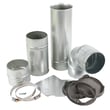
- Check the vent path for kinks, crushing, or heavy lint buildup
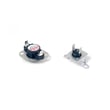
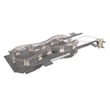
- If the dryer runs but does not heat correctly, common service parts include the dryer heating element WP8544771 and the dryer thermal cut-off fuse kit 279973
Last updated: February 2026
What does code 800 mean?
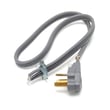
On a Maytag MED8000AW0 electric dryer, “code 800” is not a standard dryer fault code; it most often points to an electrical supply or installation issue (power cord, outlet, grounding, or wiring configuration) rather than a failed dryer part. Use the installation guide to confirm the correct power supply and connection method.
- Verify the dryer is on a dedicated 30-amp circuit (typical for electric dryers).
- Confirm you have the correct supply type: 120/240V, 60 Hz (some installations use 120/208V if shown on the rating plate).
- Do not use an extension cord.
- If the home was built after 1996, remodeled after 1996, or it’s a mobile home install, use a 4-wire power supply connection.
- Make sure the dryer is properly grounded; improper grounding can cause abnormal behavior and error indications.
Use this as a fast reference; follow the wiring steps and diagrams in the installation guide for the exact procedure.
| Installation situation | Correct connection type | Why it matters |
|---|---|---|
| Homes built after 1996 | 4-wire | Neutral and ground must be separated |
| Mobile home installation | 4-wire | Grounding through neutral is prohibited |
| Local codes prohibit neutral-ground bonding | 4-wire | Reduces shock risk |
| Older installations where allowed by code | 3-wire (only if permitted) | Uses neutral as ground path |
- Reset power: unplug (or switch off breaker) for 1 minute, then restore power.
- Recheck terminal block connections for tightness and correct wire placement.
- Inspect for heat damage at the cord/terminal block area.
- If the dryer runs but heats erratically, test heating safety components; a failed thermostat or thermal cut-off can create confusing symptoms.
- Dryer thermal cut-off fuse kit 279973
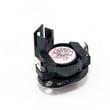
- Dryer high-limit thermostat WP8557403
- Dryer thermistor WP8577274
Electrical miswiring, the wrong cord configuration, or poor grounding can create a real shock or fire risk and can also cause control problems that look like “mystery” error codes.
Last updated: February 2026
Which dryer has the least problems?
Dryers with the fewest problems are typically simple, well-vented electric models with fewer electronics and a proven drum support and belt-drive design. If you already own a Maytag MED8000AW0, keeping airflow strong and replacing wear items early prevents most “problem” symptoms. For model-specific use and setup details, use the owner's manual.
Most dryer complaints come from airflow restrictions, normal wear parts, or heat control issues, not the brand name alone.
Common causes of repeat repairs:
- Restricted venting (long dry times, overheating, shutdowns)
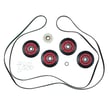
- Worn drum support rollers or idler pulley (squealing, thumping)
- Heating circuit failures (no heat, intermittent heat)
- Sensor or thermistor issues (overdrying, underdrying)
- Poor installation conditions (not level, tight clearances)
If you are shopping, these features reduce service calls over time:
- Basic controls (fewer boards and touch panels)
- Easy-to-clean lint path and straightforward vent routing
- Widely available maintenance parts (rollers, idler, thermal fuse)
- Strong warranty terms you can live with
- Proper installation clearances and ventilation
| Priority | What to look for | Why it helps |
|---|---|---|
| 1 | Short, smooth vent run | Prevents overheating and long dry times |
| 2 | Fewer electronic features | Fewer failure points |
| 3 | Common, serviceable wear parts | Lower cost and faster repairs |
| 4 | Good drum support design | Less noise and less vibration |
We see the best reliability when you treat maintenance as prevention.
Start with these steps:
- Clean the lint screen every load; wash it periodically to remove residue
- Inspect and clean the venting; keep the run as short and straight as possible
- Make sure the dryer sits level (a slope over about 1 inch can affect tumbling and sensor cycles)
- If you hear squealing or thumping, service the drum support system early
- If the dryer runs but will not heat, check the heating circuit safety parts
Model-relevant parts that commonly solve “problem” symptoms:
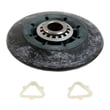
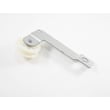
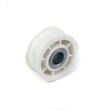
- Noise or drum drag: dryer drum support roller WPW10314173, dryer idler pulley 279640
- No heat or overheating protection trips: dryer thermal cut-off fuse kit 279973, dryer heating element WP8544771
A dryer that is installed correctly and moves air efficiently runs cooler, dries faster, and puts less stress on the heating element, thermostats, and thermal fuses. That is the most reliable path to “least problems,” regardless of brand.
Last updated: February 2026