Owner’s manual
 View engine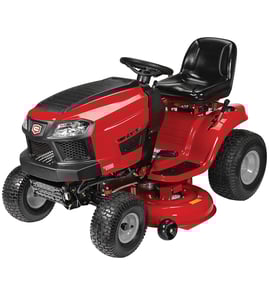




Can you tell the year of a lawn mower by serial number?
Yes, you can often estimate the build year from a serial number, but the exact decoding format varies by manufacturer. For the Craftsman model 247288880 (PYT9000 tractor), the serial number label helps identify the unit, but the operator’s documentation does not provide a universal “serial-to-year” decoder for every production run; use the label details plus the manual’s model identification guidance in the 247288880 operator’s manual.
Common locations on riding mowers and tractors like model 247288880 include:
- Under the seat on the frame or fender pan
- On the rear frame near the hitch plate
- Under the hood near the dash tower
- On the left or right side of the frame rail
- On the engine label (engine has its own model and code date)
Serial numbers may include a date code, but the position and format depend on who built the tractor and who built the engine.
- Tractor serial number: may include a manufacturing date code, but it is not standardized across all Craftsman production.
- Engine code (often Briggs & Stratton on this model family): frequently includes a clear manufacture date code on the engine shroud label.
- Model number vs. serial number: the model identifies the product family; the serial identifies your exact unit.
| Tag you read | What it tells you | Best use |
|---|---|---|
| Tractor model/serial label | Unit identity and production sequence | Matching correct parts and diagrams |
| Engine model/type/code label | Engine build date and engine specs | Dating the engine and ordering engine parts |
- Write down the full tractor model and serial exactly as shown.
- Write down the engine model and code from the engine label.
- Use the engine code to determine the engine’s manufacture date.
- Treat the tractor’s build date as the same year or close to the engine date (most tractors are assembled shortly after the engine is built).
Knowing the approximate year helps us narrow down parts that changed mid-production (for example, deck belt routing, PTO clutch style, or electrical switches) and reduces the chance of ordering the wrong replacement part.
Last updated: January 2026
What are the common problems with Craftsman lawn mowers?
For the Craftsman 247.288880 (PYT9000) lawn tractor, the most common problems we see are starting or running issues, poor cutting quality, and drive or PTO engagement problems. Many of these trace back to normal wear items (belts, blades, filters) or safety interlock and adjustment issues described in the 247288880 operator's manual.
- Won't crank or start: parking brake not set, PTO knob not OFF, weak battery, dirty fuel, or a safety interlock issue.
- Starts but runs rough or stalls: stale fuel (older than about 30 days), clogged air filter, fouled spark plug, or restricted fuel flow.
- Blades won't engage: PTO switch/clutch circuit issue, belt routing/tension problem, or operator-seat/PTO interlock shutting PTO off.
- Cuts uneven or leaves strips: dull/bent blades, deck not level, incorrect deck height setting, or gauge wheels misadjusted.
- Excessive vibration: damaged blade, loose mounting hardware, or debris wrapped around spindles.
- Poor drive performance: drive belt wear, linkage adjustment, or hydrostatic drive concerns.
- Confirm PTO/Blade Engage knob is OFF and parking brake is engaged before starting.
- Use fresh unleaded gasoline and verify the engine oil level before each use.
- Inspect the mower deck for packed grass buildup and check blades for damage.
- Check belt condition for glazing, cracking, or stretching.
- Verify the safety interlock system behavior (seat switch, PTO, reverse logic) matches the manual.
| Symptom | Most likely causes | Best first action |
|---|---|---|
| No crank | Interlock not satisfied, weak battery | Set brake, PTO OFF; check battery connections |
| Cranks, no start | Stale fuel, spark/air issue | Replace fuel; check air filter and spark plug |
| Blades stop in reverse | Reverse safety logic | Use reverse caution mode only when necessary |
| Uneven cut | Deck level, blades, gauge wheels | Level deck; set gauge wheel clearance |
Catching these problems early helps prevent bigger failures like belt damage, spindle wear, or unsafe operation. It also keeps the tractor cutting cleanly and reduces strain on the Briggs and Stratton engine.
Last updated: January 2026
What riding mower has the least problems?
For the fewest problems, we recommend choosing a mower that matches your yard and then maintaining it on schedule. For your Craftsman model 247288880 (PYT9000 tractor), the operator guidance emphasizes routine service and correct operation; see the maintenance and operation sections in the 247288880 operator's manual.
Even the best brands have trouble if the mower is overloaded, stored with stale fuel, or not serviced. Low-trouble ownership is usually driven by how the engine, deck, and drive system are used and maintained.
Key reliability habits:
- Change engine oil at the recommended intervals
- Keep the air filter and pre-cleaner clean (service more often in dusty conditions)
- Keep the muffler area and controls free of grass and debris
- Replace worn belts and keep blades sharp and balanced to reduce vibration
- Use fresh unleaded gasoline (the manual notes fuel should be fresh, typically within 30 days)
When comparing lawn tractors and zero-turn mowers, we suggest focusing on durability and support, not just the badge.
- Buy the right size deck for your acreage so you are not overloading the cutting system
- Choose a drivetrain suited to your terrain (especially if you have slopes)
- Prefer designs with easy access to oil, air filter, battery, and deck belt
- Consider parts and service availability in your area
- Avoid mowing habits that strain the deck (very tall, wet, or heavy grass)
| What you prioritize | Why it helps | What it prevents |
|---|---|---|
| On-time maintenance | Reduces wear and heat stress | Mid-season breakdowns |
| Proper mowing speed and load | Lowers belt and spindle stress | Belt slip, vibration |
| Clean storage and fresh fuel | Reduces fuel-system issues | Hard starting |
The manual states your machine is designed to cut normal residential grass up to 10 inches tall and warns against mowing unusually tall, dry grass or piles of leaves. Following those limits and the service schedule helps minimize common issues like belt wear, vibration, and starting problems.
Last updated: January 2026
Where to find model number on riding mower?
On the Craftsman 247288880 (PYT9000) riding mower, the model and serial number are typically on an ID label under the seat area (seat pan) or on the tractor frame near the rear wheels. We use that exact model number to match the correct parts and diagrams.
Look for a sticker or metal tag in these spots (wipe off grass and oil so it is readable):
- Underside of the seat pan (lift the seat)
- Rear frame area between the rear wheels
- Left or right side of the tractor frame (near the footrest/running board)
- Rear of the frame cover
- On or near the cutting deck (often on the left rear area of the deck)
- Park on a flat surface, set the parking brake, and remove the key.
- Lift the seat and inspect the underside of the seat pan and the frame directly below it.
- Check the rear frame between the rear tires.
- If you still do not see it, inspect the cutting deck edges and the frame rails.
| Item on label | Example for this tractor | Why it matters |
|---|---|---|
| Model number | 247288880 | Identifies the exact parts list and diagrams |
| Serial number | Varies | Helps confirm production run and compatible revisions |
| Engine model/type/code | Varies (engine label) | Needed for engine-specific parts like filters and ignition |
Craftsman tractors can look similar across model families, but small changes in deck size, belt routing, or PTO clutch style can change the correct replacement parts. Using the exact model number (and often the serial number) prevents ordering the wrong belt, blade, or spindle.
For additional label and identification details, we recommend checking the 247288880 operator's manual.
Last updated: January 2026