Owner’s manual
 Error Codes


How many cubic feet is my Kenmore refrigerator by model number?
For Kenmore Elite model 79571054014, the most accurate way to get the exact cubic-foot capacity is to look up the specifications in the 79571054014 owner's manual or on the refrigerator’s identification label inside the fresh food compartment; those sources match your exact configuration.
Fast ways to find the capacity (best to least effort)
- Check the identification label inside the refrigerator compartment (commonly on the right-hand side wall).
- Look in the specifications/features section of the 79571054014 owner's manual.
- If you still cannot locate it, measure usable interior space as a rough estimate (less accurate than the label/manual).
Where to look on the refrigerator
Most Kenmore bottom-mount refrigerators list model and serial information on an identification label inside the fresh food section.
- Open the refrigerator door (not the freezer drawer)
- Look along the right-hand interior wall
- Check near the crisper/pantry area or behind bins where labels are often placed
Quick comparison: label vs. manual vs. measuring
| Method | Accuracy | What you need | Notes |
|---|---|---|---|
| Identification label | Highest | Flashlight, phone camera | Often lists key specs tied to your exact unit |
| Owner’s manual | High | Manual access | Covers the model series; confirm it matches your exact model |
| Measuring interior | Medium | Tape measure | Usable space varies with shelves, ice room, and bins |
Why it matters
Cubic-foot capacity helps us match the right storage accessories, compare replacement door bins, and set expectations for cooling load and organization. It is also useful when shopping for filters and planning food storage zones.
Last updated: February 2026
What are the common problems with Kenmore Elite refrigerators?
Common problems we see on the Kenmore Elite 79571054014 bottom-mount refrigerator include cooling issues (often tied to airflow or dirty condenser coils), ice maker and dispenser troubles, lights not working, and doors not sealing or closing correctly. Many symptoms trace back to maintenance, door alignment, or a failed component.
Most common symptoms and what they usually point to
- Not cooling well or runs a lot: warm room, frequent door openings, or restricted airflow; dirty condenser coils can also contribute.
- Ice maker not making ice: ice bin uneven, ice compartment door not closing tightly, or the ice maker is switched Off.
- Lights do not work: loose bulb, burned-out bulb, or power cord not fully plugged in.
- Vibration or rattling: leveling legs need adjustment or the floor is uneven.
- Water and ice dispensing problems: filter restriction, inlet valve issues, or dispenser mechanism problems.
Quick checks we recommend first (fast, no parts)
- Confirm doors close fully and gaskets seal all the way around.
- Clean the condenser coils (a common cause of poor performance).
- If the unit seems to run constantly, reduce door openings and allow time to recover after loading groceries.
- For ice issues, level the ice in the bin and keep the ice compartment door tightly closed.
- For light issues, unplug the refrigerator and reseat or replace the bulb with the same wattage, size, and shape.
Parts that commonly solve these problems
| Symptom | Common fix | Example part for model 79571054014 |
|---|---|---|
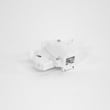
| Ice maker not producing | Replace ice maker assembly | Ice maker assembly (AEQ73110203) - refrigerator ice making component by lg AEQ73110203 |
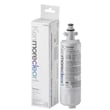
| Weak water flow or bad taste | Replace water filter | Genuine Kenmore refrigerator water filter 9690 AGF80300801 |
| Water dispenser not filling correctly | Diagnose/replace inlet valve | Lg refrigerator water inlet valve 5221JB2010G |
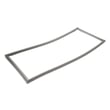
| Door not sealing | Replace door gasket | Lg refrigerator door gasket, right ADX73550624 |
Why it matters
These issues affect food safety, energy use, and ice and water performance. For example, a door that does not seal can cause longer run times, temperature swings, and ice maker problems.
For model-specific operating tips, cleaning guidance (including condenser coils), and troubleshooting tables, use the 79571054014 owner's manual.
Last updated: February 2026
What is the average lifespan of a Kenmore Elite refrigerator?
A Kenmore Elite refrigerator like model 79571054014 typically lasts 12 to 15 years. Consistent cleaning, good airflow around the cabinet, and keeping the doors sealing properly help you reach (and often exceed) that normal service life; see the 79571054014 owner's manual for model-specific care steps.
What affects lifespan the most
- Condenser coil cleanliness (dust buildup makes the compressor run longer)
- Door gasket condition (air leaks cause longer run times and frost issues)
- Room temperature and ventilation around the refrigerator
- How often doors are opened and how full the compartments are
- Water and ice system upkeep (filter changes, avoiding clogs)
Maintenance checklist we recommend
Use this as a simple routine to protect the compressor, evaporator, and fans.
- Vacuum and brush the condenser coil area regularly
- Wipe door gaskets and the door liner; keep seals flexible and clean
- Keep vents inside the refrigerator and freezer unblocked
- Replace the water filter on schedule; use the correct filter for this model
- Level the refrigerator so doors close easily and seal consistently
Common “wear items” vs. major repairs
| Item type | Examples | What it usually causes |
|---|---|---|
| Routine maintenance | Water filter, cleaning coils, leveling | Better cooling efficiency, less compressor run time |
| Sealing and door parts | Gaskets, door alignment | Warm temps, frost, moisture, longer run times |
| Major system components | Compressor, sealed system | No cooling or poor cooling |
Why it matters
Most premature refrigerator failures trace back to heat and airflow problems. When coils are dirty or a gasket leaks, the compressor can run much more than normal, which accelerates wear and increases energy use.
Last updated: February 2026
Where to find model number on Kenmore Elite fridge?
On Kenmore Elite model 79571054014, the model and serial number are printed on an identification label inside the fresh food (refrigerator) compartment, on the right-hand side wall. Use that label when ordering parts or checking troubleshooting steps in the 79571054014 owner's manual.
Quick places to check (in order)
- Inside the refrigerator compartment, right-hand side wall (primary ID label location)
- Near the crisper drawer area (look along the side walls as you pull drawers out)
- On the cabinet frame just inside the door opening (scan the vertical frame edges)
- If the label is hard to read: take a photo with flash and zoom in
What the label looks like and what to write down
The ID label typically includes both a model number and a serial number. Record these exactly.
| Item | Example format | Why you need it |
|---|---|---|
| Model number | 795.7105xxxx | Ensures parts and diagrams match your exact refrigerator |
| Serial number | Letters and numbers | Helps identify production version for service and support |
Why it matters
Kenmore Elite refrigerators often share similar styling across multiple model families, but parts like a water filter, door gasket, or ice maker can vary by model. Using the exact model number from the ID label prevents ordering the wrong component and speeds up troubleshooting.
Last updated: February 2026
Why is my Kenmore Elite refrigerator leaking from the bottom?
On Kenmore Elite refrigerator model 79571054014, bottom leaks almost always come from water that is supposed to drain away (defrost water) or water-supply components (filter, tubing, valve) that are seeping and running down to the base. Start by checking the defrost drain and the water line connections described in the 79571054014 owner's manual.
Quick checks (most common causes)
- Clogged defrost drain: Meltwater backs up, then spills into the fresh food section and down to the bottom.
- Water line connection seepage: A loose compression nut or ferrule can drip and track to the floor.
- Cracked or rubbed water tubing: Vibration can wear a line and cause intermittent leaks.
- Ice maker or dispenser leak: Small drips can collect and appear as a bottom leak.
- Drain pan overflow: During defrost, water should run into the pan; if it misses or overflows, you will see water underneath.
Step-by-step: what we recommend doing first
- Unplug the refrigerator and pull it out enough to inspect behind and underneath.
- Look for the water source:
- Clear water near the back often points to the water supply line or inlet valve.
- Water after a defrost cycle often points to the defrost drain or drain pan.
- Check the water supply connections at the shutoff valve and at the refrigerator inlet; tighten fittings that seep (do not overtighten).
- Inspect the filter area for drips; if the housing is leaking, check the refrigerator water filter head ADQ36011715.
- If the leak is tied to ice or dispensing, inspect the inlet valve and lines; the lg refrigerator water inlet valve 5221JB2010G is a common leak point when it does not fully close.
Symptom-to-cause guide
| What you notice | Most likely cause | What to check next |
|---|---|---|
| Water appears every few days | Defrost drain issue | Clear drain path; verify water reaches drain pan |
| Water appears after using dispenser | Tubing or valve seepage | Inspect tubing, fittings, and inlet valve |
| Water near filter compartment | Filter head or filter not seated | Reseat filter; inspect filter head for cracks |
| Water under freezer area | Drain pan or drain routing | Confirm pan position and drain outlet alignment |
Why it matters
A small leak can turn into floor damage, ice buildup, and cooling problems. The manual notes that water normally runs into the drain pan during defrost; when drainage is blocked or a connection drips, that water ends up at the bottom instead.
Last updated: February 2026