 Owner’s manual




What is the most common problem with Whirlpool washers?
For Whirlpool washers, the most common issues we see are draining and spinning problems, often caused by a drain restriction, excess suds from non-HE detergent, or an unbalanced load. On the Whirlpool WFW9200SQA11 front-load washer, the manual specifically calls out drain and water-inlet faults (such as F21 and F20) as frequent troubleshooting items; see the WFW9200SQA11 owner's manual.
Most common symptoms and what they usually mean
- Won’t drain or won’t spin: drain hose kinked/clogged, drain height too high, or suds routine active.
- Won’t fill or fills slowly: faucets not fully open, inlet screens clogged, hoses kinked or frozen.
- Door won’t lock or won’t start: door not fully latched, overloaded basket preventing closure.
- Noise or vibration: washer not level, load not balanced, normal pump air noise during draining.
- Odor: non-HE detergent residue, door kept closed between loads.
Quick checks we recommend first (WFW9200SQA11)
- Cancel the cycle and reset power (unplug briefly), then restart.
- Confirm both water faucets are fully open; straighten any kinked inlet hoses.
- Check inlet hose screens for debris (shut off water first).
- Inspect the drain hose for kinks or clogs; keep the drain outlet under 96 in. (2.4 m) above the floor.
- Reduce suds: use HE detergent only and avoid over-dosing.
- Rebalance the load; add a few items if a single bulky piece is throwing it off.
Common code-to-cause map (this model family)
| Display/code | What it points to | What to check first |
|---|---|---|
| F20 | Water inlet problem | Faucets, inlet screens, kinked/frozen hoses |
| F21 | Drain problem | Drain hose kink/clog, drain height, frozen hose |
| F22 | Door lock issue | Door fully shut, no items caught, reduce load |
Parts that often relate to these symptoms
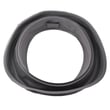
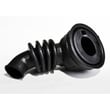
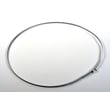
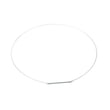
If you confirm a leak at the door opening or persistent door-seal odor, the door boot can be the root cause; the correct part for this model is the bellow WP8182119. For drain-related complaints, restrictions are more common than part failure, but a damaged internal hose can contribute; inspect the hose WPW10467168 for splits or loose connections.
Why it matters
Drain, fill, and door-lock issues can stop the cycle mid-wash, leave clothes too wet, and increase vibration. Fixing the basic causes (hose routing, HE detergent use, leveling, and load balance) prevents repeat faults and reduces wear on suspension and drive components.
Last updated: February 2026
Are Whirlpool washer parts interchangeable?
Whirlpool washer parts are not universally interchangeable, even between similar-looking models. For Whirlpool model WFW9200SQA11, we recommend using factory-specified parts designed for that model so the fit, sealing, and electrical connections match the original design (and the washer operates correctly).
What “interchangeable” really means
Some parts may look the same across Whirlpool washers, but small differences can matter (mounting points, connector style, software compatibility, or seal dimensions).
- Model-specific parts: Control boards, wire harnesses, door lock assemblies, and sensors often vary by model revision.
- Fit-critical parts: Door boot seals (bellows), clamps, and tub gaskets must match exactly to prevent leaks.
- Performance parts: Drive components (belt, pulley, springs, counterweights) must match the engineered load and balance.
- Consumable or generic hardware: Screws and some clamps can sometimes cross over, but we still match by model to avoid thread or length issues.
Parts on WFW9200SQA11 that should match exactly
If you are troubleshooting leaks, door issues, or no-start conditions, these are common “must-match” items for this model:
- Bellow WP8182119
- Latch WPW10253483
- Washer tub gasket WPW10036350
- Belt WPW10388414
- Washer drive pulley WP8182650
Quick compatibility check (practical guide)
Use this table to decide how strict you need to be about matching the exact part.
| Part type | Can it vary by model? | What can go wrong if mismatched? |
|---|---|---|
| Door seal (bellow) | Often | Leaks, door won’t close, mold and odor issues |
| Door lock/latch | Often | Won’t start, won’t unlock, error codes |
| Belt/pulley/suspension | Sometimes | Noise, vibration, poor spin, premature wear |
| Wire harness/control parts | Often | No power, intermittent faults, wrong connectors |
Why it matters
Front-load washers like the Whirlpool WFW9200SQA11 rely on tight sealing, correct door-lock feedback, and precise drive balance. A “close enough” part can create leaks, repeated error codes, or vibration that damages the tub and bearings.
Best way to confirm the right part
Follow the part identification and replacement guidance in the WFW9200SQA11 owner’s manual.
Last updated: February 2026
How to fix E1 F9 error on Whirlpool washer?
On the Whirlpool WFW9200SQA11, an E1 F9 (often shown as F9E1) points to a long-drain condition. We fix it by canceling the cycle, draining the washer, then clearing drain restrictions (hose, pump filter area, and pump inlet). Use the steps in the WFW9200SQA11 owner’s manual to run DRAIN/SPIN and restart.
Quick fix steps (in order)
- Press PAUSE/CANCEL twice to cancel; if the tub is full, select DRAIN/SPIN and press START for about 1 second.
- Unplug the washer (or disconnect power) before checking hoses or internal components.
- Check the drain hose for kinks, freezing, or a clog.
- Confirm the drain hose height is correct; the manual notes drain problems if the hose is more than 96 in. (2.4 m) above the floor.
- Reduce suds: use only HE detergent and avoid over-dosing (excess suds can slow draining).
- If draining is still slow, inspect the pump area for debris; a restricted tub-to-pump path is a common cause.
Parts that commonly solve long-drain problems
If you find a leak, blockage, or damaged rubber at the pump connection, these model-matched parts are often involved:
- Hose WPW10467168 (tub-to-pump hose): fixes internal hose clogs, soft-collapse, or leaks.
- Filter WPW10730972 (filter): replace if the filter housing or sealing surfaces are damaged or won’t seal after cleaning.
Symptom-to-cause guide
| What you notice | Most likely cause | What to do |
|---|---|---|
| Water drains very slowly | Kinked/clogged drain hose | Straighten hose; clear blockage |
| Loud humming, little/no drain | Pump inlet restricted | Clear debris from pump path |
| “SUD” shows with drain issue | Too many suds, wrong detergent | Switch to HE; use less |
| Drains but error returns | Intermittent restriction or install issue | Recheck hose height and routing |
Why it matters
A long-drain condition can leave water in the tub, keep the door locked longer, and trigger repeat error codes. Clearing restrictions and correcting drain hose installation prevents pump strain and repeat shutdowns.
Last updated: February 2026
Where is the drain filter on a whirlpool duet washer?
On the Whirlpool WFW9200SQA11 (Duet-style front-load) washer, the drain filter is part of the drain pump cleanout area at the bottom front of the cabinet, behind the lower toe-kick (access) panel. You reach it from the front by removing that lower panel and then opening the pump cleanout.
Where to look on the washer
On most Whirlpool Duet front-load designs like WFW9200SQA11, the drain pump sits low and forward so it can evacuate water quickly.
- Look along the very bottom front edge of the washer
- Remove the lower toe-kick/access panel (typically held by screws)
- The pump cleanout is directly behind that panel, near the drain pump
- Keep towels and a shallow pan ready because water will come out
How to access it safely (basic steps)
- Unplug the washer.
- Lay towels down and place a shallow pan under the pump area.
- Remove the lower access panel.
- Slowly open the pump cleanout to drain water in a controlled way.
- Remove debris (coins, lint, hair pins) from the trap area.
- Reinstall the cleanout securely and run a Drain/Spin to confirm normal draining.
Quick check table
| What you see | What it means | What to do |
|---|---|---|
| Standing water, slow drain | Restriction at pump/trap or hose | Clean pump cleanout; check drain hose |
| “SUD” routine, long drain | Too many suds can slow draining | Use HE detergent; reduce dose |
| Leaks after cleaning | Seal not seated or hose disturbed | Reseat cleanout; inspect hoses and clamps |
Parts commonly involved when drain issues persist
If cleaning the pump cleanout does not restore draining, the drain pump or the tub-to-pump hose is usually the next place to inspect.
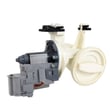
- Filter WPW10730972 (drain pump filter/pump assembly used in the drain system)
- Hose WPW10467168 (tub-to-pump hose that can trap debris)
- Clamp WP596669 (clamp used on hose connections that can seep if loose)
Why it matters
A restricted pump cleanout prevents the washer from draining fast enough to enter high-speed spin; that leads to wet loads, odor, and “won’t drain or spin” complaints.
For the exact access-panel removal method and safety notes for WFW9200SQA11, use the WFW9200SQA11 owner's manual.
Last updated: February 2026





