Error Codes


How do I know what model my Kenmore dryer is?
Your Kenmore dryer’s model number is printed on the appliance’s ID label; for Kenmore electric dryers like model 11096586200, it’s most often found around the door opening or on the cabinet. Once you have the full model number, we can match the correct parts and diagrams.
Check these common spots on Kenmore dryers:
- Inside the dryer door opening on the front frame
- On the back panel of the dryer cabinet
- Along the door opening edge near the latch area
- On the side panel near the front (less common)
- On the housing near the lint screen opening (some designs)
We recommend copying the model number exactly as shown on the label.
| What to capture | Example | Why it matters |
|---|---|---|
| Full model number | 11096586200 | Ensures correct Kenmore parts fit |
| Serial number | (varies) | Helps identify production run for some parts |
| Type | Electric dryer | Confirms heating system and wiring style |
- Use the full number, not just the first three digits (for example, not just “110”)
- Don’t rely on the control panel styling; different models can look similar
- If the label is worn, use a flashlight and take a close-up photo to zoom in
- Match parts by model number first, then confirm by part name and location
Kenmore model numbers determine the correct fit for key wear items like the drum belt 341241, heating components, door switch, and timer. Using the exact model number prevents ordering a similar-looking part that mounts differently or has different electrical ratings.
Last updated: February 2026
How much does it cost to replace a heating element in a Kenmore dryer?
For Kenmore electric dryer model 11096586200, replacing the heating element typically costs $50 to $150 for the part and $150 to $350 total if you hire service (part plus labor). If you do the repair yourself, your cost is usually the part plus basic supplies.
- DIY parts-only: $50 to $150
- Service call and labor: $100 to $250 (varies by area and access)
- Total professional repair: $150 to $350
- Extra parts sometimes needed: thermal cut-off, wiring kit, or thermostat if heat damage occurred
| Scenario | What you pay for | Typical total |
|---|---|---|
| DIY element replacement | Part only | $50 to $150 |
| DIY plus safety parts | Element + cut-off kit or thermostat | $100 to $225 |
| Professional repair | Labor + part(s) | $150 to $350 |
If your dryer overheated or has restricted airflow, we often replace more than just the element to prevent repeat failures.
- Element 279838 (heats the air; the main “no heat” part on many Kenmore electric dryers)
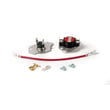
- Cut-off kit 279816 (opens if the heater housing gets too hot; often replaced with an element)
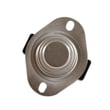
- Dryer operating thermostat WP3387134 (regulates drum temperature)
- Dryer heating element wire kit 279457 (used when terminals are heat-damaged or brittle)
A failed heating element can be a simple fix, but poor venting is a common reason elements and thermal cut-offs fail early. Restoring proper airflow helps the new part last and keeps dry times normal.
- Clean the lint screen and lint chute.
- Confirm strong airflow at the outside vent hood.
- Inspect the vent duct for crushing, kinks, or heavy lint buildup.
- Make sure the dryer is on a heat cycle and not “air fluff/no heat.”
- If the dryer heats briefly then stops, plan on checking the cut-off kit and thermostat too.
For a deeper overview of what components are involved, see what are the main parts of a clothes dryer.
Last updated: February 2026
What does F1 mean on Kenmore dryer?
On the Kenmore electric dryer model 11096586200, an F1 (or F01) code points to a control sensing problem, most often tied to the temperature-sensing circuit (thermistor/input to the control) or the electronic control/timer reading it incorrectly. Fixes usually involve checking wiring connections and replacing the failed component.
- Unplug the dryer (or switch off the breaker) for 2 minutes, then restore power and retry.
- Confirm the door closes and latches; a door that is not registering closed can interrupt cycles.
- Check for restricted airflow (packed lint screen, crushed vent, clogged vent hood).
- If the code returns immediately, inspect for loose or burned wire terminals at the heater and sensor circuits.
- If the dryer runs but heats erratically, suspect a temperature control component.
Depending on what you observe (no heat, overheating, stops mid-cycle), these parts are common suspects:
| What you notice | Most likely area | Common part to consider |
|---|---|---|
| Dryer starts, then stops and beeps with F1 | Control sensing or control board logic | Dryer timer WP3398190 |
| No heat, tumbles normally | Heating circuit | Element 279838 |
| Overheats or shuts down on high heat | High-limit safety and airflow | Cut-off kit 279816 |
| Heat cycles oddly (too hot or too cool) | Temperature regulation | Dryer operating thermostat WP3387134 |
F1 is often triggered when the dryer cannot reliably read or control temperature. Continuing to run the dryer with unstable temperature control can cause repeated shutdowns, poor drying performance, and additional heat-related part failures.
If your Kenmore dryer uses an electronic control platform, compare the displayed code format and reset behavior with our Kenmore 110 series electronic control model dryer error codes guide.
Last updated: February 2026