Owner’s manual
 Error Codes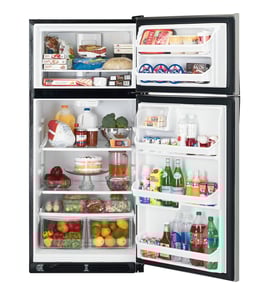



How to tell cubic feet of Kenmore refrigerator by model number?
For Kenmore model 10679172990, the model number alone usually does not state the exact cubic-foot capacity. The most reliable way is to look up the capacity in the 10679172990 owner's manual; if you need an estimate, calculate interior volume from measurements and convert cubic inches to cubic feet.
Best ways to find the cubic feet
- Check the manual first: Capacity is typically listed in the specifications section of the 10679172990 owner's manual.
- Use the model tag for an exact match: Confirm the full model number from the model/serial label inside the fresh food compartment (commonly on an inside wall).
- Measure and calculate (good estimate): Measure usable interior space and convert to cubic feet.
- Compare by style: Most Kenmore top-mount refrigerators in this family commonly fall in a mid-size range, but measuring is more accurate than guessing from the number.
How to calculate cubic feet from measurements
- Empty enough space to measure the usable interior (exclude thick walls and unusable corners).
- Measure width x depth x height in inches for the refrigerator compartment; repeat for the freezer if you want total capacity.
- Multiply to get cubic inches, then divide by 1,728.
Quick conversion table
| What you have | What to do | Result |
|---|---|---|
| Inches (W x D x H) | Multiply W x D x H | Cubic inches |
| Cubic inches | Divide by 1,728 | Cubic feet |
Why it matters
Knowing cubic feet helps you compare refrigerators accurately, choose correctly sized replacement shelves and bins, and set realistic expectations for storage, airflow, and temperature consistency.
Last updated: January 2026
What are the most common issues with 10679172990?
The most common issues we see on the Kenmore 10679172990 top-mount refrigerator are warm temperatures from airflow or defrost problems, water leaks tied to the ice maker or water supply, and door sealing issues that cause frost and poor cooling. Use the owner's manual for model-specific checks and settings.
Common symptoms and what usually causes them
- Refrigerator or freezer not cold enough: dirty condenser coils, evaporator fan issues, thermostat problems, or a defrost failure.
- Frost buildup on the freezer back wall: defrost system trouble; a failed defrost bi-metal is a common cause.
- Ice maker not making ice: no water supply, frozen fill tube, or a failed ice maker module.
- Water leaking inside or under the unit: clogged/iced drain, cracked water tube, or a leaking inlet valve.
- Door not sealing, moisture on shelves: worn gasket or misaligned hinges.
Parts that commonly fix these problems (when diagnosis confirms)
If your symptoms match, these model-compatible parts are often involved:
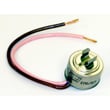
- Refrigerator defrost bi-metal WP4387503 for frost buildup and defrost complaints
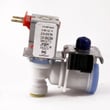
- Refrigerator inlet valve WP2315576 for no ice or water leaks at the supply connection
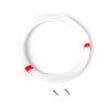
- Refrigerator water tube W10823511 for cracked or leaking water line issues
- Refrigerator door gasket 2159061 for warm temps, condensation, or air leaks at the fresh food door
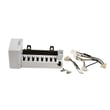
- Ice maker assembly 4317943 for ice maker failures after water supply is verified
Quick checks we recommend before replacing parts
- Confirm controls are set to normal mid-range settings.
- Clean condenser coils and verify the condenser fan (if equipped) runs.
- Listen for the evaporator fan in the freezer when the door switch is pressed.
- Check for a solid, even door seal all the way around.
- For ice maker issues, verify the shutoff arm is down and the water line is not kinked.
Symptom-to-part cheat sheet
| Symptom | Most likely area | Example part on this model |
|---|---|---|
| Frost on freezer panel | Defrost system | WP4387503 |
| No ice, water supply OK | Ice maker or valve | 4317943 or WP2315576 |
| Puddle under fridge | Drain or water line | W10823511 |
| Warm fridge, runs a lot | Air leak/controls | 2159061 or WP627985 |
Why it matters
Catching airflow, defrost, and sealing problems early prevents food spoilage, reduces compressor run time, and helps avoid repeat icing and leaking.
Last updated: March 2026
What is the upper part of a fridge called?
On the Kenmore 10679172990 top-mount refrigerator, the upper part is the freezer compartment (often just called the freezer). It’s the section designed to keep food frozen and it also supplies cold air that helps cool the fresh-food (refrigerator) section.
What the freezer does (and why it affects the fridge)
This model circulates air between the freezer and refrigerator sections. Cold air moves through vents, and blocking those vents can cause temperature and moisture problems.
- Freezes food for long-term storage
- Sends cold air to the refrigerator section through vents
- Helps maintain stable temperatures when airflow is clear
- Often houses features like an ice maker (if equipped)
Common names you may see in the manual
You’ll see different terms depending on the feature being described. The freezer area can include shelves, a freezer floor, and door storage.
| What you call it | What it usually means | Where it is |
|---|---|---|
| Freezer compartment | The whole upper frozen-food section | Top of the unit |
| Freezer section | Same as freezer compartment | Top |
| Freezer shelf / freezer floor | Storage surfaces inside the freezer | Inside freezer |
| Freezer door | The door that seals the freezer | Front, top door |
For the exact feature names used for your refrigerator, use the 10679172990 owner's manual.
Why it matters
When you’re troubleshooting cooling issues, ordering parts, or following cleaning and care steps, using the right term (freezer compartment vs. refrigerator compartment) helps you match the correct instructions and avoid blocking airflow vents.
Last updated: January 2026