Error Codes


Are Whirlpool washer parts interchangeable?
Whirlpool washer parts are only interchangeable when the replacement part is listed as compatible with your exact washer model, such as Whirlpool LSQ9200PQ1. Even within Whirlpool, similar-looking parts can differ in fit, wiring, and performance, so we match by model and part ID, not appearance.
What “interchangeable” really means
Parts can share a similar function across Whirlpool washers, but compatibility depends on mounting points, electrical connectors, and drive design (direct-drive vs belt-drive). For LSQ9200PQ1, always confirm the part is specified for this model before ordering.
Common examples where mix-ups happen
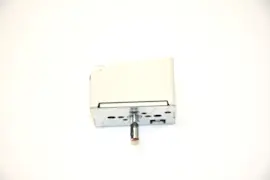
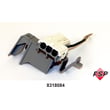
- Lid switches can have different harness plugs and actuator styles (see washer lid switch assembly WP8318084).
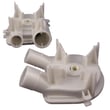
- Drain pumps can have different inlet/outlet port angles and hose sizes (see washer drain pump WP3363394).
- Timers can look identical but have different cam profiles and terminal layouts.
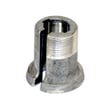
- Agitator components vary by spline count and agitator style (see agitator dog 80040).
- Drive components differ by transmission and clutch design.
Quick compatibility checklist (use this before you buy)
- Match the model number exactly: LSQ9200PQ1
- Match the part ID shown for the model
- Compare electrical connectors (number of pins, plug shape)
- Compare mounting and hose port orientation
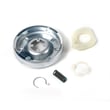
- Replace related wear parts together when recommended (for example, coupling and clutch)
Typical “safe to swap” vs “must match exactly”
| Part type | Interchangeability | Why |
|---|---|---|
| Hoses, clamps, some knobs | Sometimes | Sizes and mounting still vary |
| Lid switch, timer, motor | Must match exactly | Wiring and calibration differences |
| Pump, coupling, clutch | Must match exactly | Fit and drive-train compatibility |
Why it matters
Using a non-matching part can cause no-start conditions, leaks, poor draining/spinning, or premature wear. Matching by model and part ID protects performance and helps avoid repeat repairs.
Last updated: February 2026
How do I fix the F9 E1 error code on a Whirlpool washer?
On a Whirlpool washer, the F9 E1 error means the washer is having a drain problem (it is not pumping water out fast enough). On model LSQ9200PQ1, start by correcting any drain-hose siphoning or blockage, then check the drain pump and lid switch because either issue can stop draining and trigger the code.
Quick fixes to try first (no parts)
- Unplug the washer for 1 minute, then plug it back in and try Drain/Spin.
- Make sure the drain hose is not shoved too far down the standpipe (leave an air gap to prevent siphoning).
- Confirm the standpipe is not sealed airtight around the hose.
- Check for a kinked, crushed, or frozen drain hose.
- Verify the drain hose height is typical for top-load washers (about 39 to 96 inches from the floor).
What to inspect on LSQ9200PQ1 if it still will not drain
- Drain pump: Look for coins, socks, or lint in the pump inlet and hoses; a jammed impeller can cause slow or no drain. If the pump leaks, binds, or will not move water, replace the washer drain pump WP3363394.
- Lid switch: Many Whirlpool top-load washers will not drain or spin correctly if the lid switch does not signal “lid closed.” If the washer fills and agitates but stops before spin or drain, test and replace the washer lid switch assembly WP8318084 if it is faulty.
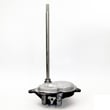
- Drive system (if pump is beltless and driven by motor): If you hear the motor run but the pump does not move water, a worn coupling can prevent proper drive. Consider the washer motor coupling 285753A if symptoms match.
Symptom-to-likely-cause guide
| What you notice | Most likely cause | What we recommend |
|---|---|---|
| Hums but will not drain | Pump jammed | Clear obstruction; replace pump if damaged |
| Drains slowly | Partial clog or weak pump | Check hose/standpipe; replace pump if flow stays weak |
| Stops before spin/drain | Lid switch not closing | Check lid strike and switch; replace lid switch |
| Motor runs, no pumping action | Coupling/drive issue | Inspect coupling; replace if worn |
Why it matters
F9 E1 is usually a water-left-in-tub situation. Fixing the drain path prevents standing water, reduces odor, and helps protect the motor and gear case from strain.
Last updated: February 2026
What is the most common problem with Whirlpool washers?
On Whirlpool top-load washers like model LSQ9200PQ1, the most common service issue we see is a no-start or no-spin condition caused by a safety interlock problem, especially a failing lid switch. If the washer fills but will not agitate or spin, the drive coupling is another frequent culprit.
Quick checks first (no tools)
- Confirm the lid closes firmly and the strike lines up with the switch.
- Set the timer to a spin cycle and pull the knob (or press start) again.
- Reduce the load size; an overloaded basket can stall agitation or spin.
- Verify the outlet has power and the cord is fully seated.
- Listen for a click at lid close; no click often points to the lid switch.
Most common causes and what you’ll notice
| Symptom on LSQ9200PQ1 | Most likely cause | Typical clue |
|---|---|---|
| Won’t spin or drain | Lid switch issue | Stops as soon as it should spin |
| Motor runs but won’t agitate/spin | Motor coupling worn | Burning rubber smell or rattling |
| Won’t drain, water left in tub | Drain pump jammed/worn | Hums but no water movement |
| Spins weakly or slips | Clutch wear | Slow ramp-up, clothes still wet |
Parts that commonly fix these problems
If your symptoms match, these are the high-frequency fixes for this model:
- Washer lid switch assembly WP8318084 (no spin, no drain, intermittent operation)
- Washer motor coupling 285753A (motor runs but tub/agitator does not move)
- Washer drain pump WP3363394 (won’t drain or drains slowly)
- Clutch 285785 (spin slipping, poor extraction)
Why it matters
These failures can look like a “bad motor” or “bad timer,” but on direct-drive Whirlpool washers the lid switch, coupling, and pump are faster, lower-cost fixes that restore normal wash and spin performance.
Helpful DIY reference
If your washer is not draining or spinning, follow the same symptom-based process in troubleshooting a top load washer that wont drain or spin video.
Last updated: February 2026