Owner’s manual
 Error Codes


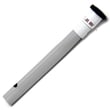
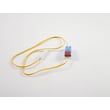
How big is the Samsung RFG237AARS?
The Samsung RFG237AARS is a full-size bottom-mount refrigerator; most units in this class are about 36 inches wide, 70 to 72 inches tall, and 34 to 36 inches deep (depth varies most with handles). For the exact published dimensions and capacity for your configuration, use the RFG237AARS owner's manual.
Typical size and what to measure at home
When you are planning a replacement, delivery, or a tight kitchen fit, we recommend measuring these points:
- Width: cabinet side to side at the widest point
- Height: floor to top of hinge cover (not just the door)
- Depth: front of doors to back of cabinet (measure with and without handles)
- Door swing clearance: space needed to fully open French doors
- Ventilation clearance: space behind and above for airflow
Quick planning table (common for 36-inch French door models)
Use this as a practical planning range, then confirm the exact spec in the manual.
| Measurement | Typical range | Why it varies |
|---|---|---|
| Width | 35 3/4 in. to 36 in. | trim and door design |
| Height | 70 in. to 72 in. | hinge cover, leveling legs |
| Depth (no handles) | 33 in. to 35 in. | cabinet depth, door thickness |
| Depth (with handles) | 35 in. to 37 in. | handle style |
Why it matters
Getting the size right prevents delivery day surprises and helps avoid door interference, poor airflow, and temperature issues caused by tight clearances.
Related tip for performance
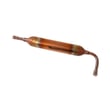
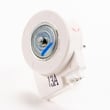
If the refrigerator is squeezed into a tight opening and runs warm, check for airflow restrictions and keep the condenser area clean; a failing fan can also cause warm temps. If you are troubleshooting cooling, the refrigerator condenser fan DA31-00146B is one common component involved.
Last updated: February 2026
Is it worth it to repair a Samsung refrigerator?
Repairing a Samsung refrigerator like model RFG237AARS is worth it when the problem is a single, clearly diagnosed part (for example a fan, gasket, or drain issue) and the repair cost stays well below the price of replacement. It is usually not worth it when the sealed system or compressor is involved.
Quick decision checklist
- Choose repair when the fridge is cooling normally but has one symptom (leak, noise, ice issue, door not sealing).
- Choose replacement when cooling is inconsistent in both sections or the unit repeatedly warms up.
- Choose repair when you can confirm the failed component and access is straightforward.
- Choose replacement when the estimate includes sealed-system labor (refrigerant work) or multiple major parts.
- Choose repair when the cabinet and doors are in good shape (no rust, no warped doors).
Common RFG237AARS repairs that are often worth it
These are typical “single-part” fixes that can restore performance without major labor:
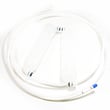
- Water under the fridge or in the fresh food section: clogged/iced drain system; consider the refrigerator drain tube DA97-04049D.
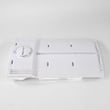
- Warm fresh food section with freezer OK: evaporator fan or airflow issue; consider the refrigerator fresh food evaporator cover and fan assembly DA97-11772B.
- Door not closing well, frost buildup, or moisture: worn gasket; consider the refrigerator freezer door gasket DA97-05557Y.
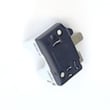
- Clicking and no start (intermittent): start device/overload issues; consider the refrigerator compressor overload protector DA34-00004D.
Cost-to-value guide (practical rule)
Use this simple comparison to decide quickly.
| What you’re facing | Typical direction | Why |
|---|---|---|
| One failed part (fan, gasket, drain, sensor) | Repair | Predictable fix; limited labor |
| Multiple symptoms across cooling, ice, and defrost | Replace or get a full diagnosis | Often cascades into multiple parts |
| Sealed system or compressor replacement | Replace | High labor cost; specialized tools |
Why it matters
A refrigerator repair is only “worth it” when it restores reliable cooling. If the root cause is airflow (fans, frost, drain) you usually get a strong payoff. If the root cause is the sealed system, costs rise fast and long-term reliability drops.
What we recommend before you commit
- Check the troubleshooting and error information in the RFG237AARS owner's manual.
- Confirm temperatures: fresh food about 37°F; freezer about 0°F.
- Inspect for frost on the evaporator cover, blocked vents, and door seal gaps.
- If ice maker is the only issue, use why your Samsung fridge stopped making ice and how to fix it to narrow the cause.
Last updated: February 2026
What is the capacity of Samsung RFG237AARS?
The Samsung RFG237AARS bottom-mount refrigerator is typically in the 23 cu. ft. class (about 23 to 24 cu. ft. total capacity). For the exact rated capacity for your specific configuration, we recommend confirming it in the RFG237AARS owner's manual.
How to confirm the exact capacity for your refrigerator
Capacity can vary slightly by revision and how Samsung lists “total” versus “usable” space. We use these checks:
- Look for “Capacity” or “Specifications” in the RFG237AARS owner's manual
- Check the model and version tag inside the fresh food section (usually on a side wall)
- Compare “total capacity” vs “refrigerator” and “freezer” compartment capacities
- If you are measuring for storage planning, focus on shelf and bin layout, not just cu. ft.
Typical capacity range (what most owners should expect)
For Samsung French door and bottom-freezer units in this series, total capacity commonly falls in this range.
| Capacity label | What it usually means | Typical value |
|---|---|---|
| Total capacity | Fresh food + freezer combined | 23 to 24 cu. ft. |
| Fresh food | Upper compartment | Larger share of total |
| Freezer | Lower drawer compartment | Smaller share of total |
Why it matters
Capacity affects how you plan food storage, choose organization parts (bins, shelves, drawers), and compare replacement refrigerators. If your refrigerator is not cooling properly, it can also feel “smaller” because you may avoid using certain zones.
If you are troubleshooting temperature swings or warm spots that reduce usable space, checking airflow components such as the refrigerator fresh food evaporator cover and fan assembly DA97-11772B is a practical next step.
Last updated: February 2026
What is the most common problem with Samsung refrigerators?
The most common issue we see on Samsung refrigerators like model RFG237AARS is a cooling problem caused by frost or ice buildup around the evaporator area, which restricts airflow and makes the fresh food section warm even when the freezer still seems cold. For model-specific operating checks, use the RFG237AARS owner's manual.
What “cooling problem” usually looks like
- Refrigerator section warms up, freezer temperature seems closer to normal
- Fan noise changes, gets louder, or stops (airflow is weak at vents)
- Frost on the back wall inside the refrigerator compartment
- Temperature swings, food freezing in the fridge, or soft ice cream in the freezer
- Water leaks or puddles from defrost drain issues
Common causes (and the parts that are often involved)
Cooling complaints typically trace back to airflow or defrost issues. These are frequent culprits:
- Frosted-over evaporator cover or a failing fan assembly (air cannot circulate)
- Defrost drain restriction leading to ice buildup and water leaks
- Temperature sensing problems that cause poor cycling
- Condenser airflow problems under/behind the unit
If you are diagnosing a leak or recurring ice buildup, the refrigerator drain tube DA97-04049D is a common related part for this model family.
Quick checks you can do before replacing parts
- Confirm settings: fridge about 37°F, freezer about 0°F (typical targets).
- Check vents: make sure packages are not blocking airflow.
- Inspect door sealing: look for gaps, torn gasket areas, or doors not closing fully.
- Clean condenser area: dust buildup raises temps and run time.
- Look for frost patterns: heavy frost behind interior panels points to a defrost/airflow issue.
Symptom-to-likely-area guide
| Symptom | Most likely area | What to check first |
|---|---|---|
| Fridge warm, freezer OK | Evaporator airflow/defrost | Frost behind rear panel, fan operation |
| Puddles inside or under unit | Defrost drain | Ice in drain trough, drain tube condition |
| Temps swing up and down | Sensors/airflow | Vent blockage, sensor readings |
| Loud humming or no airflow | Fans | Condenser fan, evaporator fan |
Why it matters
When airflow is restricted by frost or a drain freeze-up, the compressor can run longer, temperatures become unstable, and food quality drops quickly. Catching the issue early often prevents secondary problems like leaks and excessive ice buildup.
Last updated: February 2026
What's the average lifespan of a Samsung fridge?
A Samsung refrigerator like model RFG237AARS typically lasts 10 to 15 years with normal household use and basic maintenance. Keeping airflow clear, cleaning the condenser area, and fixing small issues early helps you reach the high end of that range; see the RFG237AARS owner's manual for model-specific care guidance.
Typical lifespan and what affects it
Most refrigerator life expectancy comes down to compressor run time, heat removal, and door-seal performance.
- Usage patterns: frequent door openings and warm kitchens shorten life
- Maintenance: dust buildup near the condenser area increases strain
- Temperature settings: overly cold settings can increase run time
- Door sealing: air leaks force longer cooling cycles
- Ice and water system upkeep: clogs and leaks can create secondary damage
Quick maintenance checklist (best ROI)
These steps are the most effective for extending service life on a bottom-mount Samsung refrigerator.
- Vacuum dust from the lower rear and toe-kick area (unplug first)
- Keep the toe grille area clear so heat can escape
- Confirm doors close fully and aren’t held open by bins or drawers
- Clean and dry any water under crispers or in the freezer bottom
- Address unusual fan noise early (often airflow or frost related)
Common “life-shortening” symptoms and what they usually point to
| Symptom | What it often indicates | What we recommend first |
|---|---|---|
| Warm fresh food section, freezer OK | Airflow or evaporator frost issue | Check vents, look for frost buildup, review the how to fix your evaporator cooling fan guide |
| Water pooling inside or under fridge | Drain restriction or defrost water not routing correctly | Inspect/clear the drain path; consider the refrigerator drain tube DA97-04049D if the tube is damaged or blocked |
| Doors not sealing, moisture/frost | Gasket not sealing or door alignment issue | Clean gasket, warm and reshape if needed; replace if torn |
Why it matters
A refrigerator that runs longer to maintain temperature wears the compressor, fans, and control components faster. Simple airflow and sealing maintenance reduces run time, stabilizes temperatures, and helps your RFG237AARS reach its expected lifespan.
Last updated: February 2026
Why is ice building up in the bottom of my Samsung freezer?
Ice building up on the freezer floor in our Samsung RFG237AARS refrigerator almost always happens when defrost water cannot drain to the pan, so it refreezes and layers into a sheet of ice. The most common fix is clearing a clogged drain path and correcting any door-seal air leaks.
Most common causes (and what to check first)
- Clogged/iced-over defrost drain: Water from the defrost cycle backs up and freezes on the bottom.
- Drain tube restricted or out of position: The tube can be pinched, dirty, or not seated correctly.
- Warm air leak at the door: A poor gasket seal creates excess frost that later melts and refreezes.
- Airflow issues: Overpacked freezer or blocked vents can increase frost and ice.
Quick troubleshooting steps
- Unplug the refrigerator and remove food and the freezer drawer/bins.
- Melt the ice on the freezer floor using a hair dryer on low or by leaving the door open (use towels to catch water).
- Clear the drain opening (typically behind the rear freezer panel area) with warm water using a turkey baster.
- Flush the drain until water flows freely to the drain pan.
- Inspect the door seal for gaps, rips, or areas not contacting the cabinet.
Parts that commonly solve “ice on the bottom”
If flushing helps temporarily but the problem returns, these model-compatible parts are common solutions:
| Symptom you see | Likely issue | Model-compatible part to consider |
|---|---|---|
| Ice sheet on freezer floor, recurring | Drain not carrying water away | Refrigerator drain tube DA97-04049D |
| Frost buildup plus moisture/condensation | Door not sealing consistently | Refrigerator freezer door gasket DA97-05557Y |
Why it matters
When defrost water cannot drain, it refreezes and can eventually interfere with the freezer drawer rails, reduce cooling efficiency, and lead to water leaks during thawing. Fixing the drain and seal restores normal defrost operation and airflow.
Model-specific reference
For panel removal, drain access, and any defrost or diagnostic steps specific to Samsung RFG237AARS, follow the RFG237AARS owner’s manual.
Last updated: February 2026