Owner’s manual
 Error Codes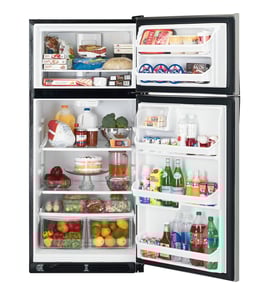



How do I read my Kenmore refrigerator model number?
Your Kenmore refrigerator model number is printed on the model and serial number label inside the fresh food (refrigerator) compartment. For Kenmore model 10663852302, use the full model number exactly as shown on that label when ordering parts or looking up service information in the 10663852302 owner's manual.
Where to find the model number label
On Kenmore top-mount refrigerators like 10663852302, the label is typically located in one of these spots:
- Inside the refrigerator compartment on an interior side wall
- Near the top section of the fresh food compartment (behind shelves on some layouts)
- On the liner wall near the crisper area (varies by configuration)
- Sometimes on the frame area just inside the door opening
How to read and use the number correctly
Kenmore model numbers are most useful when you copy them exactly, character for character.
- Write down the full model number (example: 10663852302)
- Record the serial number too; it helps with age and production details
- Use the model number to match the correct diagrams, shelves, bins, and electrical parts
- When ordering, match the part ID and description to your model’s parts list
Model number vs. serial number
| Item | What it tells you | When you need it |
|---|---|---|
| Model number | The exact refrigerator design and parts fit | Ordering parts, looking up diagrams, manuals |
| Serial number | Production-specific details | Service calls, warranty and manufacturing info |
Why it matters
A single digit difference can change fit and wiring. Using the exact 10663852302 model number helps ensure parts like an ice maker, thermostat, or door gasket match your refrigerator’s configuration.
Last updated: February 2026
How do I tell what model Kenmore fridge I have?
For a Kenmore refrigerator, the model number is printed on the model and serial number label inside the fresh food (refrigerator) compartment. On model 10663852302, that label is typically on an inside wall; write down the full model and serial number exactly as shown and keep it with your records in the 10663852302 owner's manual.
Where to look for the model number label
Check these common label locations first (use a flashlight and look for a sticker or metal plate):
- Inside the refrigerator compartment on an interior side wall
- On the ceiling area inside the refrigerator compartment (near the control housing)
- Along the door frame (hinge side) when the door is open
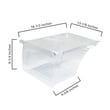
- Behind or near the lower crisper drawers (on the liner wall)
- Behind the front toe grille or kick plate area (less common)
What to write down (and why)
Record the information exactly as it appears on the label:
- Model number (for example: 10663852302)
- Serial number
- Purchase date (if known)
- Any suffixes or extra digits/letters shown on the tag
Quick checklist
| Item | Example | Used for |
|---|---|---|
| Model number | 10663852302 | Correct parts lookup and diagrams |
| Serial number | (varies) | Date/production identification for service |
| Purchase date | (your date) | Warranty and service records |
Why it matters
Kenmore model numbers can look similar, but small differences change which parts fit (ice maker, thermostat, door gaskets, and water system components). Using the exact model number helps us match the right replacement part the first time.
Last updated: February 2026
What are the common problems with Kenmore Elite refrigerators?
Common Kenmore Elite refrigerator problems include warm temperatures (cooling failure), ice maker not making ice, water leaks, and unusual noises. On Kenmore model 10663852302, these symptoms most often trace back to airflow issues, dirty coils, a defrost problem, or a failing fan or water valve; use the 10663852302 owner's manual troubleshooting section to narrow it down.
Most common symptoms and what usually causes them
- Not cooling or weak cooling: blocked air vents, evaporator fan not running, dirty condenser coils, or a defrost system issue
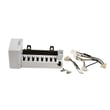
- Ice maker problems: water supply issue, inlet valve not opening, ice maker assembly failure, or a frozen fill tube
- Water leaking: clogged/iced defrost drain, loose water line, or a seeping inlet valve connection
- Noisy operation: normal compressor and fan sounds, rattling from items/water line, or a worn fan blade
- Lights not working: burned-out bulb or a faulty door/light switch
Quick checks we recommend first (10 to 20 minutes)
- Confirm controls are not set to OFF and the unit has power (breaker, outlet).
- Make sure air can circulate; do not block vents with food packages.
- Listen for the evaporator fan; it typically runs when the compressor runs.
- Check for frost buildup on the freezer back panel (points to a defrost issue).
- If you have an ice maker, confirm the shutoff arm is down and the water supply valve is fully open.
Parts that commonly fix these issues on model 10663852302
| Symptom | Common part to check | What it affects |
|---|---|---|
| Ice maker not filling | Refrigerator inlet valve WP2315576 | Opens to send water to the ice maker |
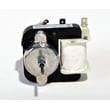
| No/weak airflow | Refrigerator evaporator motor WPW10189703 | Circulates cold air through compartments |
| Rattling or fan noise | Fan blade WP2163777 | Moves air across the evaporator |
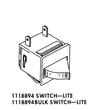
| Light stays off | Refrigerator light switch W11384469 | Turns light on when door opens |
Why it matters
Cooling and ice maker complaints are often airflow or water-supply related. Fixing the root cause early helps prevent food spoilage, repeat icing, and longer compressor run times (which your manual notes can be normal, but excessive run time usually signals a problem).
For display or diagnostic codes on Kenmore 106-style units, use Kenmore 106 model refrigerator error codes.
Last updated: February 2026
What are the dimensions of the Kenmore Coldspot model 10663852302?
The Kenmore Coldspot top-mount refrigerator model 10663852302 is approximately 66 3/4 in. high (with hinge), 32 1/8 in. deep (without handle), and 33 7/9 in. deep (with handle); with the doors open, maximum depth is about 49 7/8 in. For handling and clearance details, use the 10663852302 owner's manual.
Quick dimension summary
| Measurement | Approx. size |
|---|---|
| Height with hinge | 66 3/4 in. |
| Depth without handle | 32 1/8 in. |
| Depth with handle | 33 7/9 in. |
| Max depth with doors open | 49 7/8 in. |
How we recommend measuring at home (for best fit)
Even with published specs, we recommend confirming your exact unit and space:
- Measure height from floor to the top of the hinge cover area.
- Measure depth from the wall to the front edge of the door (include the handle if it sticks out).
- Measure width at the widest point (often the cabinet, not the doors).
- Check door swing clearance by opening the doors to your normal use position.
- Confirm the refrigerator is level; leveling affects door closing and alignment.
Clearance tips that prevent installation problems
Most top-mount refrigerators like Kenmore model 10663852302 need extra space for airflow and door movement:
- Leave space behind the cabinet for air circulation.
- Avoid pushing the cabinet tight to the wall if it causes the doors to bind.
- Plan for the 49 7/8 in. door-open depth so drawers and bins can slide out.
- If doors do not self-close, follow the door closing and alignment steps in the manual.
Why it matters
Correct dimensions and clearance protect cooling performance (airflow), reduce door seal leaks, and make routine tasks like pulling crispers and cleaning easier.
Last updated: February 2026
What is the cubic foot of my Kenmore refrigerator model 10663852302?
Your Kenmore top-mount refrigerator model 10663852302 has a total capacity of about 21.9 cubic feet. Use this number when comparing replacement refrigerators, planning kitchen fit, or estimating usable storage space for fresh food and frozen items.
What “21.9 cu. ft.” means in real use
Capacity is the combined volume of the refrigerator and freezer compartments. Actual usable space is slightly less once you account for shelves, bins, the ice maker (if equipped), and airflow clearance.
- Expect less usable space if you have an installed ice maker or bulky door bins
- Keeping vents clear improves temperature consistency and helps prevent warm spots
- Overpacking can restrict airflow and reduce cooling performance
- Shelf and crisper layout affects how much you can store, even with the same cu. ft.
Quick reference
| Spec | Value |
|---|---|
| Model | 10663852302 |
| Refrigerator type | Kenmore top-mount |
| Total capacity | 21.9 cu. ft. |
Why it matters
Knowing the cubic feet helps us match the right Kenmore replacement parts and accessories, and it also helps you plan installation clearances. For example, many top-mount refrigerators need breathing room around the cabinet for ventilation.
For additional model-specific details (features, care, and installation spacing guidance), check the 10663852302 owner's manual.
Last updated: February 2026
What is the upper part of a fridge called?
On the Kenmore 10663852302 top-mount refrigerator, the upper compartment is the freezer. It is designed to keep foods frozen, and it also supplies cold air that circulates down into the fresh food (refrigerator) section.
What the freezer does (and why it affects the fridge)
Your freezer is not just “extra cold storage”; it is the starting point for airflow. Cold air moves through freezer vents and then into the refrigerator section, so blocking vents can cause warm temperatures and moisture issues.
- Stores frozen foods at freezer temperatures
- Feeds cold air to the refrigerator section through vents
- Helps control odors and moisture when airflow is correct
- Often houses the ice maker on models equipped for ice
Common freezer-related issues to watch for
If the freezer is working but the refrigerator section is warm, airflow is usually the first thing we check.
- Food packages blocking freezer or refrigerator vents
- Frost buildup restricting airflow
- Doors not sealing evenly or fully
- Overpacked shelves preventing circulation
- Odors transferring between sections when foods are not covered
Quick terminology guide
| What people call it | Correct name | Where it is on 10663852302 |
|---|---|---|
| Upper part of the fridge | Freezer compartment | Top |
| Lower part of the fridge | Refrigerator (fresh food) compartment | Bottom |
| Air slots/grilles | Air vents/air returns | Between sections |
Why it matters
When we keep vents clear and doors aligned, the Kenmore 10663852302 maintains stable temperatures in both compartments. That protects food quality, reduces frost and moisture problems, and helps the cooling system run efficiently.
For compartment layout, vent locations, and airflow guidance, use the 10663852302 owner's manual.
Last updated: February 2026
What's the average lifespan of a Kenmore refrigerator?
Most Kenmore refrigerators average 10 to 15 years of service life; a well-maintained Kenmore 10663852302 top-mount refrigerator often reaches the upper end of that range when the condenser coils stay clean, the doors seal tightly, and cooling issues are repaired early (see the owner's manual).
Typical lifespan ranges (what we see most often)
- 10 to 15 years: common for most household refrigerators
- 15+ years: common when maintenance is consistent and airflow is good
- Shorter lifespan: more likely with poor ventilation, dirty coils, or repeated overheating
- Longer lifespan: more likely when door gaskets seal well and temperatures stay stable
| Condition | What it usually leads to | What to do |
|---|---|---|
| Coils dusty or pet hair buildup | Compressor runs hotter and longer | Clean coils regularly; keep rear/bottom vents clear |
| Door not sealing | Frost, warm temps, longer run time | Inspect and correct sealing issues; replace gasket if needed |
| Frequent power interruptions | Temperature swings, ice buildup | Follow power interruption guidance in the manual |
| Slow cooling or warm freezer | Food spoilage risk, heavy run time | Troubleshoot airflow and defrost system early |
Maintenance that extends refrigerator life
- Vacuum and brush condenser coils and the toe-kick area
- Keep 2 to 3 inches of clearance for airflow (typical for many top-mount units)
- Confirm the freezer door closes fully and the gasket makes full contact
- Set stable temps (typical targets: 0°F freezer, 37°F fresh food)
- Address cooling symptoms early (fan noise changes, frost buildup, warm spots)
Parts that commonly affect longevity
These parts do not “set” the lifespan, but failures here often decide whether a repair is worth it:
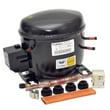
- Refrigerator compressor W10309988 (sealed system performance)
- Refrigerator condenser fan W10181323 (removes heat from the condenser area)
- Defrost bi-metal WP4387503 (helps prevent heavy frost that blocks airflow)
Why it matters
A refrigerator that runs hot, leaks cold air, or struggles to defrost uses more energy and puts extra stress on the sealed refrigeration system. Basic upkeep and quick fixes typically add years of reliable cooling.
Last updated: February 2026
Why is the top part of my refrigerator not cooling?
If the top (refrigerator section) of your Kenmore 10663852302 is warm, the most common cause is restricted airflow from the freezer into the fresh food compartment. Start by clearing blocked vents and confirming the controls are set near the factory mid-settings shown in the 10663852302 owner's manual.
Quick checks that fix most “top not cooling” complaints
- Make sure no food packages are blocking the air vents in either section (especially the top vent feeding the refrigerator section).
- Confirm the refrigerator and freezer controls are not set to OFF.
- If the refrigerator was just installed or restarted, allow 24 hours to reach stable temperatures.
- Avoid overpacking; cold air must circulate from the freezer up and into the refrigerator section.
- Verify the doors close fully and the gaskets seal all the way around.
What to check next (in order)
1) Airflow path from freezer to refrigerator
On this style of top-mount refrigerator, most cooling is made in the freezer and shared with the refrigerator section through vents. If vents are blocked, temperatures and moisture problems follow.
2) Control settings and loading
Use this as a practical guide:
| Situation | What to do | What to expect |
|---|---|---|
| Fridge warm, freezer OK | Move food away from vents; set controls back to mid-setting | Improvement within several hours; fully stable in 24 hours |
| Both sections warm | Check controls, door sealing, condenser cleanliness | Longer run times; may point to a cooling system issue |
| Fridge warm, freezer very cold | Reduce freezer setting slightly; recheck vent blockage | More balanced temps after 24 hours |
3) Evaporator fan not moving air
If you do not hear a fan running when the compressor is on (door switch held closed), the evaporator fan may not be circulating cold air. For this model, a common replacement is the refrigerator evaporator motor WPW10189703.
Why it matters
When the refrigerator section is warm, food safety and freshness drop quickly. Restoring airflow and correct control settings usually solves the problem without replacing parts.
Last updated: February 2026