Installation guide
 Owner’s manual





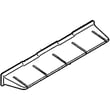
How to tell if a dryer thermal fuse is blown?
On the Electrolux EIMED60LT3 dryer, a blown thermal fuse (thermal limiter) commonly shows up as a dryer that will not start, or a dryer that runs but will not heat. The most reliable way to confirm is a continuity test with a multimeter; a good fuse reads closed (near 0 ohms), and a blown fuse reads open.
These symptoms are common on many Electrolux dryers, including the EIMED60LT3:
- Dryer will not start at all (some designs route power through a thermal limiter)
- Dryer runs but produces no heat
- Cycle seems normal but clothes stay damp (often paired with restricted airflow)
- Burning smell or unusually hot cabinet (stop using the dryer and inspect venting)
- Thermal limiter blows again soon after replacement (usually airflow related)
Before testing, disconnect power (unplug electric dryer; for gas models, unplug and shut off gas).
- Access the thermal fuse/thermal limiter location (varies by design; follow the disassembly guidance in the EIMED60LT3 installation instructions).
- Pull the wires off the fuse terminals (note their positions).
- Set your multimeter to continuity or the lowest ohms scale.
- Touch one probe to each terminal.
| Meter result | What it means | Next step |
|---|---|---|
| Beep or ~0 to 1 ohm | Fuse is good (closed circuit) | Check other heat/start components |
| No beep or OL/infinite | Fuse is blown (open circuit) | Correct airflow issue, then replace fuse |
On the EIMED60LT3, Sears PartsDirect lists thermal limiter style safety parts that are commonly confused with “thermal fuses.” If you are replacing a safety cutoff, match by model and location.
- Dryer exhaust thermal limiter 134711401 (safety cutoff used to prevent overheating)
- Dryer inlet thermal limiter 137032600 (safety cutoff used to prevent overheating)
- High-limit thermostat (can trip due to overheating and may indicate airflow problems)
A thermal fuse is a one-time safety device; it opens to prevent overheating. The most common root cause is restricted airflow (lint buildup, crushed duct, blocked vent hood). If you replace the fuse without fixing airflow, it often blows again.
For airflow-related drying problems, we recommend reviewing dryer takes a long time to dry and inspecting the full vent run from the dryer outlet to the outside hood.
Last updated: January 2026
What are common Electrolux dryer problems?
Common problems we see on the Electrolux EIMED60LT3 dryer include long dry times (usually airflow restriction), no heat (heating circuit or gas ignition issue), the dryer not starting (door switch or control issue), and loud thumping/squealing (belt or drum support wear). Use the EIMED60LT3 installation guide to confirm safe venting and electrical/gas setup first.
- Takes too long to dry: Clean the lint screen, check the vent hood outside, and inspect the full vent run for kinks or lint buildup.
- No heat (electric): Verify the 240V supply and inspect heating components.
- No heat (gas): Confirm gas supply is on; ignition components can also cause no-heat.
- Won’t start: Make sure the door fully closes and the latch engages; check power and controls.
- Noisy operation: Worn belt, rollers, or drum seals can cause squeaks, thumps, or scraping.
If troubleshooting points to a worn or failed component, these are common wear items for this model:
- Frigidaire dryer heating element 134792700 (electric heat issues)
- Dryer door switch 134813660 (won’t start when the door switch doesn’t close)
- White-westinghouse dryer drum belt 134719300 (drum not turning, squealing)
- Dryer drum support roller 5304523152 (thumping/rumbling)
- Dryer inlet thermal limiter 137032600 (overheat protection trips, often tied to vent restriction)
| Symptom | Most likely cause | Best first action |
|---|---|---|
| Long dry times | Restricted venting/airflow | Clean venting end-to-end and confirm proper duct type |
| No heat | Heating circuit or gas ignition issue | Verify supply (240V or gas), then test heat components |
| Won’t start | Door not sensed closed, power/control issue | Check door closure and door switch operation |
| Loud thump/squeal | Belt or roller wear | Inspect belt path and drum support rollers |
Airflow problems can cause poor drying performance and can also overheat the dryer, which may trip thermal limiters and lead to repeat no-heat complaints. Getting venting and basic maintenance right often prevents repeat repairs.
Last updated: January 2026
How to tell if your dryer heating element is bad?
If your Electrolux dryer model EIMED60LT3 runs but won’t heat, leaves clothes damp, or suddenly takes much longer to dry, the heating element is a strong suspect. The most reliable way to confirm is a multimeter test for an open circuit or a short to the heater housing.
- Drum tumbles normally but there’s no heat on heated cycles
- Drying time is much longer with similar loads
- Clothes come out cool and still damp
- Heat is intermittent (warms briefly, then goes cold)
- You notice a burning smell; stop the cycle and disconnect power
Follow the access and safety steps in the EIMED60LT3 installation guide before opening panels.
- Disconnect power (unplug electric dryer; shut off gas and unplug if gas).
- Access the heater area.
- Visually check the coil for breaks or contact with metal.
- Test with a multimeter:
- Continuity across the heating element terminals
- Short to ground (terminal to metal heater housing)
| Test | Normal result | Failed result |
|---|---|---|
| Continuity across element | Continuity present | No continuity (open circuit) |
| Short to ground | No continuity to housing | Continuity to housing (short) |
On the EIMED60LT3, a no-heat complaint is often caused by airflow restriction or a safety device opening the heating circuit.
- Restricted venting or clogged lint screen
- Failed thermal limiter or thermostat (example: dryer inlet thermal limiter 137032600)
- Loose or burned wire connection at the heater or terminal block
- Incorrect power supply on electric models (one leg of 240V missing)
If airflow is restricted, the dryer can overheat and open limiters, which can mimic a bad heating element and cause repeat failures after repairs.
Last updated: January 2026
Is it worth replacing a heating element in a dryer?
Yes, it’s usually worth replacing the heating element in your Electrolux dryer model EIMED60LT3 if the dryer otherwise runs normally but won’t heat. The repair is typically far less expensive than replacing the dryer, as long as you also correct any airflow restriction that caused overheating.
Replacing the heater is usually the right move when:
- The drum tumbles and the controls work, but there’s no heat.
- The dryer is in good overall condition (no major noise, no burning smell).
- You can restore strong airflow at the outside vent hood.
- The problem is isolated to the heating circuit, not multiple major systems.
For model-specific safety and venting requirements, follow the EIMED60LT3 installation guide.
A failed heater is often a symptom of overheating from poor venting. We recommend these checks first:
- Clean the lint screen and the lint screen housing.
- Inspect the entire vent run to the outdoors and remove lint buildup.
- Use 4-inch rigid or semi-rigid metal duct (avoid plastic or foil).
- Make sure the vent hood damper opens freely.
- Confirm the dryer is not pushed back and crushing the duct.
If overheating is suspected, also test the safety cutoffs that can open when temperatures get too high, such as the dryer inlet thermal limiter 137032600 and the kelvinator dryer high-limit thermostat 3204267.
| Situation on EIMED60LT3 | Usually worth it? | What to do first |
|---|---|---|
| Tumbles but no heat | Yes | Check venting, then diagnose heater circuit |
| Long dry times but some heat | Maybe | Fix airflow first; heater may be fine |
| Repeated overheating shutoffs | Maybe | Correct venting and test limiters/thermostats |
Restricted airflow can overheat the heater housing and trip safety devices, leading to repeat failures and long dry times. Fixing venting protects the new part and helps your EIMED60LT3 dry efficiently.
Last updated: January 2026