Owner’s manual
 Error Codes




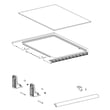

How do you reset the filter on a Samsung RF23J9011SR?
On the Samsung RF23J9011SR refrigerator, reset the water filter indicator by pressing and holding the Alarm/Filter Reset button for about 3 seconds until the filter light changes (typically turns off). For the exact button name and display behavior, follow the steps in the RF23J9011SR owner's manual.
Quick reset steps
- Close the doors so the control panel responds normally.
- Press and hold Alarm/Filter Reset for 3 seconds.
- Release the button when the indicator changes state.
- Dispense water for 1 to 2 minutes to purge air and carbon fines.
- If the light stays on, repeat the press-and-hold once more.
If the filter light will not reset
These are the most common causes on Samsung French door and bottom-mount designs:
- You are pressing Alarm briefly instead of pressing and holding.
- The control is in a locked mode (try unlocking, then reset).
- The filter is not fully seated in the housing (remove and reinstall firmly).
- Power was interrupted; a quick power reset can help (unplug for 2 minutes, then retry).
- The filter housing is leaking or not sealing; inspect the housing and connections.
Related part that can affect filter seating
If you see leaks at the filter area or the filter will not lock in smoothly, the housing can be involved: refrigerator water filter housing assembly DA97-15417B.
What to expect after resetting (normal behavior)
| What you see | What it means | What to do |
|---|---|---|
| Light turns off | Reset accepted | Run water 1 to 2 minutes |
| Light stays on | Reset not accepted | Hold button 3 seconds again |
| Light returns soon | Filter not seated or not changed | Reinstall filter, then reset |
Why it matters
Resetting the indicator keeps your maintenance schedule accurate, helps protect the water inlet valve and ice maker from restricted flow, and reduces the chance of slow dispensing or small ice cubes.
For filter replacement and indicator details, we also recommend Samsung refrigerator filter light reset explained.
Last updated: February 2026
How to defrost Samsung Ice Maker Model RF23J9011SR?
To defrost the ice maker on your Samsung RF23J9011SR, we recommend using the refrigerator’s built-in forced defrost (or forced freeze) function and then clearing any ice buildup in the ice room so airflow and ice production return to normal. Use the steps in the RF23J9011SR owner's manual for the exact button sequence.
Before you start (safety and prep)
- Move ice to a cooler and remove the ice bucket/bin.
- Protect the floor with towels; melting frost can drip.
- Keep doors closed as much as possible during the process.
- Never chip ice with sharp tools; it can puncture plastic liners or damage the evaporator area.
- If you use a hair dryer, keep it moving and away from standing water.
Defrost options (best to least invasive)
1) Forced defrost / forced freeze (recommended)
Use the control panel service mode to run a defrost cycle for the ice room. This is the fastest way to melt the “iceberg” that can form around the ice maker and fan area.
2) Power reset plus door-open thaw
Unplug the refrigerator (or switch off the breaker) for 5 minutes, restore power, then leave the ice room area open to thaw for 30 to 60 minutes.
3) Manual melt and dry
Melt remaining frost with warm air, then dry the compartment completely before reinstalling the bin.
What to check after defrost (so it does not refreeze)
- Confirm the ice bucket seats fully and the door closes tightly.
- Make sure vents in the ice room are not blocked by packages.
- If ice production is still slow, check for temperature stability issues; a failed sensor can misread temps. The refrigerator temperature sensor DA32-10104N is a common part involved in temperature feedback.
Quick troubleshooting table
| Symptom after defrost | Most likely cause | What we do next |
|---|---|---|
| Ice maker runs but no ice | Water supply issue | Check house shutoff, line kinks, then test the inlet valve |
| Small/hollow cubes | Low water flow | Replace filter, purge air, verify pressure |
| Frost returns quickly | Air leak or fan/airflow issue | Inspect seals, clear vents, listen for fan operation |
| Error code appears | Control or sensor input | Use Samsung error code guidance and follow the manual steps |
Why it matters
When frost builds up in the ice room, it blocks airflow and can stall the ice maker. A proper defrost restores airflow, prevents motor strain, and helps the dispenser and ice maker work consistently.
Last updated: February 2026
What is the capacity of the Samsung RF23J9011SR?
The Samsung RF23J9011SR has a total capacity of about 22.5 cu. ft., with roughly 6.8 cu. ft. in the freezer and the remainder in the fresh food section. For the exact breakdown used for your unit, confirm in the RF23J9011SR owner's manual.
Capacity breakdown (what you can expect)
Most Samsung bottom-mount refrigerators list capacity in three ways: total, fresh food, and freezer.
- Total capacity: about 22.5 cu. ft.
- Freezer capacity: about 6.8 cu. ft.
- Fresh food capacity: typically total minus freezer (varies slightly by configuration)
- Capacity is measured with standard shelving and bins installed
- Usable space can feel smaller if the ice room, filter housing, or door bins take up volume
| Section | Typical capacity for RF23J9011SR | What affects usable space most |
|---|---|---|
| Fresh food (refrigerator) | About 15.7 cu. ft. | Shelves, crisper layout, door bins |
| Freezer (bottom drawer) | About 6.8 cu. ft. | Basket position, ice storage |
| Total | About 22.5 cu. ft. | Overall interior layout |
Why the exact number can vary slightly
Even within the RF23J9011SR family, small design changes (bins, ice room components, or internal covers) can change the published compartment split while keeping the same overall size.
When capacity matters for troubleshooting
If the refrigerator seems “too full” or airflow is weak, it is often a loading and circulation issue, not a capacity issue.
- Keep vents clear in the fresh food section
- Avoid packing items tightly against the rear wall
- If temperatures swing, check the refrigerator temperature sensor DA32-10104N
- If cooling is uneven, inspect the refrigerator evaporator fan motor DA31-00334A
Last updated: February 2026
What is the capacity of the Samsung RF23J9011SR?
The Samsung RF23J9011SR has a total capacity of 22.5 cu. ft., with the freezer at 4.45 cu. ft. This is the usable storage volume for fresh food and frozen items in this bottom-mount refrigerator.
Capacity breakdown (what the numbers mean)
- Total capacity: 22.5 cu. ft. (fresh food + freezer combined)
- Freezer capacity: 4.45 cu. ft.
- Fresh food capacity: Total minus freezer (use this to estimate fridge space)
- Capacity is a volume rating; shelf layout and bins affect what fits day to day
| Section | Capacity |
|---|---|
| Total refrigerator | 22.5 cu. ft. |
| Freezer | 4.45 cu. ft. |
Why it matters
Capacity helps us plan grocery storage, meal prep space, and freezer organization. It also helps when comparing Samsung refrigerator models or deciding whether a second freezer is needed.
Where we recommend confirming the exact spec for your unit
For the most accurate model-specific specs and configuration details (including how Samsung defines usable volume), check the RF23J9011SR owner's manual.
Last updated: February 2026
What is the most common problem with Samsung refrigerators?
The most common problems we see with Samsung refrigerators (including the Samsung RF23J9011SR) are cooling performance issues, ice maker problems, and water leaks. In day-to-day repairs, these symptoms most often trace back to airflow restrictions from frost buildup, fan problems, or water supply and valve issues; check the RF23J9011SR owner's manual for model-specific checks and settings.
Most common symptoms and what they usually point to
- Fridge or freezer not cold enough: frost buildup on the evaporator cover, blocked vents, or a failing evaporator fan
- Ice maker stops making ice: low water flow, a freezing/clogged fill path, or an ice maker assembly issue
- Water under the fridge or in drawers: clogged defrost drain, loose water line, or a leaking inlet valve
- Noisy operation: fan blade hitting ice, worn fan motor bearings, or a condenser fan issue
- Temperature swings: sensor or control problems, or doors not sealing consistently
Quick checks we recommend before replacing parts
- Confirm the unit is not in demo mode and that temperature settings are correct.
- Make sure air vents inside the fresh food and freezer sections are not blocked by food packages.
- Inspect door gaskets for gaps and verify doors close fully.
- If you hear a grinding or buzzing, listen for which compartment the noise comes from (fresh food, freezer, or rear machine compartment).
- For ice and water issues, verify the household shutoff valve is fully open and the supply line is not kinked.
Parts that commonly solve these problems on RF23J9011SR
| Symptom | Common cause | Example part for this model |
|---|---|---|
| Warm temps, frost, fan noise | Airflow or fan issue | Refrigerator evaporator fan motor DA31-00334A |
| Ice maker not producing | Ice maker failure or icing | Refrigerator ice maker DA97-13718A |
| No water to dispenser or ice maker | Valve not opening or restricted | Refrigerator water inlet valve DA62-04027A |
| Erratic temps | Sensor out of range | Refrigerator temperature sensor DA32-10104N |
Why it matters
Cooling, ice, and leak complaints are usually connected: when airflow is reduced (often by frost), temperatures rise, the ice maker can stall, and meltwater can overflow into the cabinet. Fixing the root cause protects food quality, reduces noise, and prevents repeat icing.
Last updated: February 2026