Installation guide
 Owner’s manual


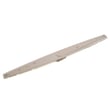
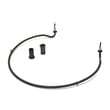
Can I run my dishwasher without the lower spray arm?
No. On the Kenmore 66513409N411 dishwasher, running without the lower spray arm is not recommended because it disrupts water coverage and wash pressure, so dishes will not clean correctly and the wash system can behave abnormally. Install the spray arm before normal use.
What happens if the lower spray arm is missing
Without the lower spray arm, the wash pump sends water where the arm should distribute it, so you typically see poor cleaning and odd cycle performance.
- Food soils remain on dishes, especially on the lower rack
- Detergent may not dissolve or rinse away well
- You may hear unusual splashing or thumping as water jets unpredictably
- The dishwasher can seem like it is “running” but not washing effectively
- Items can interfere with wash action more easily when spray patterns are wrong
What to do instead (safe, practical steps)
Use these steps to get back to normal washing performance.
- Turn off power to the dishwasher at the breaker before handling parts.
- Reinstall the lower spray arm and confirm it spins freely by hand.
- Check that filters are seated and locked; the manual warns not to operate without the ULTRA WASH HE filters properly installed.
- Run a short rinse cycle and listen for normal wash sounds.
- If the spray arm is cracked, warped, or missing, replace it with the correct part for this model.
Reference: 66513409N411 owner's manual
Related parts that often get checked at the same time
If cleaning is still poor after the spray arm is installed, these parts commonly affect wash coverage and draining.
| Symptom | Common area to inspect | Example part for this model |
|---|---|---|
| Poor lower-rack cleaning | Lower spray arm and filtration | Filters (per manual) |
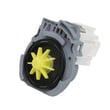
| Standing water after cycle | Drain system | Dishwasher drain pump WPW10348269 |
| Weak wash action or odd spray | Water fill and circulation | Dishwasher water inlet valve W11175771 |
Why it matters
The lower spray arm is a primary “water delivery” component. When it is missing, the dishwasher cannot sweep and distribute water across the load the way the wash system was designed to, so performance drops immediately.
Last updated: February 2026
Can you still get parts for a Kenmore dishwasher?
Yes. We still support replacement parts for many Kenmore dishwashers, including model 66513409N411. The key is matching parts to your exact model number so the fit and electrical or plumbing connections are correct; our parts list includes common repairs like racks, pumps, valves, and latches.
How to find the right part for your Kenmore 66513409N411
Use your model number 66513409N411 and confirm the symptom (won’t drain, won’t fill, door won’t latch, rack won’t roll). Then cross-check diagrams and part descriptions in the 66513409N411 owner’s manual.
Common parts customers replace on this model include:
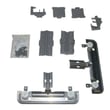
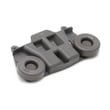
- Upper rack height hardware such as the dishwasher rack adjuster W10712395
- Drain components (pump or hose) when water stays in the tub
- Fill components (water inlet valve) when the dishwasher won’t fill
- Door latch parts when the cycle won’t start
- Spray arm or heating element parts when cleaning or drying is poor
Quick symptom-to-part map
| Symptom | What to check first | Example part on this model |
|---|---|---|
| Won’t drain / standing water | Clog in drain path, then pump | Dishwasher drain pump (WPW10348269) |
| Won’t fill / no water | Water supply, then inlet valve | Dishwasher water inlet valve (W11175771) |
| Door won’t close or start | Latch alignment, then latch | Dishwasher door latch (WPW10653840) |
| Upper rack sags or won’t adjust | Adjusters and clips | Dishwasher rack adjuster (W10712395) |
Why it matters
Kenmore dishwashers are built with serviceable components, so replacing the correct OEM-style part often restores normal washing and drying without replacing the whole dishwasher. Using the exact model number also prevents ordering a look-alike part that mounts differently.
Helpful DIY guidance
If your issue involves a flashing code or beeping, use the Kenmore 665 model dishwasher error codes guide to narrow the failure to a system such as draining, filling, heating, or the user interface.
Last updated: February 2026
Is it worth repairing a Kenmore dishwasher?
Yes, repairing a Kenmore dishwasher like model 66513409N411 is usually worth it when the problem is a wear item or a single failed part; it is most cost-effective when the repair restores core functions like filling, washing, heating, or draining without multiple major parts.
Quick way we decide: repair vs replace
- Repair when the issue is isolated (rack hardware, latch, hose, valve, drain pump).
- Repair when the tub is solid (no chronic leaks or severe corrosion).
- Replace when multiple major systems are failing (wash motor plus control plus leaks).
- Replace when repairs approach the cost of a comparable new dishwasher.
- Repair when you can DIY safely using the steps in the 66513409N411 owner's manual.
Common repairs that are typically “worth it”
These are frequent, targeted fixes on 665-series Kenmore dishwashers:
| Symptom | Likely area | Example part for this model |
|---|---|---|
| Won’t drain, standing water | Drain system | Dishwasher drain pump WPW10348269 |
| Door won’t latch or starts then stops | Door switch/latch | Dishwasher door latch WPW10653840 |
| Poor cleaning on lower rack | Spray/filtration | Dishwasher spray arm, lower W10849471 |
| Not filling or fills slowly | Water supply | Dishwasher water inlet valve W11175771 |
What to check before spending money
- Confirm the dishwasher is getting power and the cycle is actually starting.
- Clean the filter area and check for debris that blocks wash or drain flow.
- Inspect the drain hose routing for kinks and proper high loop/air gap setup.
- Run a cycle and listen: fill, then wash, then drain should all occur.
- Use the troubleshooting section in the 66513409N411 owner's manual to match symptoms to likely causes.
Why it matters
A dishwasher repair is “worth it” when it restores reliable wash and drain performance and prevents secondary damage. For example, a weak drain can leave dirty water that redeposits soil, while a failing latch can stop cycles mid-wash.
Last updated: February 2026