Installation guide
 Owner’s manual
 Error Codes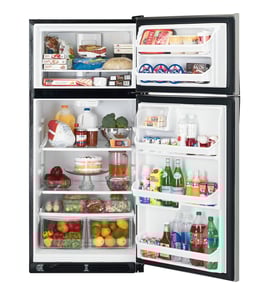



What are the disadvantages of a top mount fridge?
Top-mount refrigerators like the Frigidaire FFHT1832TP0 are reliable and space-efficient, but the main disadvantages are less convenient fresh-food access (you bend more), fewer premium organization features, and fewer built-in dispenser options compared with many bottom-freezer designs. See the FFHT1832TP0 owner's manual for model-specific features and setup guidance.
- Fresh-food items sit lower: you reach down more often for produce, drinks, and leftovers.
- Freezer is at eye level: great for frozen foods, but it shifts convenience away from the refrigerator section.
- Fewer built-in features on many models: external water and ice dispensers are less common on top-mount units.
- Organization can be simpler: fewer adjustable bins, drawers, and specialty zones than many bottom-mount styles.
- Door swing clearance can be tighter: if the hinge side is near a wall, you may need extra space to open the door wider.
| Feature | Top mount (like FFHT1832TP0) | Bottom freezer (typical) |
|---|---|---|
| Fresh-food access | Lower, more bending | Higher, easier access |
| Freezer access | Higher, easier access | Lower, more bending |
| Built-in dispensers | Less common | More common |
| Organization features | Often simpler | Often more flexible |
| Cost and simplicity | Often lower, simpler | Often higher, more complex |
Most households use the refrigerator compartment more than the freezer. If you want the most-used shelves at waist and eye level, a bottom-freezer layout usually feels more ergonomic. If you prioritize simplicity, value, and easy freezer access, a top mount is often a strong fit.
Proper placement and leveling help doors seal and swing correctly, which improves everyday usability and temperature stability:
- Place the refrigerator near a grounded outlet (no extension cord).
- Keep it out of direct sunlight and away from heat sources.
- Allow typical clearances for airflow (sides/top and rear).
- Level the cabinet so doors close and seal consistently.
For the exact clearance and leveling guidance for your unit, use the FFHT1832TP0 installation guide.
Last updated: February 2026
Is Frigidaire Gallery high end?
Frigidaire Gallery is not a luxury, high-end line; it is a strong mid-range step up from basic Frigidaire models, with more features and styling. For your Frigidaire top-mount refrigerator model FFHT1832TP0, Gallery-level features are not required for reliable everyday cooling when the unit is installed and maintained per the FFHT1832TP0 owner’s manual.
Frigidaire generally positions its refrigerator families like this:
- Frigidaire (base line): practical features, value-focused
- Frigidaire Gallery: upgraded finishes and convenience features
- Frigidaire Professional: premium styling and higher-end feature sets
When shoppers say “high end,” they usually mean a combination of performance, materials, and feature depth.
- Dual evaporators or advanced humidity management
- Quieter operation and tighter temperature control
- Premium interior lighting and adjustable storage systems
- Higher-grade exterior finishes and handles
- Longer feature lists (ice, water, smart features, etc.)
| Line | Typical positioning | What you usually get |
|---|---|---|
| Frigidaire | Entry to mid | Core cooling, simple controls |
| Frigidaire Gallery | Mid-range | More convenience features and styling |
| Frigidaire Professional | Premium | Higher-end design and feature packages |
Choosing “mid-range vs. high-end” affects what you pay for beyond basic refrigeration: finish quality, convenience features (like ice and water options), and how much flexibility you want in storage and controls. For day-to-day reliability, correct setup and care matter more than the badge; follow the installation and use guidance in the FFHT1832TP0 installation guide.
Last updated: February 2026
Which is better, top mount or bottom mount refrigerator?
A top-mount refrigerator like the Frigidaire FFHT1832TP0 is usually the better pick if you want lower cost, simpler design, and strong efficiency. A bottom-mount is usually better if you want fresh-food items at eye level and easier access to the refrigerator section.
| Feature | Top mount (freezer on top) | Bottom mount (freezer on bottom) |
|---|---|---|
| Everyday access | Freezer is easiest to reach | Refrigerator is easiest to reach |
| Typical price | Lower | Higher |
| Complexity | Simpler, fewer moving parts | More complex (often drawers/slides) |
| Organization | Basic shelves and bins | Often better freezer organization |
| Best for | Budget, reliability, efficiency | Convenience, frequent fresh-food use |
- If you use the freezer daily (frozen meals, ice, bulk storage), a top mount keeps it at a comfortable height.
- If you cook often with fresh ingredients, a bottom mount keeps produce, dairy, and leftovers at eye level.
- If you want fewer service issues over time, top mounts tend to be simpler (fewer drawer mechanisms and less weight on slides).
- If you have limited space, check door swing and clearances before deciding.
For a top-mount like FFHT1832TP0, we follow the clearances and site prep guidance in the FFHT1832TP0 installation guide. Common requirements include a level floor, a grounded outlet (no extension cord), and enough space for airflow.
- Plan for airflow clearance around the cabinet.
- Keep the refrigerator out of direct sunlight and away from heat sources.
- Level the refrigerator so doors seal correctly.
- If you are connecting water, use a cold water line with proper pressure and check for leaks after installation.
The “better” style is the one that matches how you use food storage. Layout affects daily comfort (bending and reaching), door sealing, and how efficiently cold air circulates, which can impact temperature stability and energy use.
Last updated: February 2026
What is the most common problem with Frigidaire refrigerators?
Cooling and temperature-control problems are the most common issues we see with Frigidaire refrigerators like model FFHT1832TP0, including the refrigerator section getting warm while the freezer still seems OK. These symptoms often trace back to airflow problems, dirty condenser coils, or a defrost system issue that lets frost build up.
- Confirm the temperature controls are not set to “0” (off); then allow 24 hours for temperatures to stabilize after any adjustment.
- Make sure the refrigerator is plugged into a dedicated 115V, 60 Hz, 15A outlet.
- Listen for normal fan and compressor operation; unusual silence can point to a power or control setting issue.
- Look for heavy frost on the freezer back wall; that often signals a defrost problem.
- Verify doors close and seal fully; warm air leaks cause temperature swings and frost.
| Symptom | Most likely cause | What you can do next |
|---|---|---|
| Freezer cold, fresh-food warm | Poor airflow (evaporator fan issue or blocked vents) | Clear vents, reduce overpacking, then follow how to fix your evaporator cooling fan steps |
| Frost buildup, weak cooling | Defrost system problem | Check for heavy frost; a failed heater or thermostat is common (see refrigerator defrost heater 242044008) |
| Temps fluctuate, runs a lot | Dirty condenser coils or door not sealing | Clean coils, confirm door alignment and gasket contact |
| Ice maker not working (some models) | Water supply off, low pressure, freezer not cold enough | Confirm supply is on; freezer must be cold enough for ice production |
When airflow is restricted or frost builds up on the evaporator, the refrigerator cannot move cold air where it needs to go. That leads to spoiled food, longer run times, and higher energy use.
For FFHT1832TP0, we recommend using the troubleshooting and “Before you call” checks in the FFHT1832TP0 owner's manual. It covers common occurrences like “refrigerator does not run,” temperature complaints, and ice maker checks.
Last updated: February 2026
What does quick freeze mean on a Frigidaire refrigerator?
Quick freeze on a Frigidaire refrigerator is a feature that temporarily boosts freezer cooling so newly added food freezes faster and stays fresher in texture and taste. On model FFHT1832TP0, use it when you load unfrozen groceries or want faster ice production.
- After a big grocery trip when you add a lot of room-temperature food
- When freezing meat, seafood, or prepared meals for storage
- When you want ice to recover faster after heavy use (if your unit has an ice maker)
- After the door has been opened frequently during parties or meal prep
- When you are trying to quickly firm up items like ice cream
Quick freeze helps the freezer pull temperature down faster, but it does not fix underlying cooling problems. If temperatures will not stabilize, follow the temperature adjustment guidance in the FFHT1832TP0 owner's manual.
| Situation | Quick freeze helps? | Better next step if it doesn’t |
|---|---|---|
| Large amount of warm food added | Yes | Reduce load, improve airflow, wait 24 hours |
| Freezer already too warm | Sometimes | Check vents, door seal, condenser airflow |
| Frost buildup on back wall | No | Check defrost system components |
| Door not sealing | No | Inspect/replace gasket |
- Keep air vents clear; don’t pack food tightly against the back wall.
- Use shallow containers so cold air can surround food.
- Let temperatures stabilize after changes; many refrigerators need up to 24 hours.
- If the door seal is loose, torn, or warped, cooling performance drops; consider the correct gasket for your color, such as the Frigidaire refrigerator door gasket (white) 242193206 or Frigidaire refrigerator door gasket (black) 242193212.
Faster freezing reduces large ice crystals that can damage food texture and helps the freezer recover quickly after warm loads, which supports safer food storage temperatures.
Last updated: February 2026
How to reset H code on Frigidaire refrigerator?
On the Frigidaire FFHT1832TP0, an H or HI code indicates the refrigerator sensed a high temperature condition. We reset the alert by clearing the temperature alarm at the controls; if it returns, we correct the cooling issue that caused the temperature to rise.
Try these steps in order:
- Press CLEAR ALERTS (or the temperature alarm reset key, depending on your control panel).
- If the alert will not clear, unplug the refrigerator for 30 seconds, then plug it back in.
- Confirm the temperature controls are set correctly (not set to “0”/OFF).
- Allow 24 hours for temperatures to stabilize after any control change.
- If the unit recently lost power or the doors were left open, wait for normal temps to return and the alert should stop.
For the exact button names and control layout for your unit, use the FFHT1832TP0 owner's manual.
An H/HI alert usually means the refrigerator warmed up long enough to trigger the alarm. Common causes:
- Door not sealing (gasket not fully closing, items blocking the door)
- Warm air entering from frequent openings or a door left ajar
- Heavy frost buildup restricting airflow (defrost problem)
- Poor airflow inside (overpacked shelves, blocked vents)
- Cooling system not running consistently (fan or compressor issue)
| What you notice | Most likely issue | What to do next |
|---|---|---|
| Freezer cold, fresh food warm | Airflow problem | Clear vents; avoid overpacking; check for frost |
| Frost/ice on freezer back wall | Defrost system issue | Inspect defrost heater and thermostat |
| Door feels loose or won’t close | Seal/leveling issue | Check gasket; level cabinet per manual |
If you suspect a defrost failure, the refrigerator defrost heater 242044008 is a common part involved in restoring normal defrost operation.
Clearing the H/HI code resets the alarm, but fixing the underlying temperature rise protects food safety and prevents repeat alerts. A stable temperature also reduces compressor run time and helps the refrigerator cool efficiently.
Last updated: February 2026
Why is my Frigidaire top mount freezer not freezing?
If your Frigidaire FFHT1832TP0 top-mount freezer is not freezing, the most common causes are incorrect temperature settings, blocked air vents, or a failed fan or defrost component. Set controls colder in small steps and give the unit about 24 hours to stabilize before judging results (see the FFHT1832TP0 owner’s manual).
- Confirm the freezer control is set colder; adjust gradually in small increments.
- Wait 24 hours after any control change for temperatures to stabilize.
- Make sure food packages are not blocking cold air vents (airflow is required for cooling).
- Listen for the evaporator fan running in the freezer; no airflow often means no freezing.
- Check the door is closing fully and the gasket is sealing all the way around.
Cold air has to move between compartments. If the evaporator fan is not moving air, the freezer warms up and the refrigerator section often warms too.
If the evaporator area is packed with frost, airflow gets choked off. On this model, common defrost-related parts include the refrigerator defrost heater 242044008 and the refrigerator defrost bi-metal thermostat 5303918634.
If the condenser fan is not running or the condenser coils are dirty, heat cannot leave the system efficiently and freezing performance drops.
| What you notice | What it usually means | What to do |
|---|---|---|
| Freezer warm, little or no airflow | Evaporator fan issue or heavy frost | Check fan operation and look for frost buildup |
| Heavy frost on back freezer panel | Defrost problem | Inspect defrost heater/thermostat, then defrost fully |
| Runs a lot, still not cold | Dirty coils, poor airflow, weak cooling system | Clean coils, verify fans, confirm door seal |
| Door won’t seal, moisture/frost near door | Gasket leak or door alignment | Warm and reshape gasket, level unit, verify closure |
A freezer that is not freezing is usually an airflow or defrost issue. Fixing airflow, settings, and frost buildup early prevents food spoilage and reduces strain on the compressor.
Last updated: February 2026