Owner’s manual
Are all table saw arbor nuts the same size?
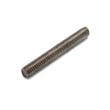
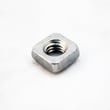
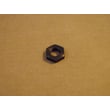
No. Arbor nuts are not universal; the thread size and direction (right-hand vs left-hand) vary by saw design. On the Craftsman 113226640 10-inch direct-drive table saw, use the correct arbor nut and collars for this saw and tighten the arbor nut securely as shown in the 113226640 owner's manual.
Most 10-inch table saws use a 5/8-inch blade arbor (the blade bore size), so many 10-inch blades fit many saws. That does not mean the arbor nut is the same across brands or models.
- Blade bore (hole size) is commonly 5/8 inch on 10-inch blades.
- Arbor nut thread (diameter, pitch) can differ by model.
- Thread direction can differ (some saws use reverse threads so the nut self-tightens in use).
- Washer/collar shape matters; collars must seat flat and clamp the blade evenly.
- Wrench flats and nut thickness can vary, affecting what wrench fits.
We recommend matching parts by model number and by the saw’s parts list terminology.
- Verify your model number is 113226640.
- In the 113226640 owner's manual, look for the blade removal/installation section and the parts list references to the arbor nut.
- Compare your existing nut to the diagram and confirm:
- Thread direction
- Thread pitch
- Whether it uses specific blade collars/spacers
| Item | Often shared across saws? | What to check |
|---|---|---|
| 10-inch blade bore | Yes (commonly 5/8 inch) | Blade label and arbor diameter |
| Arbor nut | No | Thread size, pitch, direction |
| Blade collars/flanges | No | Seating surface, hollow/flat side orientation |
Using the wrong arbor nut (or mixing collars from another saw) can prevent the blade from clamping correctly. That leads to blade wobble, poor cut quality, and a higher risk of kickback.
Last updated: February 2026
How to get rid of an old table saw?
If your Craftsman 113226640 10-inch direct-drive table saw still runs and the blade raises, tilts, and locks correctly, the best way to get rid of it is to sell or donate it. If it is unsafe or incomplete, remove the blade, secure the cord, and recycle it as scrap metal or through a local bulky-item program.
Before transporting any table saw, we recommend making it safe to handle and impossible to start.
- Unplug the saw and remove the switch key (store it separately)
- Lower the blade fully below the table surface; return the blade to 90 degrees
- Remove the blade and pack it separately (wrap teeth and label as sharp)
- Vacuum or blow out sawdust so it does not spill during transport
- Coil and tape the power cord to the cabinet or stand
Choose the option that matches the saw’s condition.
| Condition | Best option | Why it works |
|---|---|---|
| Works and has guard/fence | Sell locally | Highest value; someone can use it immediately |
| Works but needs cleanup/tune-up | Donate or list free | Fast removal; keeps it out of the waste stream |
| Missing parts or unsafe | Scrap metal recycler | Cast iron and steel are commonly accepted |
| Motor or wiring damaged | Recycling drop-off | Keeps electrical components out of trash |
Blades and sharp accessories are the biggest safety issue during disposal.
- Wrap blades in cardboard and tape the edges so they cannot cut through bags
- Keep the arbor nut and washers with the saw (bag and tape to the cabinet)
- If you include accessories (miter gauge, rip fence), bundle them so nothing falls out
A table saw can start unexpectedly if the switch is bumped or power is restored after an outage; the manual calls out locking the switch OFF and removing the key when the saw is not in use. Following the shutdown and blade-lowering steps reduces injury risk during moving, donation, or recycling. See the 113226640 owner's manual for the exact switch-lock and blade-lowering guidance.
Last updated: February 2026
Are Craftsman table saws any good?
Yes. Craftsman table saws are a solid choice for DIY and light-to-moderate shop use when they are set up correctly and maintained. For the Craftsman 113226640 10-inch direct-drive table saw, good results come from careful alignment, using the right blade and inserts, and keeping safety guards and anti-kickback parts in working order (see the owner's manual).
A table saw can be “good” in different ways; here is what most owners care about:
- Cut quality: smooth, burn-free cuts with the right blade
- Accuracy: fence and miter gauge stay square and repeatable
- Power delivery: steady feed rate without stalling on typical stock
- Safety: guard, spreader, and anti-kickback pawls used correctly
- Durability: holds adjustments and runs reliably over time
For a 10-inch direct-drive saw like model 113226640, these are the common pros and cons.
| Area | What it’s typically good at | Where you may notice limits |
|---|---|---|
| General DIY cuts | ripping and crosscutting common lumber | heavy, all-day production work |
| Setup and tuning | can cut very accurately after alignment | needs periodic re-checking |
| Maintenance | straightforward cleaning and basic service | sawdust buildup can affect motor ventilation |
Our best advice is to treat setup and safety as part of performance. The manual emphasizes using the proper insert, keeping guards in place when possible, and positioning your body correctly during cuts.
- Unplug the saw before adjustments or maintenance
- Keep the blade height as low as practical for the cut
- Use the proper table insert and keep it flush with the tabletop
- Keep the blade guard, spreader, and anti-kickback pawls installed and working
- Never feed material into the blade from the rear; start and finish the cut from the in-feed side
- Clean out sawdust inside the cabinet and motor area to support normal ventilation
Most “bad saw” complaints come from alignment drift, a worn blade, or missing safety hardware. On the 113226640, routine cleaning and keeping the guard assembly components in good shape helps the saw run more consistently and reduces the chance of kickback.
Last updated: February 2026
Can you use an 8 inch blade on a 10 inch table saw?
Yes; an 8-inch blade can be used on the Craftsman 113226640 10-inch direct-drive table saw if it fits the arbor correctly and the blade’s maximum RPM rating meets or exceeds the saw’s operating RPM. For ripping and other through-cuts, we use the maximum diameter blade the saw is designed for.
The 113226640 manual emphasizes using accessories designed for the saw and specifically notes that when ripping, you should use the maximum diameter blade the saw is designed for because the spreader is nearest the blade in that setup.
- Use only accessories designed for this saw
- For ripping (through-cuts), use the saw’s designed maximum blade diameter (10-inch)
- Keep guards in place whenever possible
- Never operate without the proper table insert installed
- Keep the cutting tool as low as possible for the operation
On 10-inch table saws, 8-inch cutters are most common for non-through operations (for example, certain dado or molding setups) where the blade guard and spreader may be removed and other safety methods are required.
| Operation | Recommended on 113226640 | Key setup focus |
|---|---|---|
| Ripping (through-cuts) | 10-inch blade | Spreader position and kickback control |
| Crosscutting (through-cuts) | 10-inch blade | Guard fit and cut capacity |
| Non-through cutting | 8-inch cutter may be used | Correct insert, push tools, controlled feed |
These are the checks that matter for correcting the earlier issues about “arbor speed” and spreader alignment.
- RPM rating: confirm the blade’s max RPM is at least the saw’s RPM (the saw’s RPM is fixed; the blade must be rated to handle it)
- Arbor fit: match the blade’s arbor hole to the saw’s arbor size; install arbor collars and arbor nut properly
- Spreader and guard: for through-cuts, keep the blade guard and spreader installed; for non-through cuts, use push sticks and featherboards and reinstall the guard and spreader when finished
- Insert: use the correct throat plate/table insert for the blade or accessory; keep it flush with the tabletop
A smaller blade reduces cutting depth and changes how the blade lines up with fixed safety components. On the 113226640, the spreader relationship is safest when you use the designed maximum blade diameter for ripping.
For model-specific setup and safety instructions, follow the owner's manual.
Last updated: February 2026