Installation guide
 Owner’s manual
 Error Codes


What are the most common problems with Kenmore refrigerators?
The most common problems we see on Kenmore side-by-side refrigerators like model 10656934600 are weak or no cooling, ice maker and dispenser issues, water leaks, frost buildup, and unusual noises. Many start with airflow, door sealing, or water supply problems that you can diagnose quickly.
Common symptoms and likely causes
- Not cooling or warm temps: blocked vents, dirty condenser area, controls set wrong, doors not sealing
- Runs too much: frequent door openings, warm room, large food load (often normal)
- Noisy operation: buzzing, gurgling, popping, water-running sounds (many are normal)
- Ice maker or dispenser trouble: freezer door not fully closed, ice bin not seated, ice stuck in chute, low water pressure
- Bad-tasting or discolored ice/water: old ice, odor transfer, filter needs flushing or replacement
- Leaks/puddles: clogged defrost drain, loose water line, inlet valve seepage
Quick checks first (no tools)
- Confirm power and controls are on; after installation, allow 24 hours for full cooling (see the owner's manual).
- Make sure doors close fully and gaskets seal all the way around.
- If the ice maker was just installed, allow 24 hours to start making ice and up to 72 hours for full production.
- If ice looks gray/dark after a filter change, flush the water system.
Parts that commonly solve these issues
| Problem area | What to inspect | Part option for 10656934600 |
|---|---|---|
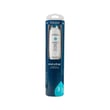
| Water quality | Filter age, flushing | Refrigerator water filter EDR3RXD1 |
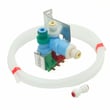
| No ice or slow fill | Water supply, valve function | Refrigerator inlet valve W10408179 |
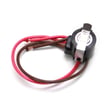
| Frost/defrost trouble | Defrost components | Refrigerator defrost bi-metal WPW10225581 |
Why it matters
Small issues like a poor door seal or restricted airflow quickly lead to temperature swings, frost, and extra compressor run time, which affects food quality and overall performance.
Last updated: February 2026
What is the FDH code on a Kenmore refrigerator?
On Kenmore model 10656934600, the FDH code points to a freezer defrost heating problem. In most cases, the issue is in the evaporator defrost circuit (defrost heater, defrost thermostat/bi-metal, or wiring), not a random sensor on the rear panel.
What FDH usually means on this refrigerator
FDH is commonly interpreted as a freezer defrost heater error. The freezer evaporator coil is supposed to periodically warm up during a defrost cycle so frost does not choke off airflow.
What to check first (fast, high-value checks)
- Make sure freezer vents are not blocked by food; blocked airflow can mimic defrost trouble.
- Look for heavy frost on the freezer back wall; that is a classic sign of a defrost failure.
- Listen for normal fan operation; the manual notes you may hear the evaporator fan circulating air.
- Confirm doors are sealing; warm air leaks increase frost load quickly.
- If the unit recently had a filter change or water work, keep troubleshooting focused on the freezer defrost system (FDH is not a water-system code).
Parts that commonly cause an FDH defrost error
These are the most common failure points in the freezer defrost circuit:
| Component | What it does | Common symptom when failed |
|---|---|---|
| Defrost bi-metal (thermostat) | Opens/closes based on evaporator temperature | Heavy frost buildup, intermittent defrost |
| Defrost heater | Melts frost off the evaporator | Solid frost sheet, warm fridge section |
| Wiring/connector | Carries power to heater/thermostat | Random or recurring FDH, burn marks |
For this model, the parts list includes the defrost thermostat/bi-metal and the defrost heater:
Why it matters
When the freezer cannot defrost, frost builds up on the evaporator coil and blocks airflow. That often leads to warm refrigerator temperatures, poor ice production, and longer run times.
Best next step
Use the troubleshooting and access instructions in the owner's manual to locate the evaporator area and confirm whether you have frost buildup, then test the defrost heater and defrost bi-metal for continuity (with power disconnected).
Last updated: February 2026
What size is a Kenmore 10656934600 refrigerator?
The Kenmore 10656934600 is a full-size side-by-side refrigerator; its exact exterior dimensions and total capacity depend on the specific configuration listed in the product specifications for this model. For the most accurate size details, use the measurements and clearance guidance in the owner's manual.
What “size” usually means (and what to measure)
When customers ask about refrigerator size, we typically look at these items:
- Overall width, height, and depth (cabinet and with handles)
- Door swing clearance (space needed to open doors fully)
- Installation clearances (airflow space around the cabinet)
- Capacity (cubic feet, if provided in the specs)
Quick measuring checklist
Measure with a tape measure and record in inches:
- Width: left cabinet edge to right cabinet edge
- Height: floor to top of hinge cover (or highest point)
- Depth: back to front of doors (and separately to front of handles)
- Door swing: distance needed so doors clear nearby walls/cabinets
Installation clearances for this model
The manual for Kenmore 10656934600 calls out ventilation and placement clearances that affect “fit” as much as the cabinet dimensions:
- Allow 1/2 inch (1.25 cm) space on each side and at the top for ventilation
- If installed next to a fixed wall, leave 2 inches (5.08 cm) minimum on each side (varies by setup) so doors can swing open
- If the refrigerator has an ice maker, allow extra space at the back for the water line connection
| What you’re checking | Typical target | Why it matters |
|---|---|---|
| Side/top ventilation | 1/2 inch | Prevents poor cooling and overheating |
| Wall clearance for door swing | 2 inches minimum | Avoids doors hitting walls and binding |
| Rear space (water line) | Extra as needed | Prevents kinks and leaks |
Why it matters
A side-by-side refrigerator that is even slightly too tight in the opening can run warmer, make more noise, and have door alignment or ice maker water line issues. Using the manual clearances helps the refrigerator cool correctly and keeps doors operating smoothly.
Last updated: February 2026
Where is the model number on a Kenmore side by side refrigerator?
On Kenmore side-by-side refrigerator model 10656934600, the model number is printed on the appliance identification label (the same label that lists the serial number). We use that label information to match the correct parts, diagrams, and troubleshooting steps in the owner's manual.
Most common places to check
Look for a paper or foil label in one of these spots:
- Inside the fresh food (refrigerator) compartment on a side wall
- On the ceiling of the fresh food compartment near the light housing
- Behind the crisper drawers (you may need to slide drawers out)
- On the door frame (hinge side) when the refrigerator door is open
- Inside the freezer compartment on a side wall
What you should see on the label
The label typically includes both a model number and a serial number.
- Model number: identifies the exact design and parts list (example: 10656934600)
- Serial number: identifies the production unit; it is usually a mix of letters and numbers
- Electrical ratings: voltage and amperage information
| Label item | What it’s used for | Why it matters |
|---|---|---|
| Model number | Parts lookup and diagrams | Ensures the part fits your exact refrigerator |
| Serial number | Production details | Helps confirm version changes within a model |
Tips for finding it fast
- Use a flashlight and check the door frame first; it is often the quickest spot.
- If the label is behind drawers, remove food and slide the drawers out for a clear view.
- Write the model number exactly as shown (all digits), then use it when selecting parts like the genuine Kenmore refrigerator water filter EDR3RXD1.
Why it matters
Kenmore refrigerators can look similar across multiple model numbers, but parts such as the water filter, ice maker, door bins, and inlet valve can vary by model. Using the correct model number prevents ordering the wrong replacement part.
Last updated: February 2026