Owner’s manual
 Error Codes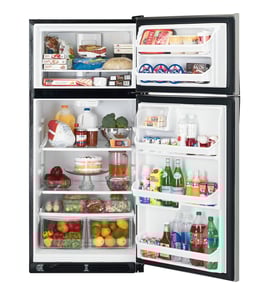
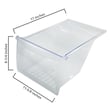



What are the dimensions of a Kenmore refrigerator model 25371822102?
For Kenmore top-mount refrigerator model 25371822102, the overall cabinet dimensions are typically about 32 in. wide, 65-3/4 in. high, and 26-5/8 in. deep (depth can vary depending on handle and door clearance). For the exact measurement method and clearance guidance, use the 25371822102 owner's manual.
Dimensions and what they mean
Refrigerator dimensions are usually discussed in three ways; measuring the right one helps avoid fit issues.
- Width: side-to-side cabinet size (leave space for airflow)
- Height: floor to top of cabinet or hinge cover (varies by installation)
- Depth: cabinet depth; add extra space for handles, door swing, and water line if equipped
| Measurement | Typical for 25371822102 | What to add for fit planning |
|---|---|---|
| Width | 32 in. | 1/2 to 1 in. on each side for clearance |
| Height | 65-3/4 in. | Extra if hinges or leveling legs raise the unit |
| Depth | 26-5/8 in. | More if you need door swing and handle clearance |
How we recommend measuring your space
Use a tape measure and confirm the tightest points (walls, cabinets, trim).
- Measure width at the front and back of the opening
- Measure height at multiple points (floor can slope)
- Measure depth from the back wall to the front edge of counters
- Plan for door swing so crisper drawers can pull out fully
- Confirm a nearby grounded outlet location as described in the 25371822102 owner's manual
Why it matters
A refrigerator that is even 1/2 inch too wide or too deep can prevent proper airflow, make doors bind, or keep bins and drawers from opening fully. Confirming clearances up front helps avoid installation headaches.
Last updated: January 2026
What is the upper part of a fridge called?
On the Kenmore 25371822102 top-mount refrigerator, the upper section is the freezer compartment. It’s the coldest area of the appliance, designed to keep foods frozen and to support ice-making (if your model is equipped with an ice maker). See the 25371822102 owner's manual for compartment features and storage guidance.
What you’ll typically find in the upper (freezer) compartment
- Freezer shelves or door bins for frozen foods
- Cold-air circulation paths that help keep temperatures even
- Space for ice trays or an automatic ice maker (on equipped models)
- A freezer door seal (gasket) that prevents warm air leaks
- Storage areas where temperature can vary more near the door
Freezer vs. refrigerator section (quick comparison)
| Section | Common name | Main purpose | Typical temperature target |
|---|---|---|---|
| Upper section (top-mount) | Freezer compartment | Long-term frozen storage, ice | 0°F |
| Lower section | Fresh food compartment | Short-term refrigerated storage | 37°F |
Why it matters
Knowing the correct name helps when you’re looking up parts, organizing food for better temperature stability, or following care and use instructions. For example, many refrigerators perform best when you avoid overloading door shelves and allow air to circulate.
Related parts customers often ask about
If you’re troubleshooting ice production or freezer performance, these model-matched parts are commonly involved:
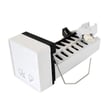
- Ice maker mold 241798231 (ice maker component)
- Refrigerator gasket 242193213 (door seal that helps prevent frost and warm-air leaks)
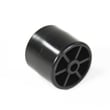
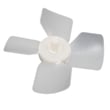
- Refrigerator evaporator fan blade 5308000010 (moves cold air through the freezer and fresh food sections)
Last updated: January 2026
What are the common problems with Kenmore Elite refrigerators?
Common problems we see on Kenmore refrigerators like model 25371822102 include the refrigerator not running (power, control set to OFF, or defrost cycle), weak cooling from airflow or defrost issues, and ice maker troubles when the water supply is off or the ice maker is turned off. See the 25371822102 owner's manual for model-specific checks.
Most common symptoms and what they usually point to
- Refrigerator won’t run: loose plug, tripped breaker, blown fuse, control set to OFF, or unit in defrost (wait about 20 minutes and recheck)
- Freezer too cold or fresh food too warm: temperature controls need adjustment; allow about 24 hours to stabilize after changes
- No ice or slow ice production: ice maker switched off, water valve closed, or water supply issue
- Frost buildup or warm freezer: defrost system problem (often tied to a defrost thermostat or airflow restriction)
- Door not sealing: warm air leaks cause temperature swings, frost, and longer run times
Quick checks we recommend before replacing parts
- Confirm the cord is fully seated in a grounded outlet (no extension cord).
- Verify the temperature control is not set to OFF.
- If it just stopped, wait 20 minutes to rule out a normal defrost cycle.
- Adjust controls in small steps; recheck temperatures after 24 hours.
- For ice maker issues, confirm the household water valve is open and the ice maker is on.
Parts that commonly solve these problems (when diagnosis confirms)
| Symptom | Commonly involved area | Example part for this model |
|---|---|---|
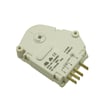
| Frost buildup, warming | Defrost system | Refrigerator defrost bi-metal thermostat 5303918202 |
| Warm temps, weak airflow | Evaporator fan area | Refrigerator evaporator fan blade 5308000010 |
| Door not sealing | Door gasket | Refrigerator gasket 242193213 |
Why it matters
Catching a control setting, defrost-cycle pause, or door-seal leak early prevents food spoilage and reduces compressor run time, which helps protect the sealed system.
Last updated: January 2026