Installation guide
 Owner’s manual
 Error Codes


What is the capacity of wtw4800bq0?
For the Whirlpool WTW4800BQ0 washer, the exact tub capacity (in cubic feet) is not identified in the model-specific documents we have for this model; the installation guide focuses on setup requirements and clearances, not basket volume. For day-to-day use, load sizing by basket fill level works reliably; see the WTW4800BQ0 installation instructions.
Using the right load size helps cleaning performance and reduces out-of-balance spinning.
- Load items loosely; do not pack them down
- Keep items below the top rim of the basket
- Mix large and small items to help balance during spin
- Choose the cycle that matches the fabric and load type
- If the washer bangs or “walks,” reduce the load and redistribute
| Load size | Basket fill guideline | Typical examples |
|---|---|---|
| Small | About 1/3 full | Towels, jeans, heavy items |
| Medium | About 1/2 full | Mixed everyday laundry |
| Large | About 3/4 full | Sheets and light clothing (not packed) |
If you consistently get slipping, weak agitation, or repeated off-balance behavior even with proper loading, a worn drive component or suspension part may be involved.
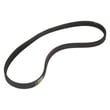
- Burning rubber smell or squeal: inspect the belt
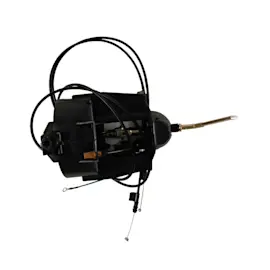
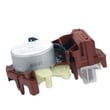
- Poor agitation or intermittent shifting: inspect the actuator and splutch
- Excessive tub movement: inspect suspension/dampers
A common drive item for this model is the washer drive belt WPW10006384.
Overloading is a top cause of vibration, poor wash action, and premature wear on the drive system and suspension.
Last updated: January 2026
What is the most common problem with Whirlpool washers?
For the Whirlpool WTW4800BQ0 washer, the most common service issues we see are no drain/no spin and excessive vibration or noise. Those symptoms often trace back to the lid lock system, drain pump and hoses, or the drive system (belt, splutch, actuator) rather than a single “one-size-fits-all” failure. See the WTW4800BQ0 installation guide for setup items that can prevent early problems.
- Won’t drain or leaves water in the tub: drain pump restriction, kinked drain hose, or a clogged tub-to-pump hose
- Won’t spin or stops mid-cycle: lid lock not engaging, actuator/shifting issue, or drive system wear
- Loud banging or walking: out-of-level cabinet, worn suspension/dampers, or overloaded/unbalanced loads
- Slow fill or no fill: inlet valve screens clogged, low water pressure, or a failing inlet valve
- Leaks: loose hose connections, cracked drain hose, or a tub seal/tub-to-pump hose leak
If your WTW4800BQ0 has the symptoms above, these model-matched parts are frequent suspects:
| Symptom | Part to check on WTW4800BQ0 | What it does |
|---|---|---|
| No drain / water left in tub | Washer drain pump assembly WPW10276397 | Pumps water out during drain and spin |
| Won’t start or won’t spin (lid-related) | Washer lid lock assembly W10404050 | Confirms lid is locked so the washer can agitate/spin |
| Shifts oddly, won’t agitate or spin | Washer actuator WPW10006355 | Shifts the drive system between agitation and spin |
| Excessive shaking/banging | Washer damper W10780045 | Helps control tub movement during spin |
- Confirm the washer is level and all feet are firmly on the floor
- Verify the drain hose is not shoved too far into the standpipe (helps prevent siphoning)
- Check for kinks or pinched hoses behind the cabinet
- Reduce load size and redistribute items to correct out-of-balance spins
- If draining is slow, inspect the pump area and hoses for coins, socks, lint, or debris
No-drain/no-spin and vibration complaints often look like “major” failures, but they are frequently caused by a simple restriction, a lid lock issue, or an out-of-level install. Fixing the root cause early helps prevent belt, splutch, and gearcase wear.
Last updated: January 2026
How do I find the model number on my WTW4800BQ0?
Your Whirlpool washer’s model number is printed on the appliance’s model and serial tag. On WTW4800BQ0, check under the lid area first; once you find the tag, match the model number exactly (letters and numbers) before ordering parts or using service information.
Check these common tag locations in this order:
- Under the washer lid, around the lid opening (top rim of the cabinet)
- On the underside of the lid
- Along the top edge of the front panel, just under the lid
- On the back of the washer cabinet (upper area)
- Inside the cabinet on a side wall (less common)
Record both numbers from the tag:
- Model number (example: WTW4800BQ0)
- Serial number (helps confirm production details)
- Brand (Whirlpool)
The model number determines the exact fit for parts like a lid lock, drain pump, or water inlet valve. Even one character off can pull up a different parts list or different wiring and control components.
- Copy the model number exactly, including any zeros
- Take a clear photo for reference
- Use the model number when checking diagrams and procedures in the WTW4800BQ0 installation guide
| Item on the tag | What it’s used for | Example format |
|---|---|---|
| Model number | Correct parts list and diagrams | WTW4800BQ0 |
| Serial number | Identifies the specific unit | Mix of letters and numbers |
Last updated: March 2026