Owner’s manual
 Error Codes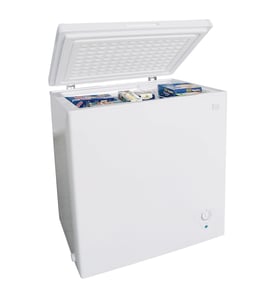




Is the GE chest freezer 7 cu ft any good?
Yes. The GE FCM7SUFWW 7 cu ft chest freezer is a solid choice when you want reliable extra frozen storage with simple manual-defrost operation. In normal use, its temperature control is designed to maintain sufficiently low temperatures for freezing recommended quantities of food; see the FCM7SUFWW owner's manual for operating details.
What “good” looks like for this model
We consider a chest freezer like the GE FCM7SUFWW “good” when it consistently holds safe freezer temperatures, runs without excessive noise, and fits your space and loading habits.
- Holds steady temperatures once pre-chilled and loaded correctly
- Provides bulk storage for long-term frozen foods
- Manual defrost keeps the design simple and serviceable
- Works best when the lid seal is clean and the lid closes fully
- Performs more consistently when you avoid frequent lid openings
Performance and capacity expectations
A practical benchmark from the manual is freezing capacity: the freezer is designed to freeze about 3 lb (1.5 kg) per cubic foot at one time.
| Freezer size | Approx. max fresh-freeze load at once | What it means |
|---|---|---|
| 7 cu ft | ~21 lb | Freeze in batches for best results |
| 5 cu ft | ~15 lb | Smaller batch loads |
| 9 cu ft | ~27 lb | Larger batch loads |
Tips to get the best results (and avoid common complaints)
- Keep the lid closed as much as possible; frequent openings warm the cabinet
- If you add a lot of unfrozen food, lower the control temporarily, then return to normal
- Keep packages from blocking the lid from closing fully
- Clean odors with a baking-soda solution; keep an open box inside and replace every 3 months
- During a power outage, keep the lid closed; food typically stays frozen about 24 hours if warm air is not admitted
Why it matters
Chest freezers are most “worth it” when they stay cold with minimal temperature swings. Good loading habits, a fully closing lid, and correct control settings protect food quality and reduce frost buildup.
Last updated: January 2026
How much meat can you fit in a 7 cu ft freezer?
In a 7 cu ft chest freezer like the GE FCM7SUFWW, you can typically store about 200 to 250 lb of packaged meat if it’s tightly wrapped and stacked efficiently. For freezing fresh (unfrozen) meat at one time, plan on about 56 lb max per batch (8 lb per cubic foot). See the FCM7SUFWW owner's manual for safe loading and freezing guidance.
Practical capacity guidelines (what fits in real life)
How much you can fit depends on packaging, bone-in vs. boneless, and how organized you keep the load.
- Whole or half animal orders: A half beef or whole hog often lands in the 200 to 250 lb range of take-home cuts, which is a common “full” load for a 7 cu ft chest freezer.
- Boxed retail meat: Uniform packages stack tighter, so you may fit closer to the high end.
- Odd shapes (turkeys, roasts): Bulky items reduce usable space.
- Airflow and lid seal: Don’t pack so high that the lid won’t close flat.
Freezing fresh meat: don’t overload the freezer at once
The manual guidance for this GE chest freezer design is to freeze about 8 lb per cubic foot at one time. For 7 cu ft, that is about 56 lb in a single freezing cycle.
- Pre-chill meat in a refrigerator first when possible
- Spread packages out initially (don’t stack thick piles on day one)
- After 24 to 48 hours, consolidate into tighter stacks
- Keep the temperature control set for steady freezing (target around 0°F)
Quick reference table
| What you’re doing | Good planning number for 7 cu ft | Why |
|---|---|---|
| Storing already-frozen packaged meat | 200 to 250 lb | Typical real-world “full” load |
| Freezing fresh meat at one time | ~56 lb | Matches the 8 lb per cu ft guidance |
Why it matters
Overloading a chest freezer with too much unfrozen meat at once can slow freezing, which hurts food quality and can raise food-safety risk. Planning in batches helps the GE FCM7SUFWW freeze faster and hold temperature more consistently.
Last updated: January 2026
What are the common chest freezer problems?
Common problems on a GE chest freezer like model FCM7SUFWW are the freezer running too warm, heavy frost buildup, constant running, water leaking during defrost, and unusual noises. Most issues trace back to airflow and loading, lid seal problems, or temperature control settings; our FCM7SUFWW owner's manual covers normal operation and defrosting steps.
Most common symptoms and what they usually mean
- Too warm or inconsistent temperature: lid not sealing, frequent openings, overloading, or a control issue
- Excessive frost: lid left open, humid air entering, or delayed defrosting
- Runs all the time: warm room location, packed too tightly, dirty airflow paths, or thermostat/control problems
- Water on the floor: defrost drain not capped, drain plug missing, or overflow during manual defrost
- Clicking, humming, or popping: often normal refrigeration sounds; persistent loud noises can indicate a failing component
Quick checks we recommend (safe DIY)
- Confirm the control setting: keep the temperature control at a normal mid-range setting, then allow 24 hours to stabilize.
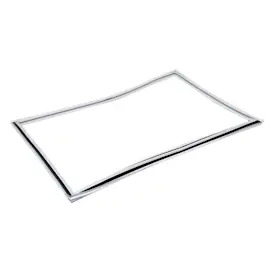
- Check the lid seal and closing: make sure packages are not preventing a full close.
- Reduce frost buildup: defrost when frost reaches about 1/2 inch; scrape only with a plastic or wood tool (no sharp tools).
- Use the defrost drain correctly: during complete defrost, use the front drain and reinstall the drain plug and cap afterward.
- Avoid unsafe defrost methods: do not use electrical devices to speed defrosting.
Problem-to-fix guide
| Problem | What to do first | Parts that may be involved |
|---|---|---|
| Frost buildup | Manual defrost; limit lid-open time | Lid gasket (if leaking), drain components |
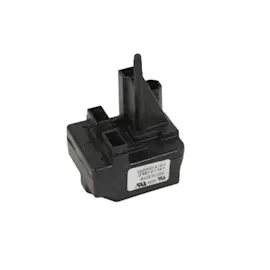
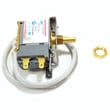
| Too warm | Verify control setting; improve loading/air gaps | Freezer temperature control thermostat WR50X10085, freezer temperature control knob WR02X12190 |
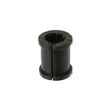
| Water leak during defrost | Check drain plug and cap; sponge excess water | Drain stopper WR01X28051 |
Why it matters
A chest freezer is designed to freeze a limited amount of unfrozen food at one time (about 3 lbs per cubic foot). Overloading or letting frost build up forces longer run times, higher energy use, and more temperature swings.
Last updated: January 2026