Owner’s manual
 Error Codes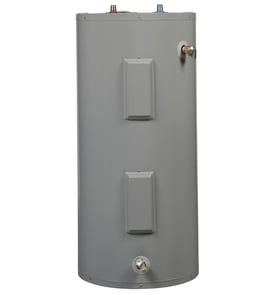



How do I read my water heater model number?
On your Kenmore electric water heater model 153329560, the model number is printed on the model rating plate on the front of the tank, located near the access panel (typically adjacent to the lower access panel). Use that exact model number and the serial number when ordering parts or looking up specifications in the owner's manual.
Look for a sticker or metal plate on the outside of the tank. On this model, it’s positioned near the access panel area.
- Check the front of the water heater first
- Look adjacent to the lower access panel
- The plate typically lists model number and serial number together
- Ignore most of the technical fields unless you’re troubleshooting (volts, watts, pressure)
- If the plate is dirty, wipe it gently so the characters are readable
For parts lookup and service records, we use these fields from the rating plate:
| Rating plate field | What it’s used for | Example for this page |
|---|---|---|
| Model number | Identifies the exact water heater design | 153329560 |
| Serial number | Identifies your specific unit | (varies by unit) |
| Volts / watts | Helps match heating elements and wiring | (reference only) |
Kenmore water heaters can look similar across multiple model series, but parts like a heating element, thermostat, or anode rod must match the exact model. Using the rating plate model number helps us pull the correct parts list and diagrams for your unit.
If you’re ordering common repair parts for model 153329560, match by model number first, then confirm the part description:
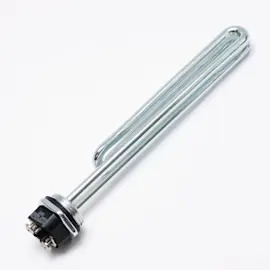
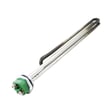
- Element 100108346 (heating element)
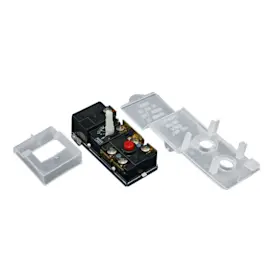
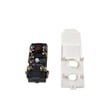
- Thermostat 100108683 (upper thermostat)
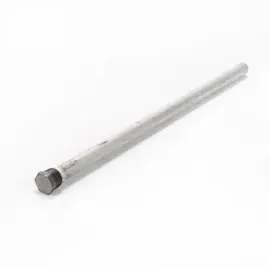
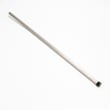
- Anode rod 100108660 (corrosion protection)
Last updated: February 2026
What is usually the most common water heater problem?
The most common water heater problem is not getting the hot water you expect, usually caused by normal wear in the heating system (electric elements or thermostats) or by sediment buildup that reduces efficiency and recovery time. For Kenmore 153329560, our owner's manual troubleshooting steps focus on power supply checks, thermostat settings, and leak checkpoints.
Most customers notice one of these first:
- No hot water or not enough hot water
- Hot water runs out faster than normal (slow recovery)
- Water temperature is too hot or fluctuates
- Rumbling or popping noises (often tied to sediment)
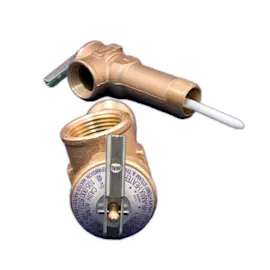
- Water around the heater (often a fitting, valve, or relief valve issue)
Use these safe, high-value checks before replacing parts:
- Confirm the water heater breaker is on; check for blown fuses or a weak breaker
- Verify any disconnect switch is in the ON position
- Make sure the tank is completely full of water before turning power on
- Check the thermostat setting and adjust if needed
- Look for obvious water leaks at pipes, the drain valve, and around access panels
| Symptom | Most likely cause | Parts that commonly apply on this model |
|---|---|---|
| No hot water | Failed heating element, power issue, high-temp shutoff tripped | Element 100108346, thermostat 100108683 |
| Not enough hot water | One element not heating, thermostat out of calibration | Element 100093526, thermostat 100108683 |
| Water around element area | Element gasket leaking or element not sealed | Water heater heating element gasket 100108379 |
| Premature tank wear | Anode rod depleted | Anode rod 100108660 |
Catching the “common” problems early saves money and prevents damage. The manual notes that even small leaks can cause property damage; using a drain pan and leak detection or shut-off devices helps reduce risk. It also explains that maintaining the anode rod can extend tank life.
Last updated: February 2026
Can you replace parts on a hot water heater?
Yes. On a Kenmore 153329560 electric water heater, we can replace common service parts such as heating elements, thermostats, and the anode rod to restore hot water performance and extend tank life. Always shut off power at the breaker and follow the safety steps in the owner's manual.
These are typical replaceable parts on this model and similar electric water heaters:
- Heating element (fixes no hot water or slow recovery)
- Thermostat (fixes water too hot, too cold, or temperature swings)
- Anode rod (helps reduce tank corrosion)
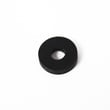
- Heating element gasket (prevents leaks after element service)
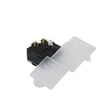
- Thermostat bracket and cover (helps keep controls secure and protected)
| Symptom or need | Part to check/replace | Example from this model |
|---|---|---|
| No hot water or weak heating | Heating element | Element 100108346 or element 100093526 |
| Temperature problems | Thermostat | Thermostat 100108683 |
| Preventive maintenance | Anode rod | Anode rod 100108660 |
| Seepage after element removal | Element seal | Water heater heating element gasket 100108379 |
We use this sequence for most electric water heater part replacements:
- Turn OFF power at the breaker and confirm power is off
- Remove the access panel and insulation carefully
- Keep the thermostat seated firmly against the tank surface when reinstalling
- Reinstall the terminal cover, insulation cap, and access panel before restoring power
- Refill and purge air from the tank before turning power back on (dry-firing an element can damage it)
Replacing a failed heating element or thermostat is often the fastest way to fix “no hot water” or unstable temperatures without replacing the entire water heater. Replacing the anode rod is one of the best ways to slow corrosion and help the tank last longer.
Last updated: February 2026
What is the life expectancy of a Kenmore water heater?
Most Kenmore electric water heaters like model 153329560 typically last 8 to 12 years. Regular maintenance (flushing sediment, checking the anode rod, and keeping thermostats set correctly) helps you reach the high end of that range; neglected tanks usually fail sooner.
A water heater’s tank life is mainly affected by water quality, temperature settings, and how much sediment builds up.
- Hard water and sediment shorten life by insulating the heating element and overheating the tank bottom.
- High thermostat settings increase stress on the tank and elements.
- A worn anode rod speeds up tank corrosion.
- Small leaks at fittings can become bigger problems if not corrected.
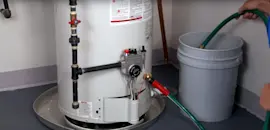
- Regular draining/flushes reduce sediment and help stabilize water temperature.
Use the schedule below as a practical baseline for a Kenmore electric water heater.
| Task | What it helps prevent | Typical timing |
|---|---|---|
| Drain a few gallons or flush the tank | Sediment buildup, rumbling, slow recovery | Every 6 to 12 months |
| Inspect/replace anode rod | Tank corrosion and early leaks | Every 2 to 5 years |
| Check element and thermostat operation | No hot water, fluctuating temps | As symptoms appear |
| Verify fittings are dry | Hidden leaks and jacket moisture | Monthly quick check |
For model-specific procedures and safety steps (power off at breaker, cool-down time, draining steps), follow the owner's manual.
When hot water is weak, inconsistent, or slow to recover, these parts are often involved:
- Element 100108346 (part number 31906) for 3800-watt operation
- Element 100093526 (part number 31908) if the unit was converted to 5500 watts
- Thermostat 100108683 (part number 31917) for temperature control
- Anode rod 100108660 (part number 9003928) to protect the tank from corrosion
Once the tank itself corrodes through, replacement is the only practical fix. Keeping sediment down and the anode rod healthy is the most reliable way to extend service life and reduce heating element and thermostat failures.
Last updated: February 2026
How do I know if my electric water heater element is bad?
On your Kenmore 153329560 electric water heater, a bad heating element usually shows up as no hot water, not enough hot water, or a breaker/fuse issue. The most reliable way to confirm it is bad is to turn power OFF and test the element with a multimeter for an open circuit or a short to ground (see the safety and wiring notes in the owner's manual).
- No hot water at all (especially if the upper element fails)
- Lukewarm water or you run out of hot water quickly (often the lower element)
- Breaker trips or fuses blow when the heater tries to heat
- Longer recovery time in cold weather (can be normal, but can also expose a weak element)
- You recently replaced an element and now see water at the element opening (gasket or seating issue)
- Shut off power at the breaker before removing access panels.
- Remove the element access cover and insulation.
- With wires removed from the element terminals:
- Resistance across the two screws:
- Infinite/OL = element is open (failed)
- A steady ohms reading = element is likely intact
- Short to ground test: one probe on a terminal screw, the other on the metal tank or element flange.
- Any continuity = element is shorted (failed)
- Resistance across the two screws:
| Element wattage (240V) | Typical resistance (approx.) | What it means |
|---|---|---|
| 4500W | ~12–13 Ω | Normal range |
| 5500W | ~10–11 Ω | Normal range |
| Any | OL / infinite | Open element (bad) |
| Any | Continuity to tank | Shorted element (bad) |
These checks prevent unnecessary parts replacement:
- Confirm the tank is completely full of water before restoring power (running dry can damage a new element).
- Verify the cold water supply valve is open and piping is correct.
- Check thermostat setting and consider a high-temperature shutoff event.
Use the correct element and seal for this model:
A failed element can stop heating entirely or force the remaining element to overwork, which increases recovery time and can contribute to nuisance breaker trips.
Last updated: February 2026