Owner’s manual
 View engine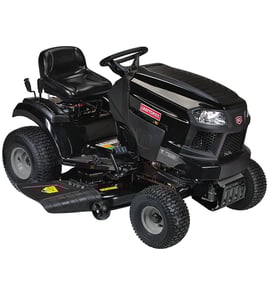




What years did they make the Craftsman 247255890?
Craftsman model 247255890 was produced during the era when many Craftsman riding mowers used MTD-built 247.xxxxxx model numbers; the most reliable way to pin down the exact build year for your tractor is to match the model and serial number on the ID tag to the date information shown in the 247255890 owner's manual.
How to find the build year on your tractor
Look for the product ID tag (model/serial label) and use the serial number format shown in the manual.
- Check under the seat (common location on Craftsman tractors)
- Check the frame rail near the engine or footrest area
- Write down the full serial number exactly as shown
- Compare the serial number format to the manual’s identification section
- Keep the tag info with your maintenance records for parts lookups
What “247” usually means (helpful context)
Craftsman tractors with model numbers starting with 247 are commonly associated with MTD manufacturing for Sears-branded equipment. That helps narrow the parts family, but the exact year still depends on the serial number and production run.
Quick guide: what you can confirm from the ID tag
| What you have | What it tells you | Why it helps |
|---|---|---|
| Model number (247255890) | Exact configuration family | Ensures correct diagrams and parts |
| Serial number | Build date or date code | Identifies the production year |
| Engine model/type code | Engine-specific parts | Helps match tune-up and ignition parts |
Why it matters
Year matters because Craftsman tractors can look identical across multiple seasons, but wiring, safety interlock circuits, deck hardware, and drivetrain components can change mid-series. Using the correct year prevents ordering the wrong starter solenoid, interlock switch, or deck parts.
Last updated: January 2026
What engine does Craftsman riding mower use?
For the Craftsman front-engine lawn tractor model 247255890, the exact engine make and model varies by build and is best confirmed by the engine ID label and the parts diagrams in the 247255890 owner's manual. Many Craftsman tractors in this class commonly use single-cylinder gasoline engines.
How to identify the exact engine on model 247255890
Use the tractor and engine labels to match the correct engine parts (starter, carburetor, air filter, spark plug).
- Lift the hood and locate the engine ID tag (often on the blower housing or valve cover)
- Write down the engine model, type, and code (Briggs & Stratton format) or model/spec (other brands)
- Compare that information to the engine section in the parts diagrams
- If the tractor has been repowered, rely on the engine tag, not the tractor model number
- Keep the engine code handy when ordering tune-up parts
Common engine types you will see on Craftsman front-engine tractors
These are typical configurations for front-engine riding mowers; your exact engine is confirmed by the ID tag.
| Engine type | What it usually means | What to check first |
|---|---|---|
| Single-cylinder OHV gas | Most common on 42-inch class tractors | Air filter, spark plug, fuel quality |
| V-twin OHV gas | More torque and smoother running | Battery condition, charging system |
| Carbureted fuel system | Standard on many models | Stale fuel, clogged jets, dirty filter |
Why it matters
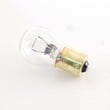
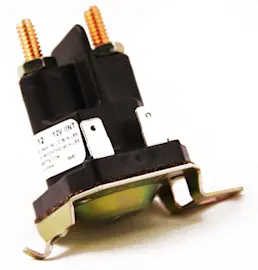
The engine brand and spec determine the correct maintenance parts and electrical components. For example, a no-crank issue can point to the starter circuit; on this model, a failed lawn tractor starter solenoid 725-06153 is a common fix when the battery and cables test good.
Quick troubleshooting tip (engine cranks vs. no crank)
- Clicks but won’t turn over: battery weak, bad cable connection, solenoid contacts worn
- Spins but won’t start: stale fuel, clogged carburetor, fouled spark plug
- Dies when you release the brake: safety interlock circuit issue
Last updated: January 2026
Is it worth replacing a lawn mower engine?
Yes, replacing the engine on a Craftsman riding tractor like model 247255890 is worth it when the mower deck, frame, steering, and transmission are in good shape and the total engine swap cost stays well below the cost of replacing the whole tractor. Use the 247255890 owner's manual to confirm engine specs, wiring, and safety steps before you commit.
Quick decision checklist
- The deck housing is solid (no cracks, severe rust-through, or bent spindles)
- The transmission drives smoothly (no slipping, whining, or loss of forward/reverse)
- The frame and front axle are straight (no collision damage)
- You can source the correct engine and mounting pattern for your tractor
- You are comfortable with a project that typically takes several hours plus troubleshooting time
Cost rule of thumb (what we use)
If the engine replacement (engine, hardware, belts if needed, fluids, and your time) is over about 50% of the price of a comparable new riding mower, replacing the tractor usually makes more sense.
| Option | Best when | Typical downside |
|---|---|---|
| Replace engine | Chassis and deck are strong; you want to keep the tractor | More labor and setup time |
| Repair existing engine | Problem is minor (fuel, ignition, carb, starter circuit) | May not solve internal wear |
| Replace tractor | Multiple major systems are worn (engine + deck + drive) | Higher upfront cost |
Parts and systems to inspect before you decide
Focus on the expensive, hard-to-fix items first:
- Deck and mandrels: vibration, noisy bearings, uneven cut
- Drive system: idler pulleys, belt routing, transaxle performance
- Electrical starting circuit: battery cables, key switch, safety switches, solenoid
- Fuel system: tank condition, fuel lines, stale fuel contamination
If the tractor only clicks or cranks inconsistently, diagnose the starting circuit before buying an engine; a failed lawn tractor starter solenoid 725-06153 is a common fix on many riding mowers.
Why it matters
An engine swap can extend the life of a good Craftsman chassis for years, but it does not fix worn deck components or a failing transmission. Checking those big-ticket areas first prevents spending engine money on a tractor that still will not mow or drive reliably.
Last updated: January 2026
Where can I find my lawn mower engine model number?
On your Craftsman riding lawn tractor model 247255890, the engine model number is typically on the engine itself (not on the tractor frame tag). Look for a printed label or a stamped plate on the engine shroud, valve cover area, or blower housing; it’s often easiest to see after wiping off dirt and grass.
Where to look first (most common spots)
- Top of the engine cover or plastic shroud
- Side of the engine shroud near the recoil or blower housing
- Valve cover area (especially on twin-cylinder engines)
- Near the spark plug wire routing area
- On a metal tag riveted to the engine block
What the engine ID usually includes
Engine labels commonly show a few different identifiers. Use the one labeled Model (or Model/Type/Code).
| What you see on the engine | What it means | What to do with it |
|---|---|---|
| Model | Engine family identifier | Use this to match engine parts |
| Type | Build/spec variation | Helps narrow exact parts |
| Code/Date | Production code | Useful for confirming revisions |
Quick tips to find it fast
- Park on a flat surface, set the parking brake, and let the engine cool.
- Use a flashlight and a rag; dried grass can hide the stamp.
- If the label is missing, check for stamped numbers on the blower housing or block.
- Record the full string exactly as shown (letters, dashes, and spaces).
Why it matters
The tractor model 247255890 identifies the chassis and deck parts, but the engine model number is what we use to match engine-specific items like ignition parts, carburetor components, and tune-up parts.
For diagrams and model-specific identification details, use the 247255890 owner’s manual.
Last updated: January 2026