Owner’s manual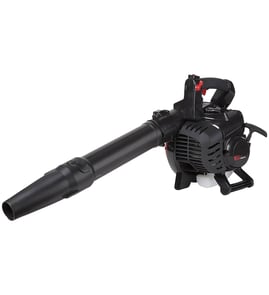



What is the life expectancy of a gas leaf blower?
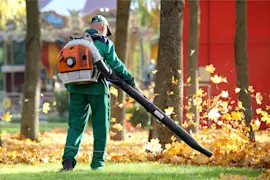
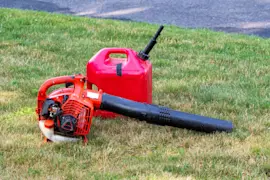
A gas leaf blower like the Craftsman 316794720 typically lasts about 10 years with normal homeowner use and consistent maintenance. Fuel quality, air filtration, and keeping the carburetor clean are the biggest factors that determine whether it reaches (or exceeds) that lifespan; see the 316794720 owner's manual for the maintenance schedule.
What affects lifespan the most
- Fuel habits: Fresh, properly mixed fuel (if 2-cycle) and draining or stabilizing fuel for storage
- Airflow and filtration: A clean air filter prevents dirt from wearing the engine
- Carburetor condition: Old fuel and air leaks cause hard starting and lean running
- Cooling and exhaust: Debris buildup and a restricted muffler raise engine temps
- Storage: Dry storage reduces corrosion and fuel system varnish
Maintenance checklist that helps you get 10+ years
- Use fresh fuel; do not store mixed fuel for long periods
- Clean or replace the air filter on schedule
- Inspect fuel lines and the fuel cap seal for leaks
- Check fasteners and housings for looseness or cracks
- Keep the intake and impeller area clear of debris
Common “wear-out” items and what they point to
| Symptom | Most common cause | What to check next |
|---|---|---|
| Hard starting after storage | Fuel varnish, air leak | Carburetor gaskets, fuel system cleaning |
| Surging or dying at idle | Lean condition | Air leaks, dirty carburetor passages |
| Loss of power | Restricted airflow or exhaust | Air filter, muffler screen (if equipped) |
| Excess vibration/noise | Loose hardware, damaged housing | Impeller housing, screws/bolts |
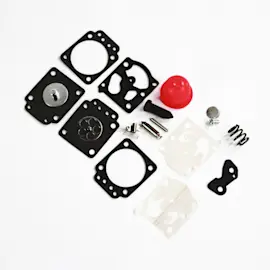
If you suspect an air leak at the carburetor mount, replacing the engine carburetor mount gasket 753-06253 is a common fix that can improve starting and prevent lean running.
Why it matters
A blower that runs lean (often from stale fuel or gasket leaks) can overheat and score the cylinder, which shortens engine life dramatically. Simple upkeep protects the short block, ignition, and impeller system.
Last updated: February 2026
How to find Craftsman leaf blower model number?
Your Craftsman leaf blower model number is printed on a factory ID label on the unit. For Craftsman model 316794720, the label is typically on the engine housing, near the starter area, or on the rear handle frame; confirm the exact location in the 316794720 owner's manual.
Where to look on a Craftsman gas leaf blower
Check these common label locations first (wipe dirt and oil off before reading):
- Side of the engine/motor housing (near the muffler or air filter cover)
- Rear of the unit near the handle or trigger area
- Near the recoil starter (pull-cord) housing
- On the frame or housing seam close to the fuel tank
- Under a removable cover (tube connection area or shroud)
What the model label looks like (and what to write down)
On Craftsman outdoor power equipment, the label usually includes a few identifiers. Record all of them so we can match parts correctly.
| Label item | Example | Why it matters |
|---|---|---|
| Model number | 316794720 | Matches the correct parts diagrams and lists |
| Serial number | Varies | Helps identify production run details |
| Engine family/type | Varies | Useful when ordering engine-related parts |
Tips if the label is hard to read
If the sticker is faded or dirty, these steps usually make it readable without damaging it:
- Clean gently with a damp cloth and mild soap; avoid harsh solvents
- Use a flashlight at an angle to highlight embossed or faded print
- Take a close-up photo and zoom in
- Copy the number exactly, including dashes or extra digits
Why it matters
Using the exact model number (for example, 316794720) prevents ordering the wrong carburetor, fuel tank parts, ignition components, or blower tubes, since similar Craftsman blowers can use different part numbers.
Last updated: February 2026
How to crank a Craftsman leaf blower?
To crank (start) your Craftsman gas leaf blower model 316794720, we recommend using fresh 2-cycle fuel mix, priming the bulb, setting the choke for a cold start, then pulling the starter rope until the engine fires and moving the choke to RUN as it warms up. For the exact control positions, use the 316794720 owner's manual.
Quick start steps (cold engine)
- Fill the tank with fresh, properly mixed 2-cycle fuel (old fuel is the top no-start cause).
- Press the primer bulb about 10 times or until you see fuel moving through the lines.
- Move the choke to the START/FULL CHOKE position.
- Set the throttle/trigger lock (if your unit has one) so it can idle after it starts.
- Pull the starter rope in smooth, strong pulls until the engine “pops” or tries to start.
- Move the choke to WARM UP/HALF CHOKE, pull again until it runs.
- After 10 to 30 seconds, move the choke to RUN.
If it won’t start (fast checks)
These checks solve most “won’t crank” complaints on 2-cycle blowers.
- Fuel: Dump and replace fuel older than 30 days.
- Flooded engine: Move choke to RUN, hold throttle wide open, pull 5 to 10 times.
- Spark plug: Check for a loose boot; inspect plug condition and gap.
- Airflow: Make sure the air filter and intake are not packed with debris.
- Fuel cap vent: Loosen the cap briefly; if it starts, the vent may be restricted.
Common symptoms and what they point to
| Symptom | Most likely cause | What to do next |
|---|---|---|
| Starts then dies | Stale fuel, dirty carburetor, air leak | Refresh fuel; inspect gaskets and fuel lines |
| Only runs on choke | Lean condition (air leak or fuel restriction) | Check carb mounting and gaskets |
| No pop at all | No spark or no fuel delivery | Check plug/ignition, primer action, fuel lines |
Why it matters
Correct priming and choke steps prevent flooding, reduce pull-start effort, and protect the engine from running too lean (which can overheat a 2-cycle blower).
If you suspect an air leak at the carburetor, replacing the engine carburetor mount gasket 753-06253 is a common fix when the blower only runs on choke.
Last updated: February 2026
Who makes Craftsman leaf blowers?
Craftsman is a brand owned by Stanley Black & Decker; Craftsman leaf blowers (including model 316794720) are manufactured for Craftsman by various outdoor power equipment makers, depending on the specific model and production run. For model-specific identification details, we use the 316794720 manual.
What “who makes it” can mean for Craftsman
Craftsman tools and outdoor power equipment are commonly produced through contract manufacturing. That means the name on the housing is Craftsman, while the actual manufacturer can vary by:
- Model number (for example, 316794720)
- Product type (gas blower vs. cordless blower)
- Year of production and factory
- Engine family and carburetor design
- Service parts used (fuel system, ignition, muffler)
How to identify the actual manufacturer on your 316794720
We recommend checking the ID labels and emissions information on the unit, then matching what you find to the documentation.
- Look for an emissions label on the engine housing or near the starter cover
- Check for an engine family code and displacement (cc)
- Note any carburetor or primer-bulb markings
- Compare label info to the parts diagrams and specs in the 316794720 manual
- Use the exact model number 316794720 when ordering parts to avoid mismatches
Quick checklist: where to look
| Location on blower | What you may find | Why it helps |
|---|---|---|
| Engine shroud | Engine family and emissions info | Points to the engine maker |
| Fuel tank area | Model/serial label | Confirms exact variant |
| Muffler side | Service tag or stamp | Helps match exhaust parts |
| Carburetor area | Casting marks | Helps match fuel system parts |
Why it matters for parts and repairs
The “maker” matters most when you are matching service parts like a carburetor gasket, ignition module, or fuel tank components. Using the exact model number 316794720 and the manual diagrams helps ensure the right fit and avoids repeat repairs.
Last updated: February 2026
Why does my leaf blower stop when I give it gas?
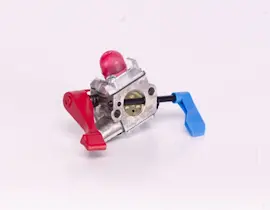
When your Craftsman leaf blower model 316794720 dies as you squeeze the throttle, the engine is usually going lean under load (not enough fuel for the extra air). The most common causes are stale fuel, a restricted carburetor circuit, or an air leak at the carburetor mounting gasket.
Quick checks that fix most stalling-on-throttle problems
- Drain old fuel and refill with fresh, properly mixed fuel (if your model is 2-cycle) and a clean fuel container.
- Make sure the choke is fully off once warm; a blower that only runs on choke typically has a fuel-delivery restriction.
- Inspect the air filter and clean or replace it if it is dirty or oil-soaked.
- Check the fuel cap vent; if it runs better with the cap loosened, the vent is restricted.
- Look for cracked or loose fuel lines and a loose primer bulb (if equipped).
Carburetor and air-leak causes (most likely)
A blower that stalls when you “give it gas” often has a partially clogged carburetor (especially the low-speed circuit) or an air leak where the carb mounts to the engine.
If you suspect an air leak, the carburetor mounting gasket is a common fix point. Use the correct gasket for your model and install it in the same orientation shown in the 316794720 owner’s manual. A damaged gasket can let extra air in, leaning the mixture and causing a stall when the throttle opens.
Helpful part to consider:
What the symptoms usually mean
| Symptom | Most common cause | What to do first |
|---|---|---|
| Runs on choke, dies on run | Carb restriction or air leak | Fresh fuel, then carb clean, then gasket check |
| Idles OK, dies when throttled | Lean condition under load | Check fuel cap vent, fuel lines, carb |
| Surges at high speed | Fuel restriction or air leak | Inspect lines, gasket, then carb |
Why it matters
Stalling on throttle is more than an annoyance; a lean-running small engine can overheat and lose power. Fixing fuel quality, airflow, and carb sealing restores stable acceleration and helps protect the engine.
Last updated: February 2026