Owner’s manual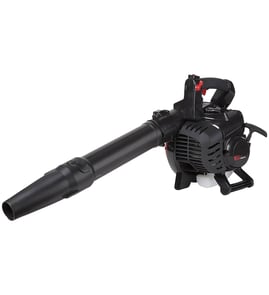






What is better, cfm or mph for a leaf blower?
Neither CFM nor MPH is “better” by itself; they measure different performance strengths. For the Craftsman 358794731, the operator specs list 430 CFM (air volume) and 200 MPH (air speed), which is a balanced combo for both moving piles of dry leaves and dislodging heavier debris (especially with the right nozzle setup). See the 358794731 operator’s manual for the rated performance and operating tips.
What CFM and MPH actually tell you
- CFM (cubic feet per minute): how much air the blower moves; best for pushing and gathering debris into piles.
- MPH (miles per hour): how fast the air stream is; best for breaking loose wet leaves and debris stuck in cracks.
- Best real-world performance comes from a good balance of both, plus the right nozzle and technique.
Quick guide: which spec matters more?
| Your cleanup job | Prioritize | Why |
|---|---|---|
| Large driveway or lawn with dry leaves | Higher CFM | Moves more material per pass |
| Wet leaves, matted grass, debris in joints | Higher MPH | More “punch” to loosen debris |
| General all-around use | Balanced CFM + MPH | Handles mixed conditions better |
How to get the most from your blower
- Use the full nozzle extension so the air stream works close to the ground.
- When you need more air speed, install the high-speed nozzle (the manual calls this out for greater air speed).
- Blow in one direction and build a pile; avoid scattering debris.
- In dusty conditions, lightly dampen surfaces first.
- Keep bystanders and pets at least 30 feet away; debris can be thrown forcefully.
Why it matters
If you shop by only one number, you can end up with a blower that either moves a lot of air but lacks force (low MPH), or hits hard but takes longer to clear big areas (low CFM). Matching the spec to the job saves time and reduces fatigue.
Last updated: February 2026
How to find Craftsman leaf blower model number?
Every Craftsman leaf blower has a model number label; for model 358794731, the tag is typically on the blower housing or engine area and is used to match the correct parts list and operator information. Use the number exactly as printed when ordering parts or checking specs in the 358794731 operator's manual.
Where to look on a Craftsman gas leaf blower
Check these common label locations first:
- On the side of the engine or motor casing
- On the rear of the housing near the handle
- Near the fuel tank area
- Along the blower tube connection point
- On the bottom of the unit (turn it off and let it cool first)
What the model number looks like (and why it matters)
For this unit, the model is formatted like 358.794731 in the manual, and you may also see it printed without the dot as 358794731 on the label.
Quick reference
| What you see | What it means | What to do |
|---|---|---|
| 358.794731 | Model format used in the manual | Use it to confirm you have the right manual and parts diagrams |
| 358794731 | Model format often used on labels and parts sites | Use it when searching parts and ordering |
Tips if the label is dirty or hard to read
- Wipe the area with a damp cloth; avoid soaking decals
- Use a flashlight at an angle to make faint printing stand out
- Take a close-up photo and zoom in
- Write down the full number before it rubs off
Why it matters
The model number is the key to getting the right Craftsman leaf blower parts (fuel line, primer bulb, carburetor parts, recoil starter parts) and the correct maintenance steps. Even small model changes can use different fuel pickup or tube assemblies.
Last updated: February 2026
Who makes Craftsman leaf blowers?
Craftsman leaf blowers are sold under the Craftsman brand; the brand is owned by Stanley Black & Decker. Your Craftsman gas leaf blower model 358794731 is a Craftsman-branded unit, and the best model-specific operating and maintenance details are in the 358794731 operator's manual.
What “who makes it” means for parts and service
Craftsman is the brand name on the product, but many outdoor power tools are built by manufacturing partners and share components across related platforms. For repairs, the most reliable approach is to match parts by model number and the illustrated parts list.
- Use the full model number 358794731 when ordering parts.
- Match the part by name and ID, not just by appearance.
- Follow the manual’s fuel and starting instructions to avoid no-start issues.
- Replace common wear items first (fuel line, primer bulb, switch components).
- Keep fasteners and covers installed; airflow and cooling depend on them.
Common Craftsman 358794731 parts customers replace
These are model-relevant examples from the parts list for 358794731:
| Symptom | Likely area | Example part for this model |
|---|---|---|
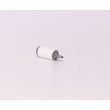
| Hard starting, won’t prime | Fuel delivery | Ayp leaf blower primer bulb 530035497 |
| Fuel leaks, won’t stay running | Fuel line/tank routing | Ayp lawn & garden equipment fuel line, large 530069216 |
| Engine won’t shut off or intermittent run | Stop switch circuit | Craftsman, poulan leaf blower start/stop switch kit 545081830 |
Why it matters
Knowing the brand owner helps with brand history, but your model number is what guarantees fit. The operator’s manual also specifies critical operating details like using a 40:1 2-cycle fuel mix and proper storage steps that prevent carburetor and fuel-system problems.
Last updated: February 2026
How to start a Craftsman gas leaf blower?
To start your Craftsman gas leaf blower model 358794731, mix fresh 40:1 fuel, move at least 10 feet from fueling, then use the primer bulb and choke for a cold start while holding the throttle fully. Follow the step-by-step procedure in the 358794731 owner's manual.
Cold-start steps (most common)
- Mix fuel at 40:1 (3.2 oz 2-cycle oil per 1 gallon unleaded gas).
- Move the blower at least 10 ft (3 m) away from the fueling area.
- Hold the unit in the starting position with the blower end pointed away from people, animals, glass, and solid objects.
- Slowly press the primer bulb 6 times.
- Move the choke lever to FULL CHOKE.
- Squeeze the throttle trigger fully and keep holding it while you pull the starter rope.
Warm-start tips
If the engine was recently running (and did not run out of fuel), you typically need less choke and fewer pulls.
| Engine condition | Primer bulb | Choke lever | Throttle trigger |
|---|---|---|---|
| Cold engine | 6 presses | FULL CHOKE | Hold fully while starting |
| Warm engine | Often not needed | Usually less than full choke | Hold fully while starting |
| Ran out of fuel | 6 presses | FULL CHOKE | Hold fully while starting |
If it will not start
These checks solve most no-start complaints on 2-cycle blowers:
- Confirm the STOP switch is not being held in the STOP position.
- Replace old fuel; alcohol-blended fuel can cause hard starting after storage.
- Inspect the primer bulb for cracks or stiffness; replace with the leaf blower primer bulb 530035497 if it will not pump fuel.
- Check for split or loose fuel lines; replace with the ayp lawn & garden equipment fuel line, large 530069216 if fuel is not reaching the carburetor.
- If it was stored with fuel, drain the tank and run the engine until the fuel lines and carburetor are empty before refilling with fresh mix.
Why it matters
Correct priming, choke position, and a fresh 40:1 fuel mix prevent flooding, reduce pull-start effort, and protect the carburetor and fuel system from gum deposits.
Last updated: February 2026
Why does my Craftsman leaf blower keep dying?
Your Craftsman gas leaf blower model 358794731 usually keeps dying because the engine is not getting a steady fuel and air supply. The most common causes are stale 40:1 fuel mix, a restricted fuel line or primer bulb, or a carburetor that is gummed up from storage; start with fuel quality and the fuel system checks in the 358794731 operator's manual.
Quick checks that fix most “starts then dies” problems
- Drain old fuel and refill with fresh unleaded gas mixed 40:1 (3.2 oz 2-cycle oil per 1 gallon gas).
- Confirm the STOP switch is not being bumped; hold it only to shut the engine off.
- Press the primer bulb and watch for fuel movement; if it stays collapsed or won’t fill, suspect an air leak or restriction.
- Inspect fuel lines for cracks, softness, or loose fits; replace if questionable.
- Check for a dirty air cleaner (restricted airflow can cause stalling).
- If it runs briefly on fresh fuel but still dies, the carburetor likely needs cleaning or replacement.
Fuel mix and storage issues (most common)
The manual specifies a 40:1 gas-to-oil mix and warns that alcohol-blended fuels can attract moisture and form acids during storage, which can damage the fuel system. For storage of 30 days or longer, drain the tank and run the engine until it stops to empty the carburetor and lines.
Fuel and storage guide
| Situation | What we recommend | Why it matters |
|---|---|---|
| Fuel older than ~30 days | Replace with fresh 40:1 mix | Old fuel leaves sticky deposits that cause stalling |
| Stored 30+ days with fuel | Drain tank; run until it stops | Prevents gum buildup in carburetor and lines |
| Ethanol fuel used | Use freshest fuel possible; avoid long storage | Reduces moisture separation and corrosion risk |
Parts that commonly cause stalling on this model
If fuel is fresh and it still dies, these parts are frequent culprits:
- Ayp leaf blower primer bulb 530035497 (won’t prime, cracks, or leaks air)
- Ayp lawn & garden equipment fuel line, large 530069216 (cracked line pulls air, starving the carburetor)
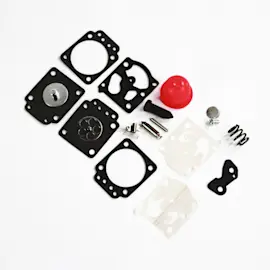
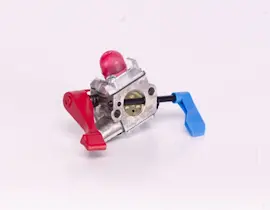
- Ayp lawn and garden equipment engine carburetor assembly 545081855 (internal varnish or metering issues)
Why it matters
A 2-cycle blower like the Craftsman 358794731 depends on the correct fuel mix and an airtight fuel path. Any air leak, restriction, or varnish in the carburetor quickly leans out the mixture, so the engine starts and then stalls.
Last updated: February 2026