 Owner’s manual




Are Whirlpool washer parts interchangeable?
Whirlpool washer parts are not universally interchangeable. For Whirlpool model WFW5090JW0, we recommend using genuine Whirlpool factory specified parts made for your washer; non-genuine or mismatched parts can cause fit issues, performance problems, and avoidable damage. See the WFW5090JW0 owner's manual for model-specific guidance.
What “interchangeable” really means
Parts can look similar across Whirlpool front-load washers, but interchangeability depends on exact design details such as mounting points, electrical connectors, hose routing, and software compatibility.
Common examples where exact matching matters:
- Electronic controls and user interface: programming and connectors vary by model
- Water inlet valve assemblies: port count, flow rates, and wiring can differ
- Door boot (bellow): clamp style and tub/front panel fit are model-specific
- Heater components (if equipped): wattage, sensor pairing, and mounting vary
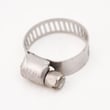
- Hardware (screws/clamps/clips): length and thread type affect sealing and vibration
Best way to confirm compatibility for WFW5090JW0
Use the model number and compare the exact part ID listed for your washer.
- Match the model number exactly: WFW5090JW0
- Match the part ID (not just the description)
- Compare any revision letters or substituted part notes (when shown)
- Use the diagrams and part lists referenced in the WFW5090JW0 owner's manual
Quick compatibility checklist
| What you have | What to match | Why it matters |
|---|---|---|
| Old part in hand | Part ID and connector style | Prevents wiring/fit mismatches |
| Symptom (won’t fill, leaks, no heat) | Correct functional part group | Avoids replacing the wrong assembly |
| Similar-looking Whirlpool model | Exact WFW5090JW0 listing | Similar does not equal compatible |
Parts on this model that are commonly mistaken as “universal”
If you are troubleshooting, these are examples of parts where using the exact listing is important:
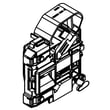
- Valve 120v/6 W11044834 (water fill and flow control)
- Bellow, d320 W11044836 (door seal that prevents leaks)
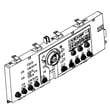
- Washer electronic control board W11616492 (controls cycles and component operation)
Why it matters
Using the correct Whirlpool factory specified part helps your washer seal properly, fill and drain correctly, and run the right cycle logic. It also reduces repeat repairs caused by small fit or electrical differences.
Last updated: February 2026
How do I fix an E1 F9 error on my Whirlpool washer?
On the Whirlpool WFW5090JW0, an E1 F9 (often shown as F9E1) points to a long-drain condition. We fix it by resetting the control, then restoring normal draining by clearing the drain pump filter and checking the drain hose installation so water can leave the tub quickly.
Step-by-step fixes (in order)
- Touch and hold POWER for at least 3 seconds to reset the control; then try the cycle again (per the WFW5090JW0 owner's manual).
- Run Rinse & Spin to force a drain; the door typically unlocks after draining (allow about 1 minute after the drain ends).
- Clean the drain pump filter (coins, lint, socks, and debris are the most common cause).
- Inspect the drain hose for kinks, crushing, or a clog; confirm it is not shoved too far down the standpipe.
- If the washer repeatedly stops with the same code after the filter and hose are clear, check the pump area for obstructions and consider a professional diagnosis of the drain pump circuit and main control.
Quick checks that prevent repeat errors
| What to check | What “good” looks like | What causes E1 F9/F9E1 |
|---|---|---|
| Drain pump filter | Clean, cap seals, no debris | Lint, coins, small garments blocking flow |
| Drain hose | Smooth path, no kinks | Kinked hose, partial clog, crushed behind washer |
| Suds level | Low suds, HE detergent | Excess suds slowing drain and triggering interruptions |
Parts that can be involved
If you confirm the filter and hose are clear but draining is still slow, the issue is usually in the drain pump system or controls. For this model, a control-related repair may involve the washer electronic control board W11616492.
Why it matters
A long-drain fault can leave water in the tub, keep the door locked, and interrupt cycles. Clearing the filter and correcting hose routing restores proper drain time and helps prevent repeat shutdowns.
Last updated: February 2026
What is the most common problem with Whirlpool washers?
The most common Whirlpool washer problems are not draining or not spinning, which leaves clothes wet at the end of the cycle. On the Whirlpool WFW5090JW0 specifically, the most frequent causes are load balance/loading issues, using the wrong cycle or spin speed, and excess suds from using non-HE detergent or too much HE detergent (all of which can slow or stop draining and spinning). See the WFW5090JW0 owner's manual for the model’s troubleshooting steps.
Most common symptoms and what they usually mean
- Washer won’t drain: suds issue, kinked drain path, or a restriction that prevents proper pumping
- Washer won’t spin or spins poorly: unbalanced or tightly packed load, or a cycle with a lower spin speed
- Loads still wet: low spin speed selected, load out of balance, or excess suds slowing the drain/spin
- Wrong wash or rinse temperature: hot and cold supply issue, kinked hoses, or clogged inlet screens
- Longer cycle times than expected: the washer is redistributing an unbalanced load or the load is too large for the selected cycle
Quick checks we recommend first (WFW5090JW0)
- Confirm HE detergent: use only HE detergent and measure carefully; too many suds can interrupt draining/spinning.
- Fix load balance: avoid washing single heavy items; add a few similar items to balance.
- Do not tightly pack: tightly packed loads can prevent proper tumbling and spinning.
- Choose the right cycle and spin speed: higher spin speeds remove more water; match the cycle to fabric type.
- Check water supply basics: verify both hoses are connected, not kinked, and water is flowing; clean inlet screens if needed.
Common causes vs. best next step
| What you notice | Most common cause | Best next step |
|---|---|---|
| Clothes are dripping wet | Low spin speed or unbalanced load | Re-run with a higher spin speed; rebalance the load |
| Washer stops mid-cycle with lots of suds | Too much detergent or non-HE detergent | Reduce detergent; use HE only; run a rinse/drain cycle |
| Rinse temp seems wrong | Supply or inlet screen restriction | Check hoses and clean inlet screens |
Why it matters
Drain and spin issues are often usage-related, not a failed part. Correct loading, cycle selection, and proper HE detergent dosing help the WFW5090JW0 finish cycles normally, protect fabrics, and reduce wear on the drive system.
Last updated: February 2026



