Owner’s manual
 Error Codes


How wide is a Kenmore side by side refrigerator?
Most Kenmore side-by-side refrigerators are about 32 to 36 inches wide; for your Kenmore 10656166500, confirm the exact cabinet width and required clearances in the 10656166500 owner's manual. Plan extra space for door swing and for the water line if you have an ice maker.
Typical width ranges (what you can expect)
Side-by-side refrigerators commonly fall into these width bands:
- 32 to 33 inches: space-saving models
- 35 to 36 inches: most full-size side-by-sides
- 42 inches: larger built-in style units (less common)
| Refrigerator type | Typical width | Best for |
|---|---|---|
| Compact side-by-side | 32–33 in. | Tight kitchens, smaller households |
| Standard side-by-side | 35–36 in. | Most homes, standard openings |
| Oversize side-by-side | 40–42 in. | Large openings, high capacity |
Clearance you should allow (important for fit)
Even when the cabinet width fits, installation clearances can be the difference between doors opening fully or not.
From the installation guidance in the manual, we recommend:
- 1/2 inch of space on each side and at the top for ventilation
- If installed next to a fixed wall, leave at least 2 inches on the hinge side (varies by setup) so the door can swing
- Allow extra space behind the refrigerator for water line connections if the unit has an ice maker
How to measure width the right way
Use a tape measure and check both the appliance and the opening:
- Measure the refrigerator cabinet (not the doors/handles) at the widest point
- Measure the kitchen opening in 3 places (top, middle, bottom)
- Confirm the door swing path near walls, islands, and trim
- If moving through doorways, measure the narrowest doorway and any tight turns
Why it matters
Width affects more than “will it fit.” It also impacts airflow (cooling performance), door swing (daily usability), and whether the water line and power cord can route without kinking or pinching.
Last updated: February 2026
Where is the model number on a Kenmore side by side refrigerator?
On Kenmore side-by-side refrigerator model 10656166500, the model number is printed on the model and serial number label located on the inside wall of the refrigerator (fresh food) compartment. For the exact label location and what the tag looks like, use the 10656166500 owner's manual.
What to look for on the label
The tag typically includes both the model number and serial number. Check for:
- Model number: 10656166500 (often shown as 106.56166500 on some labels)
- Serial number: a longer code used for manufacturing and service identification
- Purchase date: sometimes recorded by the owner, not always printed
- Brand identification (Kenmore) and electrical ratings
Common places to check (fast checklist)
Start with the fresh food section first; then check these other common spots if needed:
- Inside the refrigerator compartment on a side wall (most common)
- On the ceiling area inside the refrigerator compartment
- Behind the crisper drawers on the side wall
- Along the door frame (hinge side) when the refrigerator door is open
- On the back exterior panel (less common for day-to-day access)
Why it matters
We use the model number to match the correct parts and diagrams for your exact refrigerator. Even within Kenmore 106 models, small design changes can affect fit for items like a water filter, ice maker, or door hardware.
Model number vs. serial number (quick reference)
| Item | What it identifies | Used for |
|---|---|---|
| Model number | The exact refrigerator design and parts list | Ordering parts, looking up diagrams, manual info |
| Serial number | The specific unit and production details | Service history, manufacturing date reference |
Last updated: February 2026
How to replace an ice maker in a side by side refrigerator?
To replace the ice maker in your Kenmore 10656166500 side-by-side refrigerator, we shut off the ice maker and water supply, remove the ice bin, swap the ice maker assembly, then restore water and power. After installation, allow time for the first ice to cycle. See the 10656166500 owner's manual for ice maker on/off and bin removal details.
Before you start (safety and prep)
- Unplug the refrigerator or switch off power at the breaker.
- Turn off the household water supply to the refrigerator.
- Move the ice maker switch to OFF (right) (the switch is at the top right of the freezer compartment).
- Remove the ice storage bin by pressing the release button and lifting the bin up and out.
- Protect the floor; keep a towel handy for small water drips.
Replacement steps (typical side-by-side procedure)
- Remove the ice bin and any shelves/bins blocking access.
- Disconnect the ice maker wiring harness plug.
- Remove the mounting screws; lift the ice maker off the mounting tabs/bracket.
- Transfer any reusable parts from the old unit to the new one if your replacement requires it (for example, a wire shutoff arm or mounting bracket, depending on design).
- Install the new ice maker on the mounting tabs; tighten screws.
- Reconnect the wiring harness.
- Reinstall the ice bin; make sure it seats securely.
- Turn water back on, restore power, then switch the ice maker to ON (left).
What to expect after installation
The ice maker needs time to start producing normally.
| Milestone | What’s normal |
|---|---|
| First batch | About 24 hours |
| Full bin | Up to 3 days |
Quick checks if it still will not make ice
- Confirm the ice maker switch is ON (left).
- Make sure the ice bin is fully installed; the door-open/bin-removed sensor stops production.
- Verify the water supply valve is open and the line is not kinked.
- If cubes are small or hollow, replace the water filter and purge air from the dispenser (a restricted filter can reduce flow).
Why it matters
A correctly installed ice maker and properly seated storage bin let the optical shutoff system work as designed, preventing overfilling while keeping ice production consistent.
Last updated: February 2026
Is it worth replacing the ice maker on a refrigerator?
Yes, replacing the ice maker is worth it on Kenmore model 10656166500 when the refrigerator still cools properly and you use ice regularly; an ice maker replacement is a targeted repair that restores normal ice production without replacing the whole appliance. Confirm the on/off switch location and basic checks in the 10656166500 owner's manual.
When replacing the ice maker makes sense
Replace the ice maker when the rest of the refrigerator is performing normally (fresh food and freezer temps are stable) and the issue is isolated to ice production.
- The ice maker switch is ON (left) but no ice is produced after adequate time
- The freezer is cold enough, but the ice mold is dry or not cycling
- You see repeated jamming at the ejector area (after clearing cubes)
- You rely on the dispenser and ice bin daily
- The water supply is on and the dispenser water flow is normal
Quick checks to do before you buy an ice maker
These checks come straight from common causes in the troubleshooting section and ice maker use instructions.
- Verify the ice maker ON/OFF switch is ON (left) in the freezer compartment
- Confirm the refrigerator water shutoff valve is fully open
- Allow time: 24 hours for the first batch; up to 3 days to fill the bin
- Discard the first three batches of ice after restoring water or service
- Avoid softened water if possible; it can damage ice maker components and reduce ice quality
What the symptoms usually point to
| Symptom | Most likely cause | Best next step |
|---|---|---|
| No ice, mold is dry | Water supply issue or inlet valve not opening | Check shutoff valve; consider refrigerator inlet valve W10822681 if water supply is good |
| Ice maker on, bin never fills | Ice maker module failure or sensor/shutoff issue | Consider replacing the ice maker assembly |
| Small cubes or slow production | Restricted water flow or filter issue | Replace/seat the filter; follow how to replace the water filter in a Kenmore refrigerator |
| Cubes jam at ejector | Ice clump/jam or mechanical wear | Clear jam with plastic utensil; replace ice maker if recurring |
Why it matters
A weak or failed ice maker can look like a “big” refrigerator problem, but on model 10656166500 it is often a contained system: switch, water supply, filter, inlet valve, and the ice maker itself. Fixing the right component prevents repeat clogs, poor ice quality, and dispenser frustration.
Last updated: February 2026
What's the average lifespan of a Kenmore refrigerator?
Most Kenmore refrigerators last 12 to 15 years with normal household use. For your Kenmore 10656166500 side-by-side refrigerator, consistent cleaning, good airflow around the cabinet, and prompt repair of cooling or door-seal issues help you reach (and often exceed) that range; see the 10656166500 owner's manual for model-specific care steps.
What affects lifespan the most
- Condenser cleanliness: dust buildup makes the compressor work harder.
- Ventilation space: blocked airflow raises operating temperatures.
- Door gasket condition: air leaks cause longer run times and frost.
- Ice maker and water system health: slow fills and leaks add wear.
- Temperature settings: extreme cold settings can increase run time.
Quick maintenance checklist (best ROI)
- Vacuum condenser area and floor vents every 6 to 12 months.
- Keep doors closing easily; clean sticky gaskets with mild soap and water.
- Replace the water filter on schedule to protect the dispenser and ice maker; use the genuine Kenmore refrigerator water filter EDR3RXD1.
- Confirm the refrigerator is level so doors seal consistently.
- Clear food packages away from interior air vents.
Typical lifespan by component
| Component | Typical service life | What you notice when it is failing |
|---|---|---|
| Compressor (sealed system) | 10 to 20 years | warm fridge, long run times, clicking, no cooling |
| Evaporator fan | 8 to 15 years | warm fridge, weak airflow, unusual fan noise |
| Door gaskets | 5 to 10 years | moisture, frost, doors popping open |
| Ice maker | 5 to 10 years | no ice, small cubes, leaking or jammed cubes |
Why it matters
A refrigerator that runs longer to hold temperature uses more energy and puts extra load on the compressor and fans. Simple upkeep (airflow, cleaning, sealing) is the most reliable way to extend the life of a side-by-side refrigerator.
Last updated: February 2026
What is the cubic foot of my Kenmore refrigerator model 10656166500?
Your Kenmore side-by-side refrigerator model 10656166500 has a total capacity of about 21.9 cubic feet. For the most accurate confirmation for your exact configuration, we recommend checking the specifications section in the 10656166500 owner's manual.
How to confirm capacity on the appliance
You can usually verify the cubic feet using the model and serial label and the spec information in the manual.
- Locate the model and serial number label inside the fresh food (refrigerator) compartment
- Match the model number exactly: 10656166500
- Check the “Specifications” or “Product information” section in the manual
- If you are comparing refrigerators, use total capacity (not just freezer space)
Why cubic feet matters
Capacity helps you compare storage space and plan food organization. It also affects how much cold air the refrigerator must circulate, which can influence temperature recovery after door openings.
Quick reference: common capacity ranges
Most side-by-side refrigerators fall into these general ranges:
| Refrigerator type | Typical total capacity |
|---|---|
| Compact/top-freezer (small) | 10 to 18 cu. ft. |
| Side-by-side (common) | 20 to 26 cu. ft. |
| Large French door | 25 to 30+ cu. ft. |
Related tip for outages (uses cubic feet)
The manual uses freezer cubic feet to estimate dry ice needs during long power outages (2 lb of dry ice per cubic foot of freezer space). For details and safety guidance, follow the 10656166500 owner's manual.
Last updated: February 2026
What causes a side-by-side refrigerator to stop cooling?
A Kenmore 10656166500 side-by-side refrigerator usually stops cooling because cold-air circulation is blocked, the controls need a reset, or heat cannot leave the cabinet due to dirty condenser coils. Start with airflow and control checks, then move to cleaning and component diagnosis using the 10656166500 owner's manual.
Quick checks we recommend first
- Confirm the refrigerator has power and is plugged into a grounded 3-prong outlet.
- Make sure food packages are not blocking air vents in either compartment (blocked vents prevent proper airflow).
- Check that doors close fully and the gaskets seal all the way around.
- If your model has digital controls, turn the unit OFF then ON to reset.
- If the refrigerator was newly installed or recently loaded with warm food, allow several hours to stabilize.
Common causes (from easiest to more involved)
| Likely cause | What you notice | What to do |
|---|---|---|
| Blocked air vents | One side warm, weak airflow | Clear items away from vents; follow vent locations in the 10656166500 owner's manual |
| Doors not sealing | Frost, moisture, temps drift up | Re-seat bins, check alignment, clean gasket sealing surfaces |
| Dirty condenser coils | Runs a lot, poor cooling | Clean condenser coils to restore heat transfer |
| Control issue | Cooling stops after power event | Reset digital controls (OFF then ON) |
| Fan or sealed-system problem | Warm temps with unusual operation | Move to diagnosis; service is often required |
Why it matters
When vents are blocked or condenser coils are dirty, the refrigerator cannot move heat out or circulate cold air correctly. That forces longer run times and can make temperatures climb in both the freezer and fresh-food sections.
Parts that often relate to cooling symptoms
These parts are not always the cause, but they are commonly involved when cooling performance drops:
- Refrigerator condenser fan W10181323 (moves air across the condenser area)
- Refrigerator evaporator fan blade WP2169142 (helps circulate cold air)
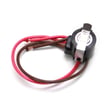
- Refrigerator defrost bi-metal WPW10225581 (helps prevent frost buildup that can restrict airflow)
Last updated: February 2026
How to read Kenmore refrigerator model number?
For Kenmore refrigerator model 10656166500, the model number is read exactly as printed on the model and serial number label. On this model, that label is located on the inside wall of the refrigerator compartment; record the full model number and serial number for parts lookup and service.
Where to find the model number label
Check these common label locations on Kenmore side-by-side refrigerators, starting with the most likely spot for model 10656166500:
- Inside wall of the refrigerator compartment (model and serial number label)
- Inside the refrigerator door frame (hinge side)
- Inside the freezer door frame (hinge side)
- Behind the lower crisper drawers (on the inner side wall)
- Behind the base grille or kick plate (front bottom)
For diagrams and the exact label location callouts, use the 10656166500 owner's manual.
How to “read” the number for parts and service
The most important rule is to use the entire model number exactly as shown, including all digits.
- Write it down from the label, do not copy it from the dispenser or control panel area
- Keep the model number and serial number together (they are often on the same sticker)
- Use the full model number when ordering parts like a water filter or ice maker
- If the label is worn, take a clear photo and zoom in to confirm each digit
Quick checklist
| What to capture | Example for this refrigerator | Why it matters |
|---|---|---|
| Model number | 10656166500 | Ensures correct parts diagrams and fit |
| Serial number | (from label) | Helps match production changes |
| Purchase date | (your records) | Useful for service history |
Why it matters
Kenmore model numbers identify the exact design family and component set. Using the full 10656166500 model number prevents ordering the wrong items, such as the wrong style of refrigerator water filter EDR3RXD1 or a mismatched door bin or drawer.
Last updated: February 2026
How to tell if a Kenmore refrigerator compressor is bad?
On Kenmore refrigerator model 10656166500, a “bad compressor” usually shows up as poor cooling with the unit running longer than normal, unusual clicking or repeated start attempts, or the compressor staying very hot while temperatures do not recover. Use the checks below to separate normal operation from a sealed-system problem; see the 10656166500 owner's manual for model-specific troubleshooting.
Quick checks before blaming the compressor
- Confirm the refrigerator is plugged into a grounded 3-prong outlet and has steady power.
- Make sure air vents inside both sections are not blocked by food (blocked airflow can mimic compressor failure).
- Clean dirty condenser coils; dirty coils reduce heat transfer and make the motor work harder.
- Verify the doors close fully and the gaskets seal all the way around.
- If your model has digital controls, turn the unit OFF then ON to reset the controls.
What “normal compressor sounds” look like
This model can run longer than older refrigerators because it is designed for efficiency. You may hear a pulsating or high-pitched sound as the compressor and fans adjust.
| What you notice | Often normal | More likely a problem |
|---|---|---|
| Longer run times | After loading warm groceries, hot room, frequent door openings | Runs constantly and never reaches safe temps |
| Compressor sound | Steady hum, occasional pitch changes | Repeated clicking, short cycling, then silence |
| Cabinet temps | Gradually returns to set temp | Stays warm for hours despite running |
Signs that point more strongly to a compressor or sealed-system issue
- Repeated clicking from the start device area with little or no sustained running
- Compressor is extremely hot to the touch after repeated start attempts
- Refrigerator and freezer both warm even after vents are clear and coils are clean
- Cooling improves only briefly after a power reset, then fails again
Why it matters
A compressor is part of the sealed refrigeration system (compressor, refrigerant, and connecting tubing). If airflow, coils, or door sealing are the real issue, fixing those restores cooling without major repair.
Last updated: February 2026