Owner’s manual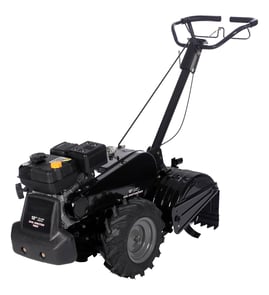


How often should I change the oil in my tiller?
For the Craftsman 917295852 gas rear-tine tiller, we recommend changing the engine oil after the first 2 hours of operation, then every 25 hours of use after that, or at least once a year. Also check the oil level before starting and during extended use.
Recommended oil-change schedule
- First oil change: after 2 hours (break-in period)
- Ongoing: every 25 hours of operation
- Minimum: once per year, even if you do not reach 25 hours
- Oil checks: before each use, and after every 5 hours of continuous use
| Situation | What we recommend |
|---|---|
| New or recently serviced tiller | Change oil after 2 hours, then follow the 25-hour schedule |
| Normal seasonal use | Change every 25 hours or once per year |
| Heavy load or high temperatures | Change more often than 25 hours |
| Dusty or dirty conditions | Service more often (oil checks and air-cleaner service) |
Quick tips for a clean oil change
- Run the engine briefly so the oil is warm (warm oil drains faster).
- Park the tiller on a level surface before checking oil.
- Use a funnel and a suitable drain pan to prevent spills.
- Tighten the oil filler plug securely after checking or refilling.
Why it matters
Fresh oil protects internal engine parts from wear and overheating. Following the 2-hour break-in change and the 25-hour routine helps your Craftsman tiller start easier, run smoother, and last longer.
For oil type, oil-fill location, and the exact drain procedure for this model, use the 917295852 owner’s manual.
Last updated: January 2026
Do you push or pull a rear tine tiller?
With the Craftsman 917295852 rear-tine tiller, you typically walk behind it and guide it while the wheels pull the machine forward and the counter-rotating tines dig. Keep a firm grip, stay sure-footed, and avoid fighting the tiller if it surges.
How to handle the tiller while it works
We recommend letting the tiller do the work and focusing on control and safety.
- Walk slightly to one side of the tilled path so you do not step in freshly loosened soil
- Use the handles to guide, not to force the tiller through the ground
- If the tines catch and the tiller lunges forward, let go of the handlebars rather than restraining it
- Do not till too deep at too fast a rate; reduce depth or slow down if it bogs
- Use reverse carefully and do not stand directly behind the tiller when backing
Basic control positions that affect “push vs pull” feel
On this model, the shift lever and drive control bar determine whether the wheels and tines are driving.
| What you want to do | Typical control setup | What you will feel at the handles |
|---|---|---|
| Till soil | Shift lever to T (till), engage drive control bar | Tines and wheels drive; machine tends to pull forward |
| Move forward without tilling | Shift lever to F (forward), engage drive control bar | Wheels drive; easier to steer and reposition |
| Stop movement | Release drive control bar; shift to N (neutral) | Machine stops driving; you can reposition safely |
For the exact control locations and operating steps, use the 917295852 owner's manual.
Why it matters
Trying to “push” a rear-tine tiller through hard ground can reduce control and increase the chance of a sudden lurch. Letting the wheels pull and adjusting depth with the depth stake helps you get a smoother seedbed with less strain.
Last updated: January 2026
What are the common problems with lawn tillers?
Common problems on the Craftsman 917295852 gas rear-tine tiller include hard starting, rough running, and drive or tine issues (engine runs but the tiller will not move, or tines will not rotate). Most causes trace to fuel/ignition maintenance, soil conditions, or worn drive components; see the 917295852 owner's manual for model-specific operating and troubleshooting steps.
Most common symptoms and what they usually mean
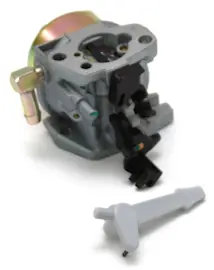
- Engine will not start or starts then dies: stale fuel, dirty carburetor, fouled spark plug, or a kill switch/wiring issue
- Engine runs but tiller will not move: drive control not engaged, belt out of adjustment, belt off pulleys
- Tines will not rotate: broken shear pin(s) (common after hitting rocks or roots)
- Engine labors when tilling: tilling too deep, throttle set too low, carburetor needs adjustment
- Excessive bounce or difficult handling: soil too dry and hard
- Soil balls up or clumps: soil too wet
Quick checks we recommend (in order)
- Safety first: shut the engine off, let hot parts cool, and keep bystanders away.
- Confirm controls: release and re-engage the drive control bar; verify the shift lever is in the intended gear.
- Match the soil to the job: aim for a typical tilling depth of 4 to 6 inches; avoid very dry or very wet soil.
- Inspect the drive system: look for a loose, glazed, or slipping belt; replace a worn belt with the husqvarna rear-tine tiller drive belt 591372401.
- Check for overload: if the tiller surges forward in hard ground, reduce depth and speed.
Troubleshooting guide (fast reference)
| Problem | Likely cause | What to do next |
|---|---|---|
| Engine runs but won’t move | Belt issue or control not engaged | Engage drive control; inspect/adjust belt |
| Tines won’t rotate | Shear pin(s) broken | Replace shear pin(s); clear obstructions |
| Bounces, hard to control | Soil too dry/hard | Moisten soil or wait for better conditions |
| Soil clumps | Soil too wet | Wait until soil dries out |
Why it matters
Catching these issues early prevents belt damage, reduces strain on the gearcase and tine hubs, and makes the tiller safer to handle, especially when tines catch in hard ground.
Last updated: January 2026
Where is the model number on a Craftsman rear tine tiller?
On Craftsman rear-tine tiller model 917295852, the tiller model number is on an ID plate attached to the top of the transmission. The engine has its own separate model number on the blower housing. For diagrams and identification details, use the 917295852 owner's manual.
Where to check on the machine
Look for a metal plate or durable label; it is usually riveted or adhered and may be dirty or paint-covered.
- Tiller model number: plate on the top of the transmission
- Engine model number: on the engine blower housing
- Clean first: wipe with a rag and mild degreaser so the numbers are readable
- Use good light: a flashlight helps with stamped characters
- Write it down: record both numbers before ordering parts
Tiller vs. engine number (what each one is for)
| Number you’re looking for | Typical label location | Used to match |
|---|---|---|
| Tiller model number 917295852 | Top of the transmission | Tines, shields, drive system, chassis parts |
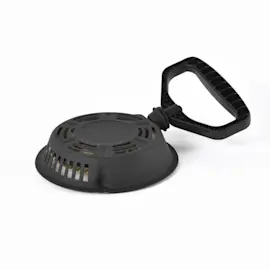
| Engine model and type numbers | Engine blower housing | Carburetor, ignition, recoil starter, engine internals |
Why it matters
Using the correct ID number prevents mismatched parts, especially when you are choosing between similar Craftsman and Briggs & Stratton components.
Last updated: January 2026