Owner’s manual
 Error Codes


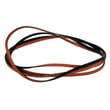
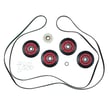
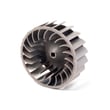
How many years should a whirlpool dryer last?
A Whirlpool dryer like model WGD5620HW1 typically lasts 10 to 13 years with normal household use. Keeping airflow strong (clean lint screen, clear venting) and addressing wear parts early can push service life closer to the high end.
Typical lifespan and what affects it
Most dryers wear out based on heat cycles, load size, and airflow restriction. For gas dryers, burner and airflow components also influence longevity.
- Usage volume: large families usually reach end-of-life sooner than light use
- Venting quality: long runs and many elbows increase heat stress and dry time
- Maintenance: lint removal and interior cleaning reduce overheating risk
- Environment: humid or dusty laundry rooms accelerate corrosion and lint buildup
- Repair history: replacing common wear parts can extend usable life
Maintenance that helps WGD5620HW1 last longer
We follow the maintenance intervals in the WGD5620HW1 owner’s manual. Key items include:
- Clean the lint screen before every load
- Check outside vent airflow; weak airflow means the vent or hood is restricted
- Use 4-inch (102 mm) venting and keep the run as short and straight as possible
- Remove lint from the exhaust vent every 2 years (more often with heavy use)
- Have lint removed from inside the dryer cabinet every 2 years by a qualified servicer
When a “simple part” can add years
If the dryer is noisy, squealing, or thumping, replacing drum support and belt-drive wear parts often restores smooth operation.
| Symptom | Common cause | Example part for WGD5620HW1 |
|---|---|---|
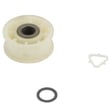
| Squealing or chirping | Worn idler pulley | Dryer idler pulley W10837240 |
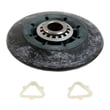
| Thumping or rumbling | Worn drum rollers | Dryer drum support roller WPW10314173 |
| Intermittent heat | Weak gas ignition components | Igniter 279311 |
Why it matters
A dryer that runs with restricted airflow or worn support parts works hotter and longer per load. That extra heat and run time accelerates wear on the motor, controls, and gas heating system.
Last updated: January 2026
What are common problems with Whirlpool Duet steam dryers?
Common problems we see on Whirlpool Duet steam dryers like model WGD5620HW1 include long dry times from restricted airflow, “no heat” conditions (often gas supply or safety devices), steam-cycle noises from the water pump/valve, and vibration or rattling from leveling or items in the drum. Use the WGD5620HW1 owner's manual to match symptoms to the correct checks.
Most common symptoms and what they usually mean
- Dryer runs but clothes stay damp: lint screen or venting restriction; long or undersized venting increases dry time.
- Dryer tumbles but does not heat: gas supply valve closed, or a heat-safety device opened due to overheating.
- Humming/whining during Steam cycle: water pump or water inlet valve running; louder after install or long periods of non-use.
- Rattling/vibration: dryer not level, or small objects caught at the drum edges.
- Thumping: normal after sitting unused; typically fades after a few minutes.
Quick checks we recommend first (safe, no tools)
- Clean the lint screen before every load.
- Check airflow at the outside hood after 5 to 10 minutes of running; weak airflow points to a clogged exhaust system.
- Confirm you are using 4-inch (102 mm) vent material and the vent run is not excessively long or full of turns.
- For gas models, confirm the gas supply valve is fully open.
- Avoid over-drying with Timed Dry; it can cause shrinkage, wrinkles, and static.
Symptom-to-likely-cause guide
| Symptom | Most likely cause | What to do next |
|---|---|---|
| Long dry times | Restricted venting or clogged hood | Clean/shorten venting; verify 4-inch vent |
| No heat (gas) | Gas valve closed or heat safety opened | Open gas valve; check for overheating causes |
| Steam cycle noise | Pump/valve operating | Normal; verify water is connected and turned on |
| Rattling/vibration | Not level or object in drum edge | Level dryer; remove object |
Parts that commonly relate to these issues
If you’ve confirmed airflow and settings and the dryer still overheats or stops heating, these parts are commonly involved:
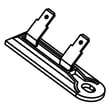
- Thermal fuse W10909685 (opens if the dryer overheats)
- Dryer thermistor WP8577274 (helps regulate temperature)
- Dryer blower wheel WP697772 (moves air through the drum and vent)
Why it matters
Steam dryers depend on correct airflow, heat control, and (for steam cycles) a proper water connection. Fixing venting and setup issues first prevents repeat overheating, nuisance shutdowns, and poor drying performance.
Last updated: January 2026
What size is the Whirlpool WGD5620HW1?
The Whirlpool WGD5620HW1 is a full-size 27-inch class gas dryer. Most dryers in this class are about 27 inches wide, roughly 38 to 39 inches tall, and about 30 to 32 inches deep (depth can increase when you include the door and venting). For the exact dimensions for your unit, use the WGD5620HW1 use and care guide.
What “size” usually means for this model
When customers ask about size, it typically refers to one of these:
- Cabinet width (fit between walls or in a laundry closet)
- Overall height (especially if you plan to stack or add a pedestal)
- Depth (door closed vs. door open, plus vent clearance)
- Capacity (how much laundry fits per load)
Typical dimensions you can plan around
These planning numbers work well for most 27-inch Whirlpool dryers like the WGD5620HW1.
| Measurement | Typical planning range | What to allow for |
|---|---|---|
| Width | ~27 in. | Side clearance for airflow and leveling |
| Height | ~38 to 39 in. | Room to open the door and access controls |
| Depth | ~30 to 32 in. | Extra space for venting and gas line |
Fit and airflow tips (important for drying performance)
Good airflow affects dry time and helps prevent overheating. We recommend:
- Use 4-inch (102 mm) venting material
- Keep the vent run as short and straight as possible
- Clean the lint screen before every load
- Check outside hood airflow periodically
- Avoid crushed or kinked venting behind the dryer
Why it matters
Getting the right dimensions helps you avoid installation surprises (tight closets, door clearance issues, and vent routing problems). Proper vent sizing and airflow also helps the dryer run efficiently and dry evenly.
Last updated: January 2026