Get free shipping on your order, with any water filter subscription. Find my filter

Open Hamburger Menu
Sears Parts Direct
Tips to find your model number
Amana LWA50AW top-loading washer

Amana LWA50AW top-loading washer Parts

Here are the diagrams and repair parts for Amana LWA50AW top-loading washer, as well as links to manuals and error code tables, if available.

By Schematic
By Part
SELECT DIAGRAM
?

This is the number corresponding to the part on the diagram / schematic

Browse Parts for LWA50AW Top-Loading Washer

  • Maytag Appliance Hose Clamp for Amana LWA50AW - Part WP596669

    Mixing valve and hose(inlet, filler, and diagram

    Hose Clamp

    Part #36801

    Replaced by #WP596669

    Info Icon
    Manufacturer substitution
    This part replaces 36801. Substitute parts can look different from the original.
    This item is not returnable
    In Stock
    $4.73
    17% OFF Phone Price : $5.73Info Icon
    Minus Item
    Qty
    Plus Item
  • Maytag Appliance Hose Clamp for Amana LWA50AW - Part WP596669

    Outer tub, cover, pressure tube, and cou diagram

    Hose Clamp

    Part #22294

    Replaced by #WP596669

    Info Icon
    Manufacturer substitution
    This part replaces 22294. Substitute parts can look different from the original.
    This item is not returnable
    In Stock
    $4.73
    17% OFF Phone Price : $5.73Info Icon
    Minus Item
    Qty
    Plus Item
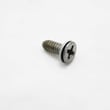
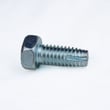
  • Washer Screw for Amana LWA50AW - Part WPW10119828

    Cabinet top, loading door, and door swit diagram

    Screw

    Part #34337

    Replaced by #WPW10119828

    Info Icon
    Manufacturer substitution
    This part replaces 34337. Substitute parts can look different from the original.
    This item is not returnable
    In Stock
    $4.13
    19% OFF Phone Price : $5.13Info Icon
    Minus Item
    Qty
    Plus Item
  • Laundry Appliance Retainer Ring for Amana LWA50AW - Part WP23748

    Motor, belt, pump, and idler assy diagram

    Retainer Ring

    Part #23748

    Replaced by #WP23748

    Info Icon
    Manufacturer substitution
    This part replaces 23748. Substitute parts can look different from the original.
    This item is not returnable
    In Stock
    $9.93
    9% OFF Phone Price : $10.93Info Icon
    Minus Item
    Qty
    Plus Item
  • Appliance Nut for Amana LWA50AW - Part WP3400029

    Motor, belt, pump, and idler assy diagram

    Nut

    Part #35423

    Replaced by #WP3400029

    Info Icon
    Manufacturer substitution
    This part replaces 35423. Substitute parts can look different from the original.
    In Stock
    $7.21
    12% OFF Phone Price : $8.21Info Icon
    Minus Item
    Qty
    Plus Item
  • Idler Pulley for Amana LWA50AW - Part 38225

    Motor, belt, pump, and idler assy diagram

    Idler Pulley

    Part #38225

    The manufacturer no longer makes this part, and there's no substitute part

  • Washtub for Amana LWA50AW - Part 39136P

    Agitator, drive bell, washtub and hub diagram

    Washtub

    Part #39136P

    The manufacturer no longer makes this part, and there's no substitute part

  • Belt for Amana LWA50AW - Part 37820

    Motor, belt, pump, and idler assy diagram

    Belt

    Part #37820

    The manufacturer no longer makes this part, and there's no substitute part

  • Washer for Amana LWA50AW - Part 39113

    Agitator, drive bell, washtub and hub diagram

    Washer

    Part #39113

    The manufacturer no longer makes this part, and there's no substitute part

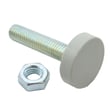
  • Washer Leveling Leg for Amana LWA50AW - Part 22003428

    Front panel, base and cabinet, and speci diagram

    Leveling L

    Part #34319

    Replaced by #22003428

    Info Icon
    Manufacturer substitution
    This part replaces 34319. Substitute parts can look different from the original.
    This item is not returnable
    In Stock
    $13.64
    13% OFF Phone Price : $15.64Info Icon
    Minus Item
    Qty
    Plus Item

Amana Top-Loading Washer LWA50AW FAQs

On an Amana LWA50AW top-loading washer, the most expensive repairs are typically major drive-system parts (transmission/gearcase, brake, or tub and spin components) and some electrical controls, because the parts are costly and the labor is more involved. Use the owner's manual to identify your washer’s exact configuration before ordering.

Most expensive washer repairs (what we see most often)

These are the repairs that usually cost the most on a washing machine, including many top-load designs like the LWA50AW:

  • Transmission/gearcase or drive assembly: large, heavy component; significant teardown time
  • Tub and spin system work (basket drive, bearings, seals): labor-intensive and often tied to leaks or loud spin
  • Motor: higher-cost part; may require additional drive components
  • Main control or timer/control components: parts can be expensive and diagnosis matters
  • Brake or clutch system: can be pricey and typically requires deeper disassembly

LWA50AW examples from parts commonly tied to higher-cost repairs

Not every expensive repair is listed as a single “big assembly” part, but these examples show the kind of components that can drive up total repair cost:

Repair area Example part on this model Why it can get expensive
Spin system/bearing work Bearing 28944RP Higher part cost; often paired with seals and labor
Brake system Brake 205546P More teardown; may be bundled with other drive wear
Controls Switch 201927P Electrical diagnosis time; control issues can mimic other failures

How to decide whether it’s worth repairing

We use these checkpoints to make a fast, practical decision:

  • Compare the part cost plus labor to the washer’s age and condition
  • If the washer leaks, roars in spin, or has metal-on-metal noise, expect drive/tub work
  • If symptoms are intermittent, confirm basics first (lid closed, correct cycle, proper load size)
  • Price out all related items (seals, clamps, fasteners) so the repair is complete
  • If multiple major systems are failing, replacement is often the better value

Why it matters

The “most expensive part” is usually expensive because it sits at the center of the wash and spin system. When it fails, the repair often includes extra parts and time, not just one component.

Last updated: February 2026

A 3.5 cu. ft. washer is typically considered medium capacity, not large. For an Amana top-loading washer like model LWA50AW, 3.5 cu. ft. usually handles everyday family loads well, while “large” washers are generally 4.0 cu. ft. and up.

Capacity size guide (typical ranges)

  • Small: 2.0 to 2.5 cu. ft. (best for singles, small loads)
  • Medium: 3.0 to 3.5 cu. ft. (most common for everyday use)
  • Large / extra-large: 4.0 cu. ft. or more (bulky items, bigger households)
Capacity Common label Best for
2.0 to 2.5 cu. ft. Small Light laundry, limited space
3.0 to 3.5 cu. ft. Medium Regular mixed loads
4.0+ cu. ft. Large Comforters, heavy weekly volume

How to decide if 3.5 cu. ft. is “big enough”

We recommend thinking in terms of what you wash most often:

  • King bedding and bulky blankets: 4.0+ cu. ft. is usually the better fit
  • Jeans, towels, mixed weekly loads: 3.0 to 3.5 cu. ft. is a strong everyday range
  • Overloading concerns: medium tubs clean better when you leave room for clothes to move
  • Cycle time and water use: bigger capacity often tempts bigger loads, which can reduce cleaning if packed too tight

Why it matters

Washer capacity affects cleaning performance, wear on drive components, and how often you need to run loads. A medium-capacity tub (around 3.5 cu. ft.) is a practical balance for most households, especially in a classic top-load design.

Where to confirm your washer’s actual capacity

Capacity can vary by design and model series. For the exact specifications for your Amana LWA50AW, check the LWA50AW service manual.

Last updated: February 2026

If your Amana LWA50AW top-loading washer is leaking, making loud noises, not filling or draining correctly, or leaving clothes dirty, it needs attention. Catching these symptoms early helps prevent bigger failures in the drive system, controls, or water-handling parts (see the LWA50AW service manual).

Common signs your washer needs repair

  • New or worsening noises: grinding, squealing, banging, or a loud spin.
  • Leaks: water under the washer, dripping at hoses, or water running down the cabinet.
  • Won’t fill or overfills: slow fill, no fill, or water level is wrong.
  • Won’t drain or won’t spin: tub stays full, clothes are soaking wet at the end.
  • Poor cleaning: detergent not dissolving, heavy soil left behind, or linty residue.
  • Burning smell or hot motor area: stop the cycle and unplug the washer.

Quick checks you can do first (safe, no tools)

  1. Unplug the washer before touching internal parts.
  2. Confirm both water supply valves are fully open and inlet hoses are not kinked.
  3. Make sure the drain hose is not shoved too far down the standpipe (can cause siphoning).
  4. Run a small load; listen for noise changes between agitate and spin.
  5. If leaking, check hose connections and clamps; a loose clamp can cause a sudden drip.

Symptom-to-likely-area guide

Symptom Most common area to inspect Example part on this model page
Water on floor near hoses Hose connections, clamps Hose clamp WP285655
Loud banging in spin Leveling, load balance Leveling leg (listed as 22003428)
Won’t start or stops mid-cycle Timer/controls, lid switch circuit Timer knob (201501W)
Won’t drain/spin Drain path, drive/brake system Brake (205546P)

Why it matters

A washer that keeps running with leaks, overfilling, or abnormal noises can damage the motor, wiring, and floor. The LWA50AW uses a timer, pressure switch, and water temperature switch logic; when one of these systems is off, symptoms usually show up as fill, agitation, or spin problems.

Helpful DIY guidance

For control and timer-related symptoms, we recommend following the steps in how to replace the timer and control parts on an Amana top load washer.

Last updated: February 2026
Most common symptoms to help you fix your washers

Choose a symptom to see related washer repairs.

Main causes: clogged drain hose, house drain clogged, bad drain pump, water-level pressure switch failure, bad control b…

Main causes: broken lid switch or lid lock, bad pressure switch, broken shifter assembly, faulty control system…

Main causes: worn agitator dogs, bad clutch, broken motor coupler, shifter assembly failure, broken door lock, suspensio…

Main causes: water heater failure, bad water temperature switch, faulty control board, bad water valve, faulty water tem…

Main causes: lack of electrical power, wiring failure, bad power cord, electronic control board failure, bad user interf…

Main causes: no water supply, bad water valves, water-level pressure switch failure, control system failure, bad door lo…

Main causes: unbalanced load, loose spanner nut, worn drive block, broken shock absorber or suspension spring, debris in…

Main causes: leaky water inlet valve, faulty water-level pressure switch, bad electronic control board…

Main causes: bad lid switch or door lock, bad timer or electronic control board, wiring failure, bad water inlet valve a…

Repair guides for side-by-side refrigerators

How to replace an electronic control board on the back of a refrigerator

How to replace an electronic control board on the back of a refrigerator

If your refrigerator isn't running, an electronic control board failure could be the problem. A service technician can d…

Repair time and Difficulty

 15 minutes or less
How to replace a press-in door gasket in a side-by-side refrigerator

How to replace a press-in door gasket in a side-by-side refrigerator

The door gasket seals the gap around the door to keep the cold air in and the warm air out. Replace a worn or damaged do…

Repair time and Difficulty

 15 minutes or less
How to replace an ice maker in a side-by-side refrigerator

How to replace an ice maker in a side-by-side refrigerator

Learn how to replace the ice maker in a side-by-side refrigerator with these step-by-step instructions.…

Repair time and Difficulty

 30 minutes or less

Effective articles & videos to help repair your washers

Use the advice and tips in these articles and videos to get the most out of your washer.

How auto-load sensing washers work (and when they don't)

How auto-load sensing washers work (and when they don't)

Your washer barely fills or seems stuck in sensing mode? Find out how auto-load sensing and Precise Fill features work, …

How to remove the main control board and user interface from a Maytag Epic Z front-load washer

How to remove the main control board and user interface from a Maytag Epic Z front-load washer

Get step-by-step instructions for removing the main electronic control board and the control panel from a Maytage Epic Z…

Using a wiring schematic to trace a current video

Using a wiring schematic to trace a current video

Find out what’s wrong with your appliance by following a circuit.…

Parts & More

Air Compressor
Air Purifier
Electric Range
Front-Engine Lawn Tractor
Gas Pressure Washer
Mechanical Sewing Machine
Parts
Power Grinder
Radial Arm Saw
Side-By-Side Refrigerator
Washer
Wet/Dry Vacuum