Owner’s manual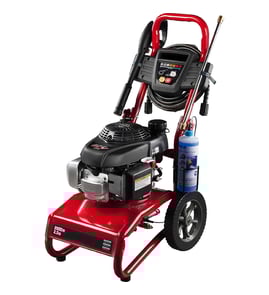



Is a 3000 PSI pressure washer good?
Yes; 3000 PSI is a strong, “heavy-duty homeowner” pressure level that works well for concrete, driveways, decks, and paint-prep when you use the right spray tip and technique. For Craftsman model 580767700, the rated pressure is 2700 PSI, which is still very capable for most residential cleaning (and it regulates pressure by engine speed). See the 580767700 owner's manual for operating and safety details.
What 3000 PSI is best for (and when it is too much)
A 3000 PSI gas pressure washer is a good fit when you need faster cleaning and better stripping power than a 2000 to 2500 PSI unit.
- Cleaning concrete, pavers, and brick (use a wider fan tip first)
- Driveway and sidewalk grime, algae, and mildew
- Deck and fence prep (use lower pressure and keep distance to avoid gouging)
- Heavy equipment and greasy surfaces (with detergent and rinse)
- Paint-prep on durable surfaces (test a small area first)
How your 580767700 compares
Your Craftsman 580767700 is rated at 2700 PSI and 2.5 GPM. That is close to 3000 PSI in real-world cleaning, especially when you use proper flow, tips, and dwell time.
| Spec | 3000 PSI class (typical) | Craftsman 580767700 (manual) |
|---|---|---|
| Pressure | ~3000 PSI | 2700 PSI |
| Flow rate | ~2.3 to 3.0 GPM | 2.5 GPM |
| Best use | Heavy residential | Heavy residential |
Why it matters
PSI controls impact force; GPM controls how fast you rinse away dirt. A slightly lower PSI with solid GPM often cleans nearly as fast, with less risk of surface damage.
Tips to get the best results safely
- Keep a steady water supply; do not run the pump without water connected and turned on.
- Purge air from the pump by squeezing the trigger before starting.
- Start with a wider spray pattern and increase pressure only as needed.
- Avoid ladders and unstable footing; recoil from the spray can cause falls.
- Use detergent correctly: apply bottom-up, let it soak 3 to 5 minutes, then rinse.
Last updated: January 2026
What PSI should my pressure washer be?
For the Craftsman pressure washer model 580767700, the rated working pressure is 2700 PSI, which is the PSI you should expect under normal operating conditions with proper water supply and a clean spray tip. Use the pressure adjustment control to match the job and avoid surface damage.
What to expect from PSI on model 580767700
PSI can vary slightly based on nozzle selection, water supply, and pump condition. For this model, 2700 PSI is the target rating, but you should tune pressure for the surface you are cleaning.
- Use lower pressure for vehicles, painted surfaces, and soft wood
- Use higher pressure for concrete, brick, and heavy grime
- Keep the spray tip clean and unclogged to maintain pressure
- Make sure inlet water temperature stays at or below 100°F
- Test a small area first to prevent etching or splintering
Quick PSI guidance by task (practical ranges)
These ranges help you choose a safer setting even though your washer is capable of 2700 PSI.
| Task | Typical safe PSI range | Notes |
|---|---|---|
| Car, boat, patio furniture | 1200 to 1900 | Use wider fan pattern; keep distance |
| Decking, fences | 1500 to 2500 | Test first; avoid forcing water into joints |
| Concrete, driveways | 2500 to 3000 | Use steady passes; avoid lingering in one spot |
If pressure seems too low or inconsistent
Start with the easy checks before replacing parts.
- Confirm full water flow from the garden hose before starting the engine
- Purge air from the pump by holding the trigger until flow is steady
- Inspect the spray tip and wand for blockage or wear
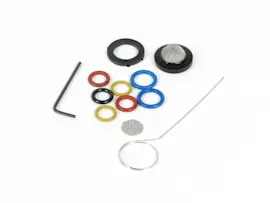
- Check for leaks at hose connections and O-rings
- If detergent mode is on, switch back to high-pressure mode (chemical does not flow in high pressure mode)
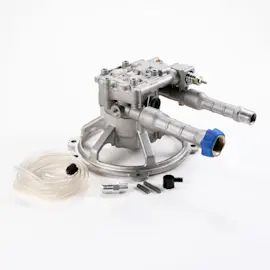
If you suspect a pump internal issue (pressure surging, weak output), a worn check valve is a common cause; the check valve 190657GS is the model-matched kit.
Why it matters
Using the right PSI protects surfaces and helps the pump run cooler and last longer. Running the engine with the trigger released for several minutes can overheat circulating water; this model uses an automatic cool-down system to help prevent pump damage.
For operating details and specifications, follow the 580767700 owner's manual.
Last updated: January 2026
What kind of gas goes in a Craftsman 3000 PSI pressure washer?
For the Craftsman 580767700 gas pressure washer, we recommend using clean, fresh unleaded gasoline (87 octane/87 AKI minimum). Use fresh fuel and refuel only after the engine cools to reduce fire risk; follow the safety and fueling steps in the 580767700 owner's manual.
Fueling tips that prevent hard-starting and surging
- Use fresh unleaded gas; avoid old fuel that has been sitting for weeks.
- Keep the fuel container clean and sealed to prevent water and dirt contamination.
- Do not overfill the tank; leave room for fuel expansion.
- Wipe up spills immediately and move the pressure washer away from the fueling area before starting.
- Run the engine outdoors only; never operate in enclosed spaces.
What to avoid
Gas pressure washers like the Craftsman 580767700 run best when fuel quality is consistent.
| Avoid | Why it causes problems | What you may notice |
|---|---|---|
| Stale gasoline | Loses volatility over time | Hard starting, rough idle |
| Contaminated fuel (water/dirt) | Disrupts combustion and clogs passages | Surging, loss of power |
| Fueling a hot engine | Increases fire risk from vapors | Strong fuel smell, potential flare-up |
If it still will not run right after refueling
If you filled with fresh 87+ octane unleaded gas and the engine still runs poorly, use this quick checklist:
- Confirm the water supply is connected and fully on before starting.
- Check the air filter and spark plug condition (common tune-up items).
- Verify the spray tip/nozzle is not clogged and the wand is set correctly.
- Look for air leaks or restrictions in the detergent pickup line if you use chemicals.
For symptom-based troubleshooting steps, use pressure washer won't start or pressure washer engine losing power.
Why it matters
Correct fuel helps the engine start easily, hold steady RPM under load, and deliver consistent pressure at the pump. Fresh unleaded gas also reduces deposits that can lead to performance issues over time.
Last updated: January 2026