Owner’s manual
What company makes Craftsman air compressors?
Craftsman is the brand name on your air compressor, not the single company that built it. For the Craftsman 919176320, the manufacturer can vary by production run; the most reliable way to identify who made yours is to use the model, code, and manufacturer numbers listed on the unit’s labels (as shown in the owner's manual).
How to identify the actual manufacturer on your 919176320
Check the labels on the compressor and record these identifiers:
- Model number: found on the label on the front of the air tank saddle
- Code number: found on the “oil” label on the side of the air tank
- Manufacturer number (ASME code compressors): on the metal data plate welded to the tank
- Motor manufacturer name: on the motor label
- Motor manufacturer number: also on the motor label
These numbers are what we use to match the correct diagrams and repair parts.
What “made by Craftsman” usually means
Craftsman air compressors have been produced by different OEMs over the years. The OEM can change by model family and year, so the label information above is the deciding factor.
Common OEM clues (what to look for)
| Where you look | What you’re looking for | Why it helps |
|---|---|---|
| Air tank saddle label | Model and code | Ties your unit to the correct parts list |
| Tank data plate | Manufacturer number (ASME units) | Identifies the tank maker and compliance info |
| Motor label | Motor maker and motor number | Motor parts and specs depend on this |
Why it matters when ordering parts
Two Craftsman compressors that look similar can use different pressure switches, check valves, regulators, or pump components. Using the exact model and code information helps ensure the replacement part matches your specific build.
If you need to search beyond the diagrams for this model, we recommend using your recorded model and code details on Sears PartsDirect.
Last updated: February 2026
What is the most common cause of air compressor failure?
The most common cause of failure on a Craftsman air compressor like model 919176320 is poor maintenance that leads to overheating and accelerated wear (dirty intake filter, incorrect oil level, and restricted cooling airflow). These issues reduce output, strain the motor, and shorten pump life; follow the maintenance schedule in the owner's manual.
What fails first most often (and why)
When maintenance slips, these problems show up early and cause the most damage:
- Dirty or restricted air intake filter: reduces airflow and capacity; the pump runs hotter and longer.
- Incorrect oil level or oil condition (oil-lubricated units): low oil increases friction; overfilling can cause premature failure.
- Overheating from poor ventilation: blocked cooling fins or a hot, unventilated location raises operating temperature.
- Air leaks: the compressor cycles more often and runs longer, increasing heat and wear.
- Pressure switch or unloader issues: the motor can struggle to restart if it has to start against head pressure.
Quick maintenance checklist for 919176320
Use this as a practical routine to prevent the most common failures:
- Unplug the compressor and release tank pressure before any service.
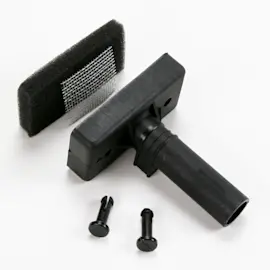
- Inspect and replace the air intake filter when dirty, oily, or paint-covered.
- Check crankcase oil before each use (keep it near the fill hole level; do not overfill).
- Change oil about every 100 hours of operation (typical interval for this style).
- Keep the unit in a dry, clean, cool, well-ventilated area; keep cooling fins clean.
- Periodically pull the safety valve ring to confirm it operates freely.
Symptoms and the most likely root cause
| What you notice | Most common cause | What to check first |
|---|---|---|
| Runs hot, low output | Restricted intake or poor cooling | Filter condition; ventilation; dirty fins |
| Won’t build tank pressure | Leak or pump/valve issue | Fittings/hoses; check valve; safety valve |
| Won’t start or trips | Overheating or restart under load | Motor reset; unloader/pressure switch behavior |
| Constant hissing after shutoff | Check valve/unloader leak | Leak at pressure release valve when stopped |
Why it matters
Overheating and poor lubrication do not just reduce performance; they permanently wear internal pump parts and can turn a simple filter or oil service into a major rebuild. If you need to look up maintenance steps or identify replacement items by diagram, we list parts by model on this page and you can also search by model number on Sears PartsDirect.
Last updated: February 2026
Is it worth it to repair a compressor?
Yes, repairing a Craftsman air compressor like model 919176320 is worth it when the problem is a normal wear item (pressure switch, check valve, gauge, belt, or fittings) and the tank and pump are in good shape; it is usually not worth it when the air tank is damaged or the pump has major internal wear.
Quick decision checklist
- Repair it if the motor runs, the tank holds air, and the issue is a control or leak problem.
- Repair it if it only needs common service parts (pressure switch, regulator, safety valve, gauges, hose fittings).
- Repair it if it trips overload and resets normally (many motors have a reset button).
- Replace it if the tank is compromised (never drill, weld, or modify the tank).
- Replace it if the pump rebuild cost plus labor approaches the price of a comparable new unit.
- Replace it if you need higher output than the compressor can realistically deliver for your tools.
Cost and effort: what typically tips the scale
| Situation | Typical fix | Usually worth repairing? |
|---|---|---|
| Won’t start or cycles oddly | Pressure switch, wiring check, overload reset | Yes |
| Won’t build tank pressure | Check valve, leaks, pump valves/seals | Often |
| Can’t adjust output pressure | Regulator issue, leaks | Yes |
| Loud operation | Mounting, intake filter, worn pump components | Depends |
| Tank damage or unsafe modification | No safe repair path | No |
Safety and “don’t do this” items (important)
The compressor can cycle automatically when power is on, and troubleshooting can expose you to voltage, moving parts, and compressed air. Before any inspection or repair:
- Unplug the unit.
- Bleed all air pressure from the tank.
- Keep hands and items away from the flywheel and belt.
- Do not adjust, remove, or defeat the safety valve or pressure switch.
- Never drill into, weld, or change the tank in any way.
For model-specific safety, troubleshooting, and parts identification, use the owner's manual.
Why it matters
A repair that restores correct cut-in and cut-out control, stops leaks, and protects the tank from overpressure keeps your 919176320 running safely and prevents repeat failures (like hard starts against a full tank).
If you decide to move forward, you can look up parts by model number and order through Sears PartsDirect.
Last updated: February 2026
Are air compressor parts interchangeable?
Most air compressor parts are not interchangeable. For a Craftsman 919176320 air compressor, internal components (pump parts, valves, pistons, gaskets, and motor-related items) must match the exact model and specifications; only some external air fittings and accessories are commonly standardized.
What’s usually interchangeable (and what isn’t)
Commonly interchangeable (with size and style matched)
- Quick-connect couplers and plugs (same coupler “style” and body size)
- Air hose fittings (matching thread type and size)
- Blow guns, tire chucks, and basic inflator accessories
- Some regulators and gauges (only when the port size and pressure range match)
Usually not interchangeable
- Pump head components (intake/exhaust valves, valve plates)
- Pistons, rings, cylinders, connecting rods
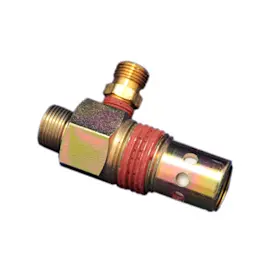
- Check valve and unloader tube arrangements (often model-specific)
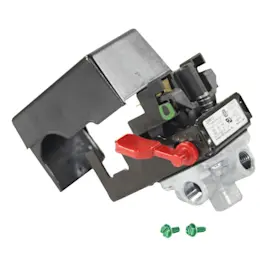
- Pressure switch configurations (cut-in/cut-out settings and port layout)
- Belt and pulley parts (must match alignment and size)
How we recommend matching parts for model 919176320
Use the parts list and diagram in the owner's manual to identify the correct part description and the exact model number. The manual also explains that ordering repair parts requires the part number, part description, and model number.
- Confirm the model number on the air tank label: 919176320
- Identify the part by name in the diagram/parts list
- Match connection details before buying fittings:
- Thread size (common sizes include 1/4-in or 3/8-in)
- Thread type (commonly NPT on many shop compressors)
- Coupler style (industrial, automotive, ARO, etc.)
Quick compatibility checklist (use this before you buy)
| Part type | What must match | What can vary |
|---|---|---|
| Internal pump parts | Exact model fit, dimensions, materials | Almost nothing |
| Pressure switch | Port layout, pressure settings, electrical rating | Cover style |
| Check valve | Tank port size, tube size, flow direction | Brand |
| Couplers/plugs | Coupler style, thread size/type | Finish, brand |
Why it matters
Interchanging the wrong internal part can cause poor compression, air leaks, overheating, or unsafe pressure control. Even with “universal” fittings, mismatched threads or coupler styles commonly create leaks and tool-connection problems.
If you do not see the exact part listed for your Craftsman 919176320, we recommend searching by model number on Sears PartsDirect to locate the closest match and diagrams for your specific configuration.
Last updated: February 2026