Owner’s manual
 View engine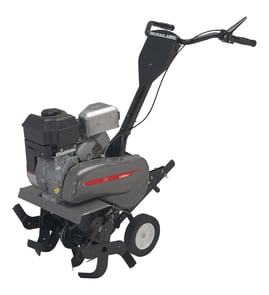





How much does a rear tiller weigh?
Most rear-tine tillers weigh about 150 to 300+ lb. Your Craftsman 917292381 is a front-tine tiller; front-tine models typically weigh about 90 to 150 lb. For the exact weight and handling guidance for your unit, use the 917292381 owner's manual.
Typical rear-tine tiller weight ranges
Rear-tine tillers vary mainly by transmission type, frame size, and features.
- Light-duty rear-tine: 150 to 200 lb
- Mid-duty rear-tine: 200 to 260 lb
- Heavy-duty rear-tine: 260 to 300+ lb
Quick comparison: front-tine vs rear-tine
Front-tine tillers are built lighter for maneuverability; rear-tine tillers are heavier for traction and deeper, more consistent tilling.
| Tiller type | Typical weight | What that weight helps with |
|---|---|---|
| Front-tine (like Craftsman 917292381) | 90 to 150 lb | Easier turning and transport |
| Rear-tine | 150 to 300+ lb | Better traction and bite in hard soil |
What makes a rear-tine tiller heavier
- Gear-driven transmission and heavier gearcase
- Wider tine path and heavier tine shaft assemblies
- Larger tires and reinforced frame
- Added features such as powered reverse
Why it matters
Weight affects traction, stability, and how aggressively the tines pull into the soil. Heavier rear-tine units usually hold depth better; lighter front-tine units often need more passes in compacted ground.
Last updated: February 2026
What kind of engine is on a Craftsman tiller?
The Craftsman front-tine tiller model 917292381 uses a Briggs & Stratton engine, specifically engine model 94202 (Type 0115-E1). You can confirm the engine identification and control locations in the owner's manual.
How to identify the exact engine on your tiller
We recommend matching what is printed on your engine to the manual so you get the right tune-up and repair parts.
- Look for the engine ID stamping or label on the blower housing or near the muffler
- Match the engine model and type number (both matter)
- Use the tiller model number 917292381 when looking up chassis parts
- Record the numbers before ordering parts or adjusting carburetor settings
- Check that decals and guards are in place before operating
What this means for maintenance and parts
A Briggs & Stratton engine on a front-tine tiller typically uses common service items (spark plug, air filter, fuel system parts), but the correct fit depends on the engine model and type.
| What you’re checking | Where it applies | Why it matters |
|---|---|---|
| Tiller model: 917292381 | Frame, tines, controls, transmission | Ensures chassis parts match |
| Engine model: 94202 | Engine internals and tune-up parts | Ensures engine parts match |
| Type: 0115-E1 | Sub-variant of the engine | Prevents wrong carb or gasket selection |
Why it matters
Using the correct engine identification prevents mis-matched ignition, carburetor, and gasket parts, and it helps you follow the right starting and operating steps (choke, throttle, recoil starter) for safe, reliable tilling.
Last updated: February 2026
How do I find the model number on my 917292381?
The model number for your Craftsman front-tine tiller is printed on the tiller’s model tag; for this unit it is 917.292381 (often shown with a dot). Use the model tag number when ordering parts and when checking specs in the 917292381 owner's manual.
Where to look on the tiller
On Craftsman tillers like model 917292381, the model tag is typically on the main frame near the engine or transmission area, where it stays visible but protected.
Check these common spots:
- Side of the frame rails near the engine mount
- Near the transmission housing or tine shield area
- On or near the handle support/bracket area
- Close to the belt guard or control panel area
What the model number looks like
You may see the model number formatted a couple of ways. These are the same model:
| You see on the tag | Use for parts lookup |
|---|---|
| 917.292381 | 917292381 |
| Model No. 917.292381 | 917292381 |
Tips to read the tag correctly
If the tag is dirty or worn, these steps usually make it readable:
- Wipe the area with a damp rag and mild detergent
- Use a flashlight at an angle to highlight stamped characters
- Take a close-up photo and zoom in
- Write down the full number, including any dots
Why it matters
Using the exact model number ensures the diagrams and parts list match your tiller’s handle assembly, tine assembly, and transmission hardware so you get the correct items (for example, the correct tine style and mounting hardware).
Last updated: March 2026