Installation guide
 Owner’s manual




Is a 7.3 cubic foot dryer big?
Yes. A 7.3 cubic foot capacity is a large dryer size, and it is considered “big” for most households. In a GE gas dryer like model DCVH515GF1WW, that capacity is well-suited for family-size loads and bulkier items (like comforters) with fewer cycles.
What “7.3 cu. ft.” means in real use
A larger drum gives clothes more room to tumble, which helps airflow and can improve drying performance when you avoid overloading.
Common loads that fit well in a 7.3 cu. ft. dryer:
- A full family mixed load (towels, tees, jeans)
- Bulky bedding (queen or king comforter, depending on fill)
- Multiple bath towels in one cycle
- Larger items that need space to tumble (blankets, jackets)
Size comparison (typical ranges)
| Dryer capacity | How it’s usually described | Best for |
|---|---|---|
| 5.0 to 6.5 cu. ft. | Standard | Singles, couples, smaller loads |
| 6.6 to 7.4 cu. ft. | Large | Families, frequent laundry |
| 7.5+ cu. ft. | Extra-large | Very large households, frequent bulky loads |
Why it matters
Bigger is only better when the load can tumble freely. If the drum is packed tight, drying time increases and heat can build up in the cabinet and exhaust system.
To get the best results with a large-capacity dryer:
- Fill the drum loosely; stop around 3/4 full for mixed loads
- Dry bulky items with similar items (do not mix with small, heavy pieces)
- Clean the lint screen every load
- Keep venting efficient and unobstructed (especially important on gas dryers)
For model-specific loading tips and cycle guidance, use the DCVH515GF1WW owner’s manual.
Last updated: February 2026
What is the most common problem with a GE dryer?
The most common problem we see with a GE dryer like model DCVH515GF1WW is poor drying performance (long dry times or clothes still damp), most often caused by restricted airflow from lint buildup or a blocked exhaust vent. “Won’t start” and unusual noise are also frequent issues.
Most common symptoms and what usually causes them
- Long dry times / clothes still damp: clogged lint screen, crushed/blocked vent, lint buildup inside the cabinet or ducting
- No heat (gas dryer): ignition or gas burner components not operating correctly, airflow restriction causing overheating shutdowns
- Won’t start: power supply issue, door not fully closed, failed door switch
- Squealing, thumping, scraping: worn belt, idler pulley, drum glides, or felt seals
- Shuts off too soon: small loads, door opened mid-cycle, or exhaust restriction (the dryer can sense abnormal conditions)
Quick checks we recommend first (fast, high-impact)
- Clean the lint screen before every load.
- Check the vent path from dryer to outside; remove kinks, clear lint, confirm strong airflow outdoors.
- Avoid overloading; mixed heavy and light fabrics often need a “More Dry” type setting.
- If the dryer stops after opening the door mid-cycle, reselect the cycle before restarting.
- Review model-specific operating and troubleshooting guidance in the DCVH515GF1WW owner’s manual.
Common part-related fixes for noise or no-tumble
If the dryer runs but the drum will not turn, or it squeals loudly, these parts are common wear items on this model:
| Symptom | Likely wear item | Example part for DCVH515GF1WW |
|---|---|---|
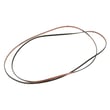
| Drum not turning, burning rubber smell | Belt | Drive belt WE03X29897 |
| Squeal or chirp while tumbling | Idler pulley | Idler pulley WE12X83 |
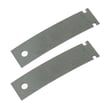
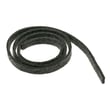
| Scraping at front of drum | Drum glides/pads | Dryer drum glide bearing (green) WE03X37317; dryer drum front glide pad WE03X37318 |
Why it matters
Restricted airflow is the root cause behind many “GE dryer problems” because it increases drying time, can trigger overheating protection, and accelerates wear on moving parts. The manual also recommends periodic internal and duct cleaning by a qualified technician.
Last updated: February 2026
What is the most dependable gas dryer?
The most dependable gas dryer is typically a simple, well-vented model with proven core components and strong parts support. For GE owners, keeping a GE gas dryer like model DCVH515GF1WW reliable comes down to correct gas hookup, safe venting, and staying on top of wear items outlined in the DCVH515GF1WW installation guide.
What “dependable” means for a gas dryer
Dependability is mostly about consistent heat, steady airflow, and a drum that turns smoothly without excessive wear.
- Stable ignition and flame (no repeated clicking or delayed ignition)
- Strong airflow through the lint screen and vent
- Smooth drum support (no squealing, thumping, or scraping)
- Simple controls that match how you actually dry laundry
- Easy access to common replacement parts (belt, glides, igniter, blower wheel)
What to look for when choosing a dependable gas dryer
We recommend prioritizing fundamentals over extra features.
| What to prioritize | Why it improves reliability | What to avoid |
|---|---|---|
| Proven vented design | Less strain on heating and cycling | Long, restrictive vent runs |
| Strong parts availability | Faster, cheaper repairs | Hard-to-source proprietary parts |
| Fewer “must-have” electronics | Fewer failure points | Paying for features you will not use |
| Solid drum support system | Quieter operation, less wear | Ignoring squeaks and scrapes |
How to keep a GE gas dryer dependable (DCVH515GF1WW)
A dependable dryer is usually a maintained dryer. These steps prevent the most common no-heat and long-dry-time complaints.
- Clean the lint screen every load; wash it periodically to remove residue
- Confirm the wall exhaust damper opens and closes freely
- Keep the vent run short and smooth; remove lint buildup regularly
- Follow gas connection requirements (shut-off valve accessible, proper connector, correct sealing method)
- Replace wear parts when symptoms start, not after they damage other components
Common reliability parts for this model
If your DCVH515GF1WW starts squealing or the drum stops turning, these are typical fixes:
Why it matters
Gas dryers depend on correct installation and airflow to heat safely and dry efficiently. When venting is restricted or drum support parts wear out, the dryer runs hotter and longer, which increases breakdown risk and energy use.
Last updated: February 2026
Where is my thermal fuse located on my GE dryer?
On the GE DCVH515GF1WW gas dryer, the overheat safety device people call a “thermal fuse” is mounted in the heater and airflow circuit inside the cabinet, not on the exterior. Use the wiring and component identification in the DCVH515GF1WW owner's manual to pinpoint the exact part name and its mounting location before disassembly.
Where to look on this GE gas dryer
On GE gas dryers like DCVH515GF1WW, the overheat protection is found along the hot air and exhaust path. After you open the cabinet, focus your search in these areas:
- Blower housing and exhaust duct area (where the vent connects)
- Burner and heater duct area (near the gas valve and flame path)
- Internal air ducting near the lint filter chute
- Any small, flat, screw-mounted device with 2 wires in series with the heater circuit
Safe access steps (gas dryer)
Follow the cabinet access procedure in the DCVH515GF1WW installation guide and use these safety basics:
- Unplug the dryer or switch off the breaker
- Shut off the gas supply valve to the dryer
- Pull the dryer forward and disconnect the vent
- Remove the panel(s) required to reach the blower and burner area
- Photograph wire routing before removing any connectors
- Reassemble all covers and confirm no gas leaks before operating
Quick ID guide: fuse vs sensor
| Part type | Common look | What it does |
|---|---|---|
| Thermal fuse or thermal cutoff | Flat, 2-wire, screw-mounted | Opens on overheat; can stop heat or stop the dryer |
| Thermistor | Small sensor, usually 2 wires | Helps regulate temperature |
| High-limit thermostat | Round or oval disc, 2 wires | Cycles or trips on high temperature |
A temperature-sensing part you may see in this system is the inlet control WE4M398 (thermistor).
Why it matters
If the overheat device opened, restricted airflow is the root cause. Fixing venting and lint buildup prevents repeat failures and protects the burner and motor.
Last updated: February 2026
Where to find part number on GE dryer?
On your GE DCVH515GF1WW gas dryer, we find the model and serial number label at the top inside of the door opening (inside the door frame area). Use that model number to match the correct parts list and diagrams in the DCVH515GF1WW owner's manual.
What to look for on the label
The sticker typically includes several identifiers. For ordering parts, the most important are the model number and sometimes the serial number.
- Model number: identifies the exact dryer version (use this first)
- Serial number: helps confirm production details for some part changes
- Electrical ratings: voltage/amps (useful for troubleshooting)
- Gas type notes (on some units): helpful when diagnosing heat issues
Model number vs. part number (quick guide)
A common mix-up is searching for a “part number” on the dryer label. The label usually shows the model number, not individual part numbers.
| You’re trying to find | Where it’s found | Example from this dryer |
|---|---|---|
| Model number | Sticker at top inside door opening | DCVH515GF1WW |
| Part number / part ID | On the part itself or in parts diagrams | Drive belt WE03X29897 |
| Serial number | Same sticker as model number | Varies by unit |
If you need the part number for a specific component
Once you have DCVH515GF1WW, match the symptom to the part category, then confirm the part by name and ID.
- Squealing or thumping: check drum support items like the dryer drum glide bearing (green) WE03X37317 and dryer drum front glide pad WE03X37318
- Drum not turning: check the drive belt WE03X29897 and idler system
- No heat or intermittent heat (gas): check ignition and gas valve components (diagnosis first)
Why it matters
GE often has multiple similar-looking dryers with different internal parts. Using the exact model number DCVH515GF1WW prevents ordering the wrong belt, glide, igniter, or control.
Last updated: February 2026