Owner’s manual
 Error Codes



What's the average lifespan of a Maytag washer?
Most Maytag washers, including the Maytag MVWP475EW0, typically last 10 to 13 years with normal household use; with consistent care and timely repairs, many run 14 years or longer.
What affects washer lifespan the most
- Load size and balance: frequent overloading or unbalanced loads increase wear on the drive system and suspension.
- Water quality: hard water and sediment can shorten the life of valves and internal components.
- Drain performance: slow draining strains the pump and can leave residue behind.
- Vibration and movement: excessive shaking accelerates wear on supports and dampers.
- Maintenance habits: keeping the tub and hoses clean helps prevent odor, buildup, and premature failures.
Quick maintenance checklist (high impact)
- Use the correct detergent amount; too much can cause buildup and poor rinsing.
- Leave the lid open between loads to help the tub dry.
- Check fill hoses for bulges or cracking and replace as needed.
- Level the washer to reduce vibration and suspension wear.
- If draining slows, inspect the drain path and consider the pump as a likely wear item.
Common wear items and what they do
| Part | What it affects | Typical symptom when failing |
|---|---|---|
| Washer drive belt WPW10006384 | Agitation and spin | Slipping, squealing, weak or no spin |
| Washer drain pump assembly WPW10276397 | Draining | Standing water, slow drain, humming |
| Damper assembly W10780044 | Vibration control | Banging, walking, out-of-balance spins |
Why it matters
A washer that is nearing the 10 to 13 year range often benefits most from targeted repairs (belt, pump, suspension) and better loading habits; those steps reduce strain on higher-cost components like the tub and support structure.
For model-specific care and operating guidance, follow the MVWP475EW0 owner's manual.
Last updated: January 2026
How do I reset the lid lock on a Maytag washer?
On the Maytag MVWP475EW0 washer, we reset a lid lock issue by doing a quick power reset first, then running the washer’s diagnostic and calibration routine if the lock still will not release or the washer will not start. This clears many control glitches that keep the lid locked.
Step 1: Do a simple power reset
- Turn the cycle knob to Off.
- Unplug the washer (or switch the breaker off).
- Wait 60 seconds.
- Restore power.
- Lift and close the lid once, then try Start.
Step 2: Run diagnostics and calibration (common Maytag top-load method)
Use this when the lid lock light stays on, the washer will not start, or the lid stays locked after a cycle.
- Make sure the tub is empty.
- Set the knob to Off.
- Enter diagnostics using the dial-turn sequence described in the MVWP475EW0 owner's manual.
- Once in diagnostics, select calibration and press Start.
- Let the routine finish without interrupting power.
What to expect during calibration
| What you see | What it usually means | What to do |
|---|---|---|
| Lid locks and unlocks | Control is testing the lock | Let it complete |
| Basket moves briefly | Normal self-check | Do not open lid |
| Cycle ends and unlocks | Reset completed | Try a normal cycle |
If the lid still will not lock or unlock
These checks help you decide whether it is a use issue, a wiring issue, or a failed lock.
- Confirm the lid is closing fully and not hitting the cabinet.
- Check for a stuck garment between the lid and top.
- Verify the washer is level; excessive cabinet twist can misalign the lock.
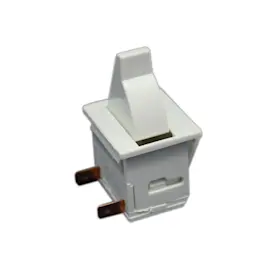
- If the lock will not engage at all, the lid lock assembly may be the problem; see lid lock W10404050.
- If the washer will not drain and stays locked, a drain problem can keep the lid locked; inspect the drain path and consider washer drain pump assembly WPW10276397.
Why it matters
The lid lock is a safety interlock; if the control does not sense a secure lock (or a safe water level and basket speed), it can stop the cycle or keep the lid locked to prevent injury and spills.
Last updated: January 2026
What is the most common problem with a Maytag washer?
The most common Maytag washer problems (including the Maytag MVWP475EW0) are no-spin and no-drain symptoms. These are often caused by a lid lock issue, a worn drive belt, or a drain restriction in the pump or hose; all of these stop the washer from completing the spin cycle.
Most common symptoms and what they usually point to
- Washer won’t spin: lid lock not engaging, drive belt slipping, brake/drive system issue
- Washer won’t drain: clogged or failing drain pump, kinked/blocked drain hose
- Lid won’t lock or unlock: lid lock assembly problem
- Loud banging or walking: suspension/damper wear, unbalanced load
- Slow fill or no fill: inlet valve or supply screen restriction
Quick checks we recommend before replacing parts
- Reset power: unplug for 2 minutes, then retry a Drain/Spin cycle.
- Confirm the lid is closing firmly: a weak latch feel often matches a lid lock problem.
- Check draining: look for a kinked standpipe setup and inspect the drain hose for pinches.
- Listen during spin: a squeal or burning-rubber smell often points to a slipping belt.
- Reduce load size: heavy, bulky loads can prevent proper spin and trigger out-of-balance behavior.
Common parts involved on MVWP475EW0
| Symptom | Likely area | Example part for this model |
|---|---|---|
| Won’t drain | Drain system | Washer drain pump assembly WPW10276397 |
| Won’t spin | Drive system | Washer drive belt WPW10006384 |
| Lid won’t lock | Safety interlock | Lid lock W10404050 |
| Slow/no fill | Water supply | Washer water inlet valve WPW10683603 |
Why it matters
No-drain and no-spin problems are “cycle-stoppers”; the washer may agitate but it will not complete the rinse and spin steps, leaving clothes wet and increasing strain on the drive system and suspension.
Helpful reference
For cycle behavior, error displays, and model-specific checks, use the MVWP475EW0 owner’s manual. For code-based troubleshooting, use Maytag bravos vmw top load washer error codes.
Last updated: January 2026
Is 4.8 cubic feet a large capacity washer?
Yes. A 4.8 cubic feet washer is considered large capacity (often extra-large), so it handles bigger loads and bulky items with fewer cycles. For your Maytag MVWP475EW0, confirm the exact tub capacity and recommended load sizes in the MVWP475EW0 owner's manual.
What “large capacity” means in practical terms
Most top-load washers are commonly grouped by tub size like this:
| Capacity (cu. ft.) | Common label | Best for |
|---|---|---|
| 3.5 to 4.4 | Standard | 1 to 3 people, everyday loads |
| 4.5 to 5.2 | Large | Families, towels, mixed loads |
| 5.3+ | Extra-large | Frequent bulky loads, large households |
How to tell if 4.8 cu. ft. is the right size for you
A 4.8 cu. ft. washer is a strong fit if you regularly wash:
- Full family loads (multiple outfits, socks, and towels together)
- Bedding like queen comforters (check care labels and cycle guidance)
- Bulky items like hoodies, blankets, and bath mats
- Heavier loads where you want fewer total cycles per week
Why it matters
Capacity affects cleaning and wear. Overloading can reduce agitation, leave detergent residue, and strain drive components (belt, suspension, and brake system). Underloading wastes water and energy. Following the load guidance in the MVWP475EW0 owner's manual helps you get better cleaning and longer part life.
Quick tips for loading a large-capacity top-load washer
- Load items loosely; do not pack them down.
- Keep the top of the load below the tub rim so items can circulate.
- Mix large and small items to balance the spin.
- Use the right cycle and water level for the fabric type.
- If the washer bangs or walks, reduce load size and rebalance.
Last updated: January 2026