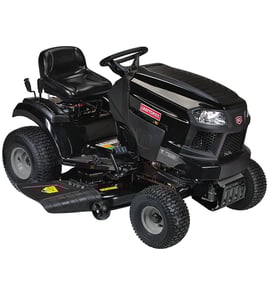

What engine does Craftsman riding mower use?
Craftsman riding mowers use several different engines depending on the exact model and production year; for Craftsman model 91725121, the engine is typically a Briggs & Stratton single-cylinder style used on many front-engine lawn tractors, but the exact horsepower and engine family are best confirmed from the engine ID tag on your tractor.
Look for the engine identification label (usually on the blower housing, valve cover area, or near the starter). Record these items:
- Engine brand (commonly Briggs & Stratton on many Craftsman tractors)
- Model number
- Type number
- Code (date code)
- Any spec number shown on the tag
Even when two tractors look similar, engine variants can change filters, belts, and pulleys. Before ordering, we match by model number and by what you see on the machine:
- Deck size and belt routing (mower deck belt vs ground drive belt)
- Transmission type (gear drive vs hydrostatic)
- Front axle and steering wear points
- Electrical system indicators (charging output, gauge style)
If you are troubleshooting drive or steering issues while identifying the engine, common wear items on this tractor platform include bearings, washers, and idlers such as the flat idler 583772001.
| Engine brand | Typical configuration | Where it’s common |
|---|---|---|
| Briggs & Stratton | Single-cylinder or V-twin | Many Craftsman front-engine tractors |
| Kohler | Single-cylinder or V-twin | Some Craftsman tractors |
| Tecumseh (older units) | Single-cylinder | Older Craftsman models |
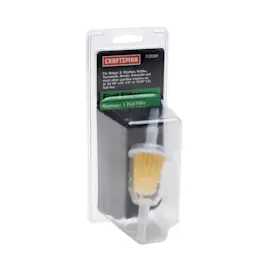
The engine make and exact engine model determine the correct tune-up parts (spark plug, air filter, fuel filter) and can also affect PTO and ground drive setups. Confirming the engine ID prevents ordering the wrong maintenance parts.
Last updated: January 2026
Is it worth replacing a lawn mower engine?
Replacing the engine on a Craftsman riding mower like model 91725121 is worth it when the tractor is otherwise solid and the total repair cost stays under about half the price of a comparable replacement mower. If the transmission, deck, or steering also needs major work, replacement usually makes more sense.
- Compare total cost (engine + labor + incidentals) to the mower’s current value.
- Confirm the engine failure is truly internal (not fuel, spark, or compression-related maintenance).
- Check the condition of the deck shell, spindles, and idlers (bent, cracked, or heavily rusted parts add cost).
- Consider hours and overall wear: sloppy steering, noisy transaxle, and weak brakes point to broader aging.
- Factor downtime: engine swaps can take a weekend DIY or longer if hardware is seized.
| Scenario | Typical outcome | Recommendation |
|---|---|---|
| Engine replacement is the only major issue | Tractor has years left | Replace engine |
| Engine plus deck drive wear (pulleys/bearings) | Costs stack quickly | Price parts first |
| Engine plus transmission problems | Repair often exceeds value | Replace mower |
Even if you are not replacing these automatically, we often check them while the tractor is apart:
- Front axle and wheel support wear (bearings and washers)
- Drive belt routing and idler pulley condition
- Electrical charging and gauge function
If you’re chasing vibration, wobble, or front-end play, a worn flange bearing 532009040 can be part of the problem.
An engine swap can restore reliable mowing, but it only pays off if the rest of the machine (deck, drivetrain, steering, and electrical) is in good shape. Pricing the “while you’re in there” wear items prevents a second teardown later.
Last updated: January 2026
Who makes Craftsman engines?
Craftsman engines are made by multiple manufacturers, depending on the specific mower or tractor and the engine family installed. For Craftsman model 91725121 (a front-engine lawn tractor), the most reliable way to identify the engine maker is to match the engine’s model and type code on the engine tag to the correct parts list.
Look for an engine ID label (usually on the blower housing, valve cover area, or near the starter). Then use the format below to determine who built it.
- Briggs & Stratton: model, type, and code (often three groups of numbers)
- Kohler: “Command”, “Courage”, “7000 Series”, or a Kohler model like CV, SV, CH, etc.
- Kawasaki: model like FH, FR, FS, FX, etc.
- Record the full engine ID before ordering parts (one missing digit can change the match)
Craftsman has commonly sourced engines from a few major engine brands over the years. Which one you have depends on the production run and configuration.
| Engine brand | Common where used | What the tag often looks like |
|---|---|---|
| Briggs & Stratton | Many Craftsman tractors and push mowers | Model/Type/Code numbers |
| Kohler | Some tractors and higher-horsepower setups | Kohler series name plus model |
| Kawasaki | Some premium tractors | FH/FR/FS/FX model prefix |
The engine manufacturer determines the correct tune-up parts (spark plug, air filter, fuel filter), carburetor parts, and ignition components. Even if the tractor model is the same, engine parts are not interchangeable across brands.
If you are already servicing your Craftsman 91725121, these common chassis parts can also come up during repairs (separate from engine parts):
- Flange bearing 532009040 (front axle or steering support wear)
- Flat idler 583772001 (ground drive belt tension and tracking)
- Ammeter 532124900 (dash gauge issues)
Last updated: January 2026
How much does it cost to replace a riding lawn mower engine?
For a Craftsman riding tractor like model 91725121, a complete engine replacement typically costs $600 to $2,500 installed. The total depends on the replacement engine price, shop labor rate, and whether you replace related wear items (belts, pulleys, wiring, fuel lines) during the swap.
These are the biggest cost drivers on most front-engine lawn tractors:
- Engine specs and compatibility (shaft diameter/length, keyway, mounting pattern, charging output)
- New vs. remanufactured vs. used engine (used is lowest cost; new is highest)
- Labor complexity (rusted fasteners, seized pulleys, damaged wiring, fuel contamination)
- Extra parts replaced during the job (belts, idlers, hardware, battery, fuel filter)
- Shop minimums and pickup/delivery fees (common with outdoor power equipment)
Use this as a planning estimate for a riding mower engine swap.
| Cost item | Typical range | What it covers |
|---|---|---|
| Replacement engine (part only) | $400 to $1,800 | Engine assembly matched to shaft and mounting specs |
| Labor (shop install) | $200 to $700 | Removal, install, setup, basic testing |
| Related parts and supplies | $25 to $300 | Belts, pulleys, fuel line, clamps, oil, filter, hardware |
These are not engine parts, but they are commonly inspected because access is easier during major service:
- Ground drive flat idler 583772001 (belt tension and routing)
- Hub bolt 596218701 (wheel or hub hardware that can be damaged during service)
- Washer 532121749 (mounting and linkage hardware)
Engine swaps fail early when the crankshaft and PTO setup do not match the tractor’s drive and deck pulleys. Confirming shaft dimensions and electrical connections for Craftsman 91725121 prevents belt misalignment, vibration, and charging or starting problems.
Last updated: January 2026