



Are Craftsman rear tine tillers any good?
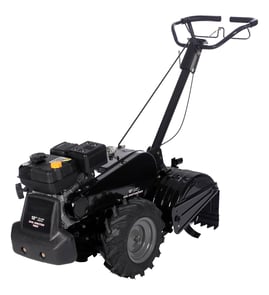
Yes. Craftsman rear-tine tillers like model CMXGVAM1144037 are a solid choice for home gardens because rear tines deliver strong traction and steady soil mixing, and the design is built to handle tougher ground with less bouncing than many front-tine units.
What “good” looks like for a rear-tine tiller
A good rear-tine gas tiller should start reliably, pull itself forward without constant pushing, and keep tine speed consistent under load. For CMXGVAM1144037, these are the most meaningful indicators:
- Starts consistently with clean fuel, a good spark plug, and a clean air filter
- Moves smoothly in forward drive without belt slip or surging
- Tines bite and churn without excessive vibration
- Controls feel predictable (forward drive cable engages and releases cleanly)
- Wear parts (belts, tines) are replaceable when performance drops
Common maintenance that keeps performance “good”
Most “bad tiller” complaints come from routine wear or fuel-related issues, not the core machine. These parts are commonly involved in keeping a rear-tine tiller running strong:
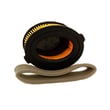
- Air intake: replace the kmart lawn & garden equipment engine air filter 951-10794 when it looks dirty or oil-soaked
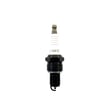
- Ignition: replace the spark plug if starting becomes harder or it misfires
- Drive: inspect the drive belt for glazing, cracking, or stretching
- Controls: check cable adjustment if it creeps or will not fully engage
- Tines: replace worn tines when they stop pulling into soil effectively
Quick comparison: rear-tine vs front-tine
| Feature | Rear-tine tiller (like CMXGVAM1144037) | Front-tine tiller |
|---|---|---|
| Best for | New gardens, heavier soil, larger plots | Light cultivation, smaller beds |
| Effort | Lower (often self-propelled feel) | Higher (more pushing and steering) |
| Stability | Higher | Lower |
| Typical wear items | Belts, tines, cables | Tines, belts (varies) |
Why it matters
A rear-tine tiller is an investment in easier soil prep. When the drive system and engine tune items are kept up, you get better depth control, less operator fatigue, and more consistent results across the garden.
Last updated: February 2026
Where is the model number on a Craftsman rear tine tiller?
On a Craftsman rear tine tiller like model CMXGVAM1144037, the model number is printed on a product ID label (sticker or metal tag) attached to the tiller frame. It’s most often on the tine shield/guard area, near the engine, or on the front frame where it’s easy to see.
Most common places to check
Look for a rectangular label with the model number and sometimes a serial number. Check these spots first:
- On the tine shield (tine guard) above or behind the tines
- On the main frame rail near the wheels
- On the front frame (near the bumper or depth stake area)
- Near the engine mounting plate or engine base
- Around the handle support or handle bracket area
Quick tips to find it faster
- Wipe dirt and dried mud off the frame with a rag; labels are often covered after tilling.
- Use a flashlight and look along flat frame surfaces where a sticker would adhere.
- If the label is scratched, look for stamped characters on nearby metal.
What the label usually shows
| Label item | What it’s used for |
|---|---|
| Model number (example: CMXGVAM1144037) | Matching the correct parts diagrams and parts |
| Serial number | Identifying production run details (helpful for some parts lookups) |
| Engine info (sometimes separate) | Matching engine tune-up parts like spark plug or air filter |
Why it matters
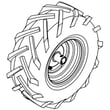
Using the exact model number helps us match the correct Craftsman parts for your rear tine gas tiller, such as a drive belt, tines, or engine maintenance parts. For example, once you confirm the model, you can confidently choose items like the mtd tiller wheel assembly 634P06425 if your wheel assembly needs replacement.
Last updated: February 2026
What are common tiller problems?
Common problems on the Craftsman CMXGVAM1144037 rear tine gas tiller include hard starting, surging or hunting at idle, loss of tine drive, and poor tilling performance. Most issues trace back to fuel/air delivery, ignition, or worn drive components.
Most common symptoms (and what they usually point to)
- Engine surges at idle: dirty carburetor passages, restricted air flow, stale fuel
- Engine starts then stalls: fuel cap venting issue, clogged fuel system, dirty air filter
- Tines will not engage or slip: worn or stretched drive belt, cable out of adjustment, belt routing issue
- Weak tilling or bouncing: worn tines, incorrect tine installation, soil too hard or too wet
- Poor starting or misfire: worn spark plug, fouled plug, incorrect gap
Quick checks we recommend first
- Use fresh fuel and drain old fuel if it has been sitting.
- Inspect the air filter; replace if dirty or oil-soaked.
- Check the spark plug condition and tighten it properly.
- Verify the fuel cap vents; a plugged vent can cause stalling after a short run.
- Check belt and cable operation; the drive system should tighten the belt when you squeeze the control.
Parts that commonly fix these problems
| Symptom | Likely part to inspect | Example part for this model |
|---|---|---|
| Surging, poor power | Air filter | Kmart lawn & garden equipment engine air filter 951-10794 |
| Hard start, misfire | Spark plug | Lawn & garden equipment engine spark plug 951-10292 |
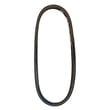
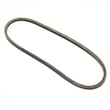
| Tines slip or won’t pull | Drive belt | Tiller drive belt 954-04091 |
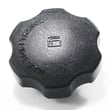
| Stalls after running | Fuel cap venting | Lawn & garden equipment engine fuel tank cap 951-12535 |
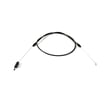
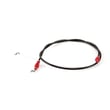
| Won’t move forward | Forward drive cable | Tiller forward drive control cable 946-04413A |
Why it matters
A rear-tine tiller depends on steady engine RPM and a tight, correctly adjusted drive system. A restricted air filter or weak spark can cause surging and stalling, while a worn belt or stretched cable prevents the tines from getting full power.
Last updated: February 2026
How many horsepower tractor do you need to run a 5 ft tiller?
Most 5-foot tractor-mounted rotary tillers run best with about 25 to 40+ PTO horsepower; the exact need depends on the tiller’s design, tilling depth, and soil conditions. The Craftsman CMXGVAM1144037 is a walk-behind rear-tine gas tiller, so tractor PTO horsepower does not apply to operating this model.
PTO horsepower guideline for a 5 ft tractor tiller
Use these common sizing targets for a 60-inch PTO tiller:
- Rule of thumb: about 5 PTO HP per foot (around 25 PTO HP for 5 ft)
- Light, previously worked soil: 25 to 30 PTO HP
- Average garden soil: 30 to 35 PTO HP
- Heavy clay, sod, or deep tilling: 35 to 40+ PTO HP
- Faster ground speed or wider bite per pass: size toward the high end
What changes the horsepower requirement
- Soil type and moisture: wet clay loads the rotor far more than dry loam
- Breaking new ground: sod and compacted soil require more torque
- Depth and number of passes: deeper cuts increase load quickly
- Tiller build: heavier rotors, more tines, and aggressive tine angles draw more PTO HP
- Tractor traction: wheel slip can limit performance even with adequate PTO HP
If you meant the CMXGVAM1144037 walk-behind tiller
For this Craftsman rear-tine gas tiller, “power” problems are usually maintenance or drive related. Start with these common fixes:
- Replace a worn or slipping belt such as the tiller drive belt 954-04091
- Restore airflow with the kmart lawn & garden equipment engine air filter 951-10794
- Tune ignition with the lawn & garden equipment engine spark plug 951-10292
Quick comparison
| Application | Power spec that matters | Typical target |
|---|---|---|
| Tractor-mounted 5 ft PTO tiller | PTO horsepower | 25 to 40+ PTO HP |
| CMXGVAM1144037 walk-behind tiller | Engine condition and belt drive | Maintain belt, air, spark |
Why it matters
Correct PTO horsepower keeps tine speed up so the tiller cuts and mixes soil instead of bogging down; on a walk-behind tiller, good belt grip and engine tune deliver the torque needed to dig consistently.
Last updated: February 2026