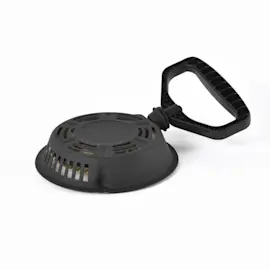
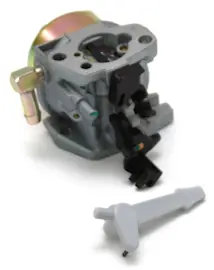
Owner’s manual
 View engine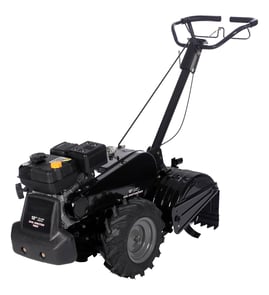



Where is the model number on a Craftsman rear tine tiller?
On the Craftsman rear-tine tiller model 917293400, the model number is printed on the tiller’s identification label (data tag). On this style of tiller, you’ll typically find that label on the tine shield/guard area or on the frame near the front of the machine; confirm the exact location using the 917293400 owner's manual.
- Tine shield (the guard covering the tines)
- Frame rail near the front of the tiller
- Handle support or handle mounting bracket area
- Near the engine mounting plate (on the tiller frame, not on the engine)
- Around the depth stake bracket area
The tag usually includes the model number and sometimes additional identifiers. Record these exactly so you get the right Craftsman parts and diagrams.
| What to record | Example for this tiller | Why it matters |
|---|---|---|
| Tiller model number | 917293400 | Matches the correct parts list and diagrams |
| Engine model number (if needed) | 143.976001 (Tecumseh) | Helps when ordering engine-specific parts |
- Wipe the area with a damp rag first, then dry it
- Use a flashlight at a low angle to make stamped/printed text easier to see
- Take a close-up photo and zoom in
- If the tag is missing, use the parts diagrams in the 917293400 owner's manual to identify assemblies by shape and mounting points
Craftsman tiller parts can look similar across model families, but small differences in tine assemblies, belts, and controls affect fit. Using the exact model number (917293400) helps ensure you order the correct rear-tine tiller parts the first time.
Last updated: January 2026
How often should I change the oil in my tiller?
For the Craftsman rear-tine tiller model 917293400, change the engine oil every 50 hours of operation or at least once a year, whichever comes first. We also recommend checking the oil level before starting and during long jobs to prevent engine damage. See the 917293400 owner's manual for the full maintenance schedule.
Use these intervals as your baseline for the 917293400:
- Check oil level: before starting the engine and after each 5 hours of continuous use
- Change oil: every 50 hours of operation
- Change oil (minimum): once per year even if you do not reach 50 hours
- Change more often: when operating under heavy load or in high temperatures
| Task | Interval | Why it matters |
|---|---|---|
| Check oil level | Before each use | Prevents running low on oil |
| Check oil during long use | Every 5 hours | Catches consumption early |
| Change engine oil | Every 50 hours or yearly | Removes contaminants and protects bearings |
These steps match the typical process described for this model:
- Park the tiller on a level surface.
- Drain oil when the engine is warm (it flows out more completely).
- Remove the oil drain plug and the fill cap/dipstick; keep dirt out of the fill tube.
- Tip the tiller forward to drain fully; then reinstall and tighten the drain plug.
- Refill with the correct oil type and recheck the level.
The manual calls for high-quality detergent oil meeting API service classification SF, SG, or SH, and notes that multi-viscosity oils (such as 5W-30 or 10W-30) can increase oil consumption in warmer temperatures.
Fresh oil is the cheapest protection you can give your tiller engine. Sticking to the 50-hour or annual interval helps reduce wear, keeps the crankcase cleaner, and lowers the risk of overheating or internal damage during heavy tilling.
Last updated: January 2026
What tiller is made in the USA?
If you’re specifically looking for a tiller made in the USA, Mantis is a commonly cited example of a brand that manufactures in the United States. For your Craftsman rear-tine tiller model 917293400, the best way to confirm country-of-origin details tied to your exact unit is to check the identification labels and the documentation in the 917293400 owner’s manual.
Country of origin can vary by model year, engine supplier, and where final assembly occurred. We recommend checking these items on the machine:
- The product ID plate on the frame (often near the engine mount or handle support)
- Any “Made in …” or “Assembled in …” markings on the engine shroud
- The engine model tag (your manual references a Tecumseh engine model family)
- The carton or original paperwork if you still have it
- The parts list and specifications section in the manual
The Craftsman 917293400 manual focuses on operation, safety, and specifications (horsepower, oil type, spark plug, etc.), plus parts breakdowns for assemblies like the tine hub and plate.
| Item | What it tells you | Where to look |
|---|---|---|
| Product ID plate | Most reliable origin statement for the unit | Frame or handle support area |
| Engine tag | Engine manufacturer and model | Engine housing/shroud |
| Owner’s manual | Specs, maintenance, parts diagrams | 917293400 owner’s manual |
“Made in the USA” can affect parts sourcing, engine support, and which replacement components fit correctly. Verifying origin on the ID plate helps ensure you match the right Craftsman parts and service information to your exact tiller.
Last updated: January 2026
What is the bar on the back of a tiller for?
On the Craftsman rear-tine tiller model 917293400, the bar at the back is the depth stake (often called a drag bar). It controls how deep the tines dig by acting as a brake and stabilizer, helping the tiller avoid lunging forward and keeping your tilling depth consistent. See the 917293400 owner's manual for the depth stake positions and pin locations.
- Sets tilling depth: raising it lets the tiller dig deeper; lowering it keeps tilling shallow.
- Stabilizes the machine: it helps keep the tiller from pulling itself forward too aggressively.
- Helps with transport: a transport position helps prevent the tines from scuffing the ground.
- Improves control in different soils: shallow settings help in hard or rocky soil; deeper settings work better in loose soil.
- Park on level ground and shut the engine off; let hot parts cool.
- Remove the depth stake pin.
- Slide the depth stake up or down to the hole that matches the depth you want.
- Reinstall the pin fully so the stake locks in place.
| Depth stake position | Typical use | What you will notice |
|---|---|---|
| Higher (more exposed) | Deeper tilling | More bite, more resistance |
| Lower (closer to ground) | Shallow tilling or cultivating | Easier control, less digging |
| Transport position | Moving around the yard | Tines less likely to scuff |
Correct depth stake adjustment protects your garden bed and your tiller. It reduces bouncing, improves traction, and helps the tines work the soil evenly instead of digging too deep too fast.
Last updated: January 2026