Owner’s manual
 Error Codes
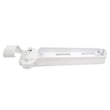


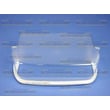
How to remove bottom grill from KitchenAid refrigerator?
On the KitchenAid KBFS22EWMS4 bottom-mount refrigerator, the bottom grill (toe kick plate) typically snaps onto the lower frame. We remove it by gripping the grill at the ends and pulling straight forward to release the retaining clips; then lift it away.
Steps to remove the bottom grill (toe kick)
- Unplug the refrigerator or switch off power at the breaker (recommended when working near wiring).
- Open both fresh food doors for better access.
- Grip the grill firmly near the left and right ends (not the center).
- Pull the grill straight toward you to pop the clips free.
- If it resists, work side-to-side: pull one end forward slightly, then the other end.
- Set the grill aside and keep any screws (some versions use screws at the ends).
Reinstalling the grill
Align the grill with the lower frame, then press along the ends until it snaps into place.
| Task | What to do | What you should feel/hear |
|---|---|---|
| Remove | Pull straight forward at both ends | Clips release with a firm pop |
| Install | Align, then press in at ends | Clips snap in securely |
If the grill will not come off
- Check for end screws (remove them first if present).
- Look for ice buildup or debris along the bottom edge; clear it so the grill can slide free.
- Avoid prying hard with a screwdriver; it can crack the grill or damage the frame.
Why it matters
Removing the toe kick gives access for cleaning the condenser area and checking for leaks or airflow issues, which helps cooling performance and can reduce noise.
For model-specific illustrations and clip locations, use the KBFS22EWMS4 owner's manual.
Last updated: January 2026
Which is better top mount or bottom mount fridge?
For most households, a bottom-mount refrigerator like the KitchenAid KBFS22EWMS4 is the better everyday choice because fresh foods sit at eye level and the freezer uses pull-out baskets for easier access. A top-mount is often simpler and can be slightly more energy-efficient.
Quick comparison
| Feature | Top-mount (freezer on top) | Bottom-mount (freezer on bottom) |
|---|---|---|
| Fresh food access | You bend more often | Eye-level access for most items |
| Freezer access | Easy reach | Pull-out drawer, less bending into shelves |
| Organization | Usually basic | Often more bins, dividers, baskets |
| Energy use (typical) | Often a bit lower | Often a bit higher |
| Price (typical) | Usually lower | Usually higher |
When we recommend a bottom-mount
- You use the refrigerator section more than the freezer
- You want better day-to-day organization (bins, drawers, baskets)
- You prefer less bending for fresh food items
- You store wider platters and want more flexible shelving
When a top-mount can be the better pick
- You want a simpler layout with fewer moving drawer parts
- You are shopping for the lowest upfront cost
- You have a tighter space and want a more basic footprint
- You do not mind bending for fresh food access
Why it matters
Most people open the fresh-food doors far more often than the freezer. With a bottom-mount design, the items you reach for daily (milk, produce, leftovers) are easier to see and grab, which helps reduce door-open time and improves food organization.
Model-specific tip for KBFS22EWMS4 owners
If you are comparing layouts because of usability (not just purchase choice), check the shelving and drawer configuration diagrams in the KBFS22EWMS4 owner's manual. Those diagrams make it easier to decide whether the storage layout fits how you shop and meal-prep.
Last updated: January 2026
What is the most common problem with a KitchenAid refrigerator?
For KitchenAid refrigerators like model KBFS22EWMS4, the most common issues we see are ice maker problems (no ice, slow ice, small cubes) and cooling complaints (warm fridge, frost buildup, noisy fan). These are often tied to airflow, water supply, or defrost drainage.
Most common symptoms and what they usually point to
- Ice maker not making ice or slow production: water supply restriction, inlet valve issue, or ice maker failure
- Warm refrigerator section: evaporator fan not moving air, blocked vents, heavy frost on evaporator
- Water leaking inside or under the unit: clogged/iced defrost drain
- Noisy humming, clicking, or buzzing: fan blade rubbing ice, failing fan motor, or compressor start components
- Temperature swings: control or sensor issues, door not sealing
Quick checks you can do first (no parts needed)
- Confirm the temperature settings are reasonable (typical targets: 37°F fresh food, 0°F freezer).
- Make sure air vents are not blocked by food packages.
- Clean condenser coils (dust buildup can cause poor cooling and longer run times).
- Check door closure and gasket contact all the way around.
- If you have a dispenser, purge air after any filter or water line work.
Common part-related fixes for this model
If the quick checks do not help, these are frequent repair paths on KBFS22EWMS4:
| Symptom | Common cause | Example part for KBFS22EWMS4 |
|---|---|---|
| No ice / slow ice | Ice maker failure | Refrigerator ice maker D7824706Q |
| Warm temps, noisy freezer | Evaporator fan motor issue | Refrigerator evaporator motor W11024089 |
| Frost buildup, warm fridge | Defrost system problem | Refrigerator defrost heater WP12729128 |
| Water leaks / puddles | Drain restriction | Refrigerator drain tube W10619951 |
Why it matters
Ice maker and cooling problems can snowball: restricted airflow or a defrost drain issue can lead to frost buildup, warmer temperatures, and extra strain on the compressor. Catching the root cause early helps protect food and reduces the chance of repeat failures.
Helpful references
- Use the KBFS22EWMS4 owner's manual for model-specific operating tips, temperature guidance, and feature details.
- For water and ice issues, follow how to prevent water dispenser and ice maker problems.
Last updated: January 2026
What is the average lifespan of a KitchenAid refrigerator?
Most KitchenAid refrigerators last 14 to 17 years on average, and a typical overall lifespan range is 10 to 20 years with normal household use. For your KitchenAid KBFS22EWMS4 bottom-mount refrigerator, consistent maintenance and quick fixes for cooling or sealing issues are what most often determine where it lands in that range.
Typical lifespan expectations
Here’s a practical way to think about service life for a freestanding KitchenAid refrigerator like the KBFS22EWMS4:
- 10 years: common point where wear items (door gaskets, fans, valves) may start needing attention
- 14 to 17 years: typical average lifespan with routine care
- 20 years: achievable when airflow stays clear, seals stay tight, and problems are repaired early
What shortens (or extends) refrigerator life
The biggest life drivers are heat management, airflow, and preventing moisture problems.
- Keep condenser area clean so the compressor runs cooler and less often
- Make sure doors close fully and seals are not torn or warped
- Fix frost buildup quickly (it can strain the evaporator fan and reduce cooling)
- Address water leaks early (clogged drains can cause puddles and ice buildup)
- Avoid overpacking; blocked vents cause temperature swings and longer run times
Quick “maintenance vs. repair” guide
| What you notice | What it usually means | What to do first |
|---|---|---|
| Warm fridge, freezer OK | Airflow issue or evaporator fan problem | Check vents, listen for fan, review how to fix your evaporator cooling fan |
| Frost/ice on back wall | Defrost system issue | Inspect for heavy frost; consider refrigerator defrost heater WP12729128 |
| Door won’t seal, moisture inside | Worn or misaligned gasket | Clean gasket, check alignment; consider gasket-fip W10830162 |
| Puddles under/inside fridge | Drain restriction or tube issue | Clear drain path; consider refrigerator drain tube W10619951 |
Why it matters
A refrigerator that runs hot, leaks water, or leaks cold air typically runs longer cycles. That increases compressor wear and energy use, and it can turn a small issue (like a weak door seal) into a major cooling failure.
Where to confirm model-specific care steps
For cleaning intervals, temperature settings, and model-specific maintenance instructions, use the KBFS22EWMS4 manual.
Last updated: January 2026