Owner’s manual
 Error Codes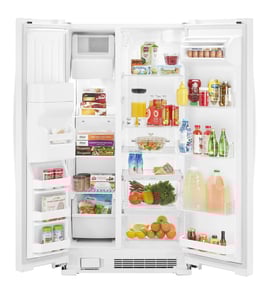


What is the disadvantage of a side-by-side fridge?
A side-by-side refrigerator like the GE LSHF6LGZBCBB trades wide, open storage for easy access to both fresh food and frozen items. The biggest disadvantage is narrower shelf space, which makes it harder to store wide platters, pizza boxes, and large trays.
Common disadvantages (what you will notice day to day)
- Narrow compartments and shelves: wide items often will not fit without rearranging.
- Less flexible fresh-food storage: the refrigerator section is typically narrower than on a French-door style.
- More bending for produce and deli drawers: crisper drawers sit low in the fresh-food section.
- Ice and water dispenser complexity (if equipped): more moving parts can mean more maintenance over time.
- Freezer organization can feel tight: tall items may block bins or shelves.
Quick comparison: side-by-side vs other common layouts
| Layout | Main drawback | Best for |
|---|---|---|
| Side-by-side | Narrow shelves for wide items | Balanced fridge/freezer access |
| French door | Freezer items are lower | Wide fresh-food storage |
| Top freezer | Fresh food is lower | Simple, budget-friendly storage |
Why it matters
If you regularly store wide leftovers, sheet pans, party platters, or pizza boxes, the side-by-side layout can create daily frustration. If you prefer eye-level access to both freezer and refrigerator items, the tradeoff is often worth it.
Tips to reduce the downside
- Use adjustable shelves to create one “tall and wide” zone.
- Store wide items diagonally or on a lower shelf with more clearance.
- Keep the freezer organized with bins so items do not block airflow.
- If temperatures vary, check settings and basic airflow guidance in the owner's manual.
Last updated: February 2026
Why is my ice maker not making ice on my GE refrigerator?
On the GE LSHF6LGZBCBB side-by-side refrigerator, an ice maker usually stops making ice because the freezer is too warm, water cannot reach the ice maker (shutoff, frozen fill tube, clogged filter, bad valve), or the ice maker is not cycling. Start with temperature and water supply checks, then move to the filter and inlet valve.
Quick checks that fix most “no ice” problems
- Confirm the ice maker is switched ON and the shutoff arm is down (if equipped).
- Set freezer temperature to about 0°F (ice production slows above about 10°F).
- Make sure the household water shutoff valve is fully open.
- Replace the water filter if it is overdue; a restricted filter can stop or slow ice production.
- Look for a frozen fill tube behind/above the ice maker (a common cause of no ice).
Step-by-step troubleshooting
- Check freezer airflow: If items block vents, the ice maker area can run warm.
- Inspect the fill tube: If it is iced up, thaw it with warm air (do not overheat plastics). Then watch for refreezing.
- Test water dispensing: If the door dispenser has weak/no water, focus on the filter, reservoir, or inlet valve.
- Listen for cycling: If you never hear the ice maker cycle or dump, the ice maker module or controls may be involved.
Parts that commonly solve “no ice” on this model
| Symptom | Most likely area | Part to consider (if applicable) |
|---|---|---|
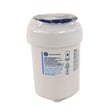
| No water to ice maker and dispenser is weak | Filtration restriction | GE refrigerator water filter MWFP |
| No water to ice maker but dispenser may still work | Inlet valve not opening fully | Refrigerator water valve WR57X33326 |
| Ice maker area warm, poor cooling, no ice | Evaporator airflow issue | Refrigerator evaporator fan motor WR60X10307 |
Why it matters
Ice makers depend on two things: cold enough freezer temperatures and steady water flow. A small restriction (like a clogged filter) or a small cooling issue (like poor airflow) can stop ice production completely.
For model-specific operating details and control locations, use the owner's manual.
Last updated: February 2026
What is the most reliable side-by-side refrigerator?
GE side-by-side refrigerators are a strong reliability pick overall, especially when you choose a simpler layout with fewer dispenser and ice-maker features to maintain. For long-term dependability, we focus on proven cooling basics, easy-to-service designs, and consistent temperature control; use the owner's manual to compare features and maintenance needs.
What “most reliable” usually means in real homes
Reliability is mostly about steady temperatures, fewer leaks, and fewer moving parts failing over time. In side-by-side models, the most common reliability drivers are the sealed cooling system, defrost system, and dispenser/ice-maker components.
Common reliability factors to prioritize:
- Simple ice and water dispensing (fewer doors, motors, and switches)
- Stable freezer and fresh-food temperatures (good sensor and airflow design)
- Easy condenser cleaning access (helps compressor and fans run cooler)
- Readily available replacement parts (fans, heaters, valves, sensors)
- Straightforward electronic controls (fewer boards and touch panels)
How to compare side-by-side models quickly
Use this checklist when you are narrowing down brands and model families.
| What to compare | More reliable choice | Why it helps |
|---|---|---|
| Ice maker/dispenser | Basic, fewer modes | Less chance of jams and air leaks |
| Controls | Simple buttons/knobs | Fewer failures than complex touch panels |
| Cooling airflow | Strong evaporator fan design | Prevents warm spots and frost issues |
| Maintenance | Easy coil cleaning | Reduces heat load and wear |
Why parts availability matters (and what it looks like on a GE)
A refrigerator can be “reliable” and still need normal wear parts. On GE side-by-sides like model LSHF6LGZBCBB, common serviceable items include temperature sensing, defrost components, and water system parts.
Examples of parts that often solve real-world issues:
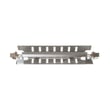
- Refrigerator defrost heater WR51X10055 for heavy frost and warm temperatures
- Refrigerator water valve WR57X33326 for no water dispensing or slow fill
- GE profile refrigerator temperature sensor WR55X10025 for temperature swings
Why it matters
A side-by-side that holds temperature and has fewer dispenser-related failures protects food better, wastes less energy, and costs less to maintain over the life of the refrigerator.
Last updated: February 2026