Owner’s manual
 Error Codes


What is the average lifespan of an LG dryer?
Most LG dryers, including the LG DLGX2502V dual-fuel dryer, typically last 10 to 15 years with normal use and basic upkeep. Consistent lint and vent cleaning matters most because restricted airflow drives overheating, longer dry times, and premature wear on thermostats, the belt, and the motor.
What affects dryer lifespan the most
- Vent airflow: crushed ducting, long runs, or clogged vents raise heat and run time
- Lint control: cleaning the lint screen every load and the housing regularly
- Load size: chronic overloading strains the drum belt, idler pulley, and rollers
- Heat system health: weak ignition or cycling heat can extend run time and stress components
- Routine care: following the cleaning and care schedule in the owner's manual
Typical lifespan by use pattern
| Use pattern | What we see most often | Practical expectation |
|---|---|---|
| Light use (few loads/week) | Less heat and mechanical wear | 12 to 15 years |
| Average family use | Normal wear items over time | 10 to 15 years |
| Heavy use (daily loads) | More frequent wear-part replacement | 8 to 12 years |
Parts that commonly limit longevity (and what symptoms look like)
If your DLGX2502V is otherwise in good shape, replacing wear parts can extend service life.
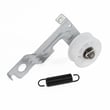
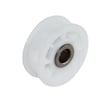
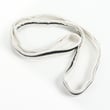
- Squealing, thumping, or drum not turning: check the dryer drum belt 4400EL2001F and idler pulley
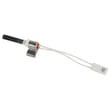
- Long dry times or heat that seems inconsistent: check venting first, then temperature sensing parts like the dryer thermistor AGM30045804
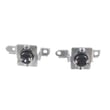
- Overheating or shutting down mid-cycle: restricted airflow is common; thermostats may also be involved
Why it matters
A dryer can keep running for years, but poor airflow and neglected cleaning make it run hotter and longer than designed. That extra stress shortens the life of key components and increases the chance of repeated breakdowns.
Last updated: February 2026
What is the most common problem with LG dryers?
The most common issue we see with LG dryers like model DLGX2502V is restricted airflow, which causes long dry times, overheating, and cycles that stop early. A clogged lint filter or blocked exhaust duct is usually the root cause; heat-sensing parts can also be involved.
Most common symptoms (and what they usually mean)
- Clothes take too long to dry: lint filter dirty, vent blocked, or duct run too long
- Dryer shuts off or seems to “overheat”: airflow restriction triggers temperature protection
- No heat on a gas model: gas supply shutoff not fully open, or an ignition/heating control issue
- Dryer runs but performance is inconsistent: load size, fabric type, and exhaust condition affect sensor drying
- Error related to temperature sensing: a thermistor circuit problem is a common trigger
What to check first on DLGX2502V
Start with the maintenance and troubleshooting steps in the owner's manual. Then work through these quick checks:
- Clean the lint filter after every cycle; never run without it installed.
- Inspect the exhaust duct for crushing, lint buildup, or excessive length.
- Confirm the dryer is not overloaded (heavy fabrics dry slower and can fool sensors).
- For gas heat, confirm both the house gas shutoff and dryer gas shutoff are fully open.
- If an error points to temperature sensing, test the thermistor and wiring.
Common causes and likely fixes
| Problem you notice | Most likely cause | Typical fix |
|---|---|---|
| Long dry times | Poor airflow | Clean lint filter; clear/shorten venting |
| Stops mid-cycle | Overheating from restricted venting | Clear venting; verify blower path is clear |
| Error tied to temperature | Failed temperature sensor | Replace dryer thermistor AGM30045804 |
| No heat (gas) | Ignition or gas valve issue | Check igniter; verify gas supply; test components |
Why it matters
Airflow problems do more than slow drying; they raise operating temperatures, which can trip safety controls and shorten the life of parts like thermostats, sensors, and even the drum belt.
Last updated: February 2026
What parts might cause an LG dryer to not heat?
For the LG DLGX2502V dual-fuel dryer, “no heat” is most often caused by a gas supply issue, a failed temperature-sensing or safety thermostat, or restricted airflow from lint buildup or a blocked vent. Start with airflow and gas supply checks, then test heat-control parts.
Quick checks first (fastest fixes)
- Confirm the cycle uses heat (not “air/no heat”).
- Clean the lint screen; the manual recommends cleaning it before or after each load. See the owner's manual.
- Verify the dryer is vented to the outdoors and the vent is not crushed or clogged.
- For gas models, make sure the gas supply or service is turned on.
- Check house power: a tripped breaker or blown fuse can prevent proper heating.
Parts that commonly cause “no heat” on this model
These are the most likely heat-related components to inspect or test on the DLGX2502V:
- Thermistor (temperature sensor): dryer thermistor AGM30045804
- High-limit thermostat (overheat safety): dryer high-limit thermostat 6931EL3003C or dryer high-limit thermostat 6931EL3004B
- Blower thermostat (airflow and temperature safety): dryer blower thermostat 6931EL3002M
- Gas ignition components (if the burner never lights): LG dryer burner igniter 5318EL3001A
- Gas valve (if igniter glows but burner will not stay lit): dryer gas valve AGM30063309
What you’ll usually observe (symptom-to-part guide)
| What you notice | Most likely direction | What to check next |
|---|---|---|
| Dryer runs, no heat, vent feels weak | Airflow restriction | Lint screen, lint housing, vent ducting |
| Igniter never glows | Ignition or control issue | Igniter, thermostats, thermistor |
| Igniter glows, flame never starts or won’t stay on | Gas delivery/control | Gas valve, thermostats |
| Dryer overheats then stops heating | Overheat protection tripping | High-limit thermostat, venting |
Why it matters
A restricted vent can cause long dry times and overheating; overheating can trip safety thermostats and make the dryer stop heating. Proper venting also helps minimize incomplete combustion byproducts in gas dryers.
Last updated: February 2026
How much to replace a LG dryer motor?
For the LG DLGX2502V dual-fuel dryer, replacing the motor typically costs $250 to $650 total (motor part plus labor). If you do it yourself, the motor part cost is usually $200 to $350, depending on the exact motor assembly you need.
What drives the total cost
- Motor price (the biggest variable)
- Service labor (commonly 1 to 2 hours)
- Extra parts that are often replaced at the same time (belt, idler pulley, rollers)
- Cause of failure (a seized blower wheel, worn drum support, or lint restriction can overload a motor)
Typical cost breakdown
| Scenario | What you pay for | Typical total |
|---|---|---|
| DIY motor replacement | Motor assembly only | $200 to $350 |
| Pro repair | Motor + labor | $250 to $650 |
| Motor plus “wear items” | Motor + belt/pulley/rollers | $275 to $750 |
Parts that commonly get replaced with a motor
If the motor failed because the drum drive system was binding or slipping, we often see these parts replaced at the same time to prevent repeat problems:
- LG dryer motor assembly 4681EL1008A
- Dryer drum belt 4400EL2001F
- Dryer idler pulley 4560EL3001A
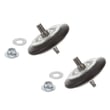
- Dryer drum support roller 4581EL2002L
Why it matters
A dryer motor can fail early if airflow is restricted or the drum drive parts are worn. Fixing the root cause (lint buildup, tight rollers, a weak belt, or a dragging idler) helps the new motor run cooler and last longer.
Before you buy a motor (quick checks)
- Confirm the drum turns by hand with the dryer unplugged; it should rotate smoothly.
- Check for burning smell, humming with no start, or intermittent stopping.
- Inspect the belt and idler for glazing, cracks, or wobble.
- Review the disassembly steps and wiring diagram notes in the DLGX2502V owner's manual.
Last updated: February 2026