Owner’s manual
 View engine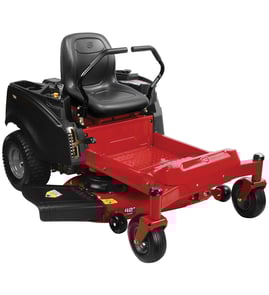




What are the most common issues with 2812523BVE?
The most common issues we see on the Snapper 2812523BVE rear-engine riding lawn mower involve starting and charging problems, poor cutting quality, and drive or steering performance changes. Most fixes come down to basic maintenance, belt and blade condition, and cleaning or tightening electrical connections.
Common problems and what they usually point to
- Won’t start or hard starting: weak battery, dirty/corroded battery terminals, bad spark plug, stale fuel, or a safety switch not engaging (seat, brake, PTO).
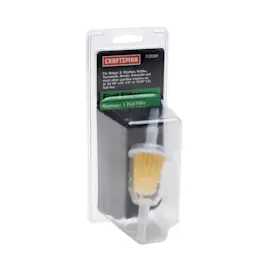
- Engine cranks but won’t fire: fuel delivery restriction, clogged fuel filter, fouled plug, or ignition issue.
- Battery won’t stay charged: loose wiring, failing alternator/stator, or a worn battery.
- Cuts uneven or leaves strips: dull/bent blade, deck not level, incorrect tire pressure, or debris packed under the deck.
- Poor drive, slipping, or slow movement: worn drive belt, idler/pulley wear, or linkage adjustment needed.
- Excess vibration: damaged blade, loose mounting hardware, or debris wrapped around rotating parts.
Quick checks we recommend first
- Park on level ground; set parking brake; remove the key.
- Verify safety interlocks: seat switch, brake/clutch position, and PTO disengaged.
- Inspect battery cables for corrosion and tightness.
- Check blade condition and clear packed grass from under the mower deck.
- Inspect belts for glazing, cracking, or slack.
Troubleshooting guide by symptom
| Symptom | Most likely area | Best first action |
|---|---|---|
| No crank | Battery, cables, safety switches | Clean/tighten terminals; confirm interlocks |
| Cranks, no start | Fuel, spark | Fresh fuel; check spark plug condition |
| Uneven cut | Blade, deck level, tires | Set tire pressure; level deck; sharpen/replace blade |
| Slips or won’t move well | Drive belt, pulleys | Inspect belt routing and wear |
Why it matters
Catching belt wear, blade damage, and electrical corrosion early prevents bigger failures like overheated pulleys, damaged spindles, and repeated no-start situations. It also keeps your cut quality consistent and reduces strain on the engine.
For model-specific procedures, adjustments, and safety interlock checks, use the 2812523BVE owner’s manual.
Last updated: March 2026
What is the advantage of a rear engine mower?
A rear-engine riding mower like the Snapper 2812523BVE puts the engine weight over the drive wheels, which improves traction on grass and helps the mower feel stable and easy to maneuver. The compact layout also makes it simpler to store than many larger lawn tractors.
Key advantages you will notice
- Better traction: more weight on the rear tires helps reduce wheel slip on typical lawns.
- Tighter maneuvering: the shorter overall footprint makes it easier to turn around trees and beds.
- Compact storage: many rear-engine riders fit in smaller sheds or garages.
- Good visibility of the cutting area: the seating position often gives a clear view of the deck edges.
- Simple routine upkeep: common maintenance tasks (oil changes, deck cleaning, lubrication) are straightforward when done on schedule.
What it means for mowing performance
Rear-engine riders are a strong fit for flat to gently rolling yards where you want a step up from a walk-behind mower without moving to a full-size lawn tractor.
| Feature | Rear-engine rider (like 2812523BVE) | Typical lawn tractor |
|---|---|---|
| Turning and maneuvering | Usually tighter in small spaces | Usually wider turning radius |
| Traction on grass | Often strong due to rear weight bias | Varies by model and tire setup |
| Storage footprint | Typically smaller | Typically larger |
Why it matters
Good traction and maneuverability help you mow more efficiently with fewer missed strips and less turf scuffing from repeated back-and-forth repositioning.
Safety and maintenance reminder
Before any adjustments or service, we follow the safety steps in the owner's manual: stop the engine and blade, set the parking brake, remove the key, and disconnect the spark plug wire.
Last updated: February 2026
What is the best engine for a riding mower?
For a Snapper rear-engine riding mower like model 2812523BVE, the best engine is the one that is compatible with the mower’s frame, crankshaft, and deck drive, and that matches your yard conditions. Use the engine identification and specifications in the 2812523BVE owner's manual to choose the correct replacement.
What “best” means for the 2812523BVE
On this Snapper Series 23 rear-engine rider, “best” is about fit and reliability, not a single brand. Prioritize:
- Exact mounting pattern and engine footprint
- Crankshaft diameter, length, and keyway (must match your pulley and blade drive)
- Crankshaft rotation direction and governed RPM
- Charging output (if your mower uses electric start and a battery)
- Throttle and choke linkage compatibility
How to choose the right replacement engine
Use this checklist before ordering or installing anything:
- Record the engine model, type, and code from the engine label
- Confirm shaft specs (diameter, length, tapped or not)
- Match pulley alignment and belt routing
- Verify fuel tank and line routing clearances
- Plan for a full tune-up after installation (oil, filter, spark plug)
Quick comparison: “best” by mowing conditions
| Yard conditions | Engine traits to prioritize | Result you get |
|---|---|---|
| Flat, light grass | standard HP, easy service access | dependable weekly mowing |
| Thick grass or bagging | strong torque curve, clean cooling airflow | fewer stalls, cleaner cut |
| Hills | stable lubrication, consistent governed RPM | better pull and less bogging |
Why it matters
An engine that does not match crankshaft and mounting specs can cause pulley misalignment, belt wear, vibration, and poor cutting performance. A correctly matched engine protects the deck drive system and keeps your Snapper 2812523BVE running safely.
Last updated: February 2026