Installation guide
 Owner’s manual



How long does a Maytag Bravos dryer last?
A Maytag dryer like the MGDC300XW1 typically lasts 10 to 15 years with normal household use. Consistent airflow (clean lint screen and venting), proper leveling, and avoiding overheating are the biggest factors that help a gas dryer reach the high end of that range.
Typical lifespan and what affects it
Most Maytag dryers fall into a 10 to 15 year service life. The biggest variables are load size, vent restriction, and heat stress on components like thermostats and thermal fuses.
- Vent system condition: crushed, long, or clogged venting increases heat and run time
- Maintenance habits: lint screen every load; periodic vent cleaning
- Installation quality: level dryer helps sensor cycles work correctly
- Usage pattern: multiple loads daily shortens life versus a few loads weekly
- Wear parts: rollers, belt, and idler wear gradually and can be refreshed as a set
Quick checks that help your dryer last longer
Use these practical checks for the MGDC300XW1 to reduce strain on the motor, drum support, and burner system.
- Keep the dryer level so the moisture sensing system operates correctly (see MGDC300XW1 installation guide)
- Use 4-inch heavy metal vent only; avoid plastic or foil venting
- Keep vent runs as short and straight as possible; fewer elbows dry faster
- Clean lint from the entire vent path periodically, not just the lint screen
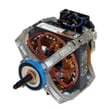
- If you hear thumping or squealing, consider a maintenance refresh such as the dryer repair kit 4392065
Venting guidance (why it matters)
Restricted venting is one of the fastest ways to shorten dryer life because it increases drying time, raises internal temperatures, and can overheat safety devices.
| Vent choice | What we recommend | Why |
|---|---|---|
| Vent material | Rigid metal (best) or flexible metal (only if accessible) | Better airflow; less crushing and kinking |
| Diameter | 4 in. (102 mm) | Matches the dryer exhaust outlet |
| Long runs and many elbows | Avoid when possible | Longer dry times; more heat stress |
Why it matters
A dryer that is properly vented and level runs cooler and finishes cycles faster; that reduces wear on the drive motor, drum support rollers, and heat-related safety parts such as a thermal cut-off.
Last updated: January 2026
What is the capacity of Maytag MGDC300XW1?
The Maytag MGDC300XW1 is a 29-inch gas dryer; its exact drum capacity (in cubic feet) is listed in the product specifications section of the MGDC300XW1 owner's manual. Use that spec to match load size, cycle selection, and venting needs for the best drying performance.
How to find the capacity quickly
Check these common spots in the documentation:
- Specifications or Product dimensions section (often lists capacity in cu. ft.)
- Cycle guide pages (sometimes reference “full load” guidance tied to capacity)
- Model/serial label location notes can help confirm you have the right manual (typically inside the door opening)
Why capacity matters for drying results
Capacity affects how well clothes tumble and how efficiently moisture is removed. Overloading a gas dryer can increase dry time and heat stress; underloading can cause uneven drying on some cycles.
Typical load guidance by capacity range
| Capacity range (cu. ft.) | Typical load size | What you may notice if overloaded |
|---|---|---|
| 6.5 to 7.0 | Medium to large family loads | Longer dry times, hot exterior, more wrinkles |
| 7.1 to 8.0 | Large loads, bulky items (one at a time) | Poor tumbling, damp spots, more lint |
Related setup tips that impact real-world “capacity”
Even with the correct cu. ft. rating, airflow and installation determine how much you can dry effectively:
- Keep the lint screen clean every load
- Use rigid or semi-rigid venting when possible
- Avoid crushed or extra-long vent runs
- Make sure the dryer sits level so clothes tumble properly
- Follow spacing and venting requirements in the MGDC300XW1 installation guide
When to consider a maintenance repair
If the dryer seems to handle smaller loads but struggles with normal loads, worn drum support parts can reduce tumbling efficiency.
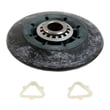
- Inspect drum support rollers for flat spots or squealing; consider dryer drum support roller WPW10314173
Last updated: January 2026
What is the capacity of Maytag MGDC300XW1?
The Maytag MGDC300XW1 29-inch gas dryer has a 7.0 cu. ft. capacity, which is a full-size drum designed to handle everyday family loads like towels, jeans, and mixed laundry. For cycle details and loading guidance, use the MGDC300XW1 owner's manual.
What 7.0 cu. ft. means for real loads
A 7.0 cu. ft. dryer drum is considered full-size. In practical terms, it typically handles:
- A full mixed load from a standard washer
- A bulky load like a comforter (size and fill dependent)
- Several bath towels in one cycle
- Jeans and heavier cottons without overpacking
Loading tips (to dry faster and protect parts)
Overloading reduces airflow and can increase drying time. We recommend:
- Fill the drum loosely; leave space for items to tumble
- Avoid packing heavy items tightly (towels, hoodies, denim)
- Clean the lint screen before every load
- Use timed dry for very small loads to prevent overdrying
- If drying is slow, check venting and airflow first
Quick reference
| Item | Typical guidance for MGDC300XW1 |
|---|---|
| Dryer capacity | 7.0 cu. ft. |
| Dryer type | 29-inch gas dryer |
| Best practice | Load loosely for proper tumbling |
Why it matters
Capacity affects drying performance, cycle results, and wear on key moving parts like the drum support system and belt. Consistently overloading can contribute to noise and faster wear on components such as the dryer drum support roller WPW10314173.
Last updated: January 2026
What is the most common problem with Maytag dryers?
For Maytag dryers like model MGDC300XW1, the most common problem we see is overheating from restricted airflow, which can blow a safety fuse and cause a no-start or no-heat complaint. Lint buildup and poor venting are frequent root causes; see the venting and safety guidance in the MGDC300XW1 installation guide.
Most common symptoms and what they usually point to
- Dryer will not start: often a blown thermal cut-off or a failed door switch
- Dryer runs but no heat (gas dryer): often an igniter or radiant sensor issue
- Long dry times: usually restricted venting, crushed duct, or lint blockage
- Squealing, thumping, grinding: worn drum support rollers, bearing surfaces, or belt wear
- Stops mid-cycle: overheating protection opening due to airflow restriction
Quick checks we recommend first (fast, high-impact)
- Clean the lint screen and confirm strong airflow at the outside vent hood.
- Inspect the vent duct for kinks, crushing, or excessive length.
- Avoid flexible plastic or foil-type venting; these materials can collapse and trap lint, restricting airflow.
- If the dryer is in a garage or cool space, confirm the area stays above 45°F (7°C) for normal cycle operation.
Parts that commonly fail when airflow is poor
Restricted venting makes a gas dryer run hotter than designed, which can damage safety and heat components.
| Symptom | Commonly involved part | Example part for MGDC300XW1 |
|---|---|---|
| Won’t start after overheating | Thermal cut-off kit | Dryer thermal cut-off kit W11050897 |
| Door must be slammed or won’t run | Door switch | Dryer door switch WP3406107 |
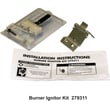
| No heat (gas) | Ignition components | Igniter 279311 |
| Loud rumbling or thumping | Drum support rollers | Dryer drum support roller WPW10314173 |
Why it matters
Airflow problems do more than slow drying; they raise operating temperatures, which can trip safety devices, shorten the life of components like thermostats and sensors, and create repeat failures until the venting is corrected.
For error-code driven troubleshooting on Maytag dryers, use Maytag centennial dryer error codes as a starting point for interpreting what the dryer is reporting.
Last updated: January 2026